Laboratory of Functional Plant Biology, Department of Biology, Ghent University, B-9000 Ghent, Belgium.
Laboratory of Toxicology, Department of Bioanalysis, Ghent University, B-9000 Ghent, Belgium.
Plant Physiol. 2021 Aug 3;186(4):1832-1847. doi: 10.1093/plphys/kiab198.
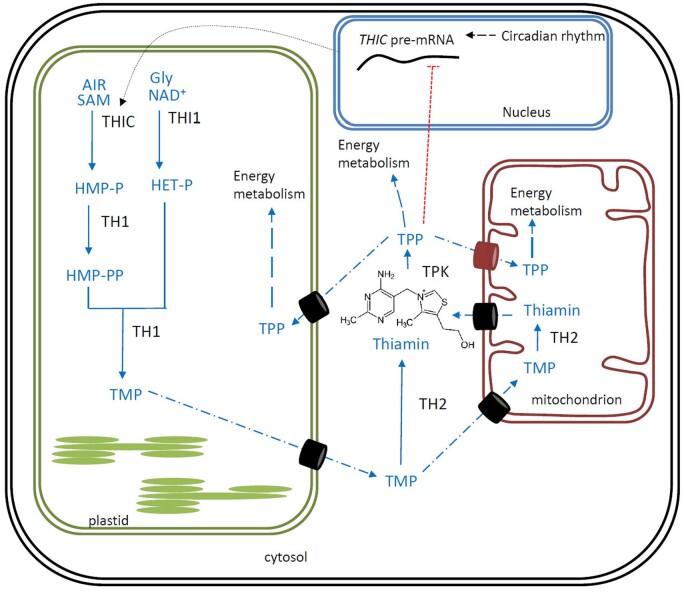
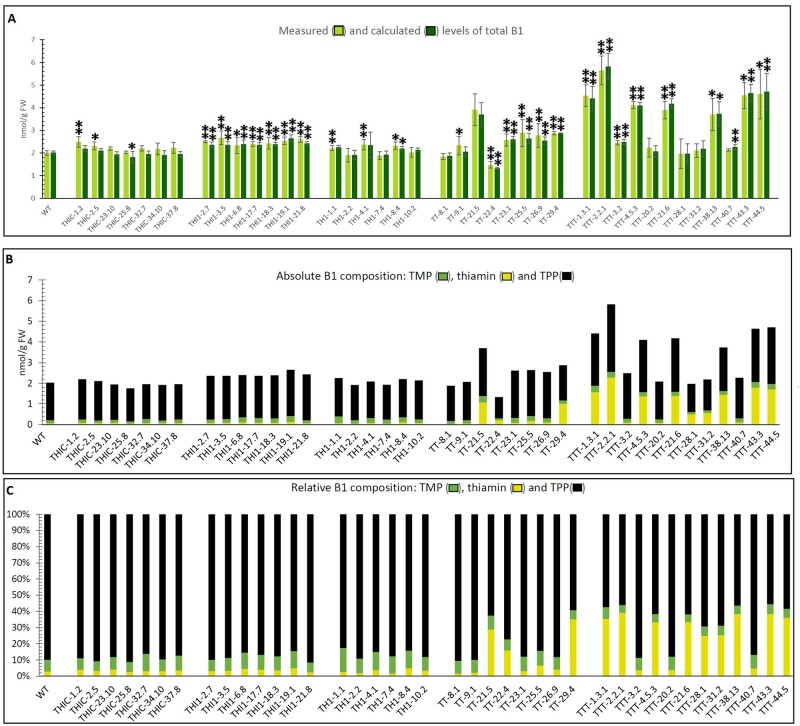
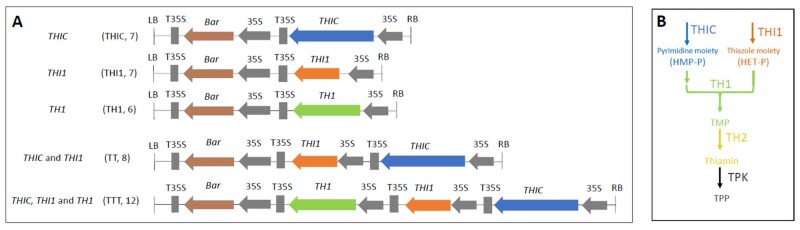
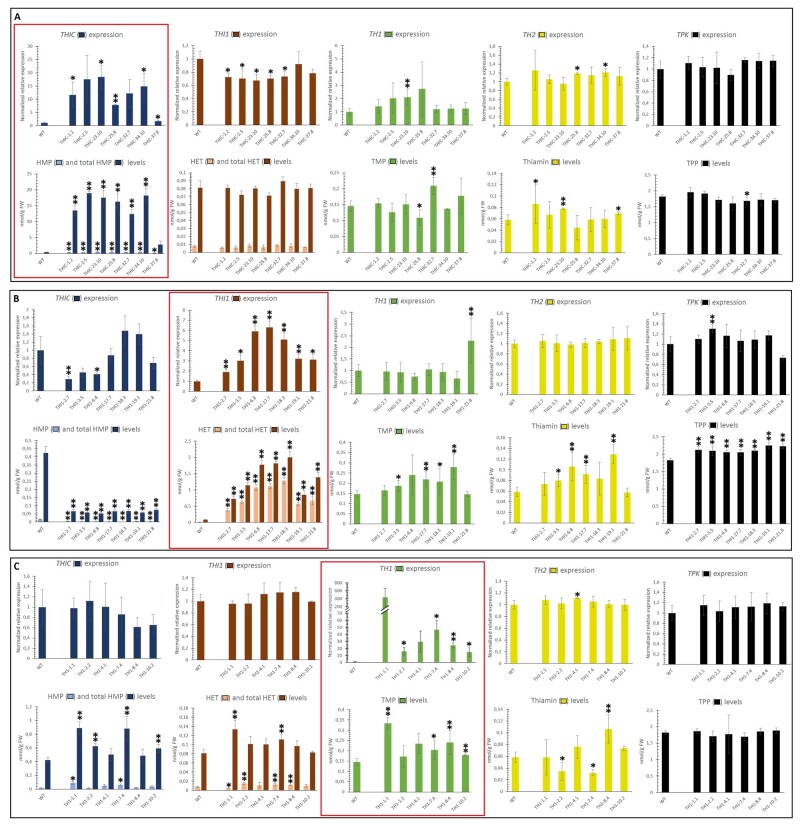
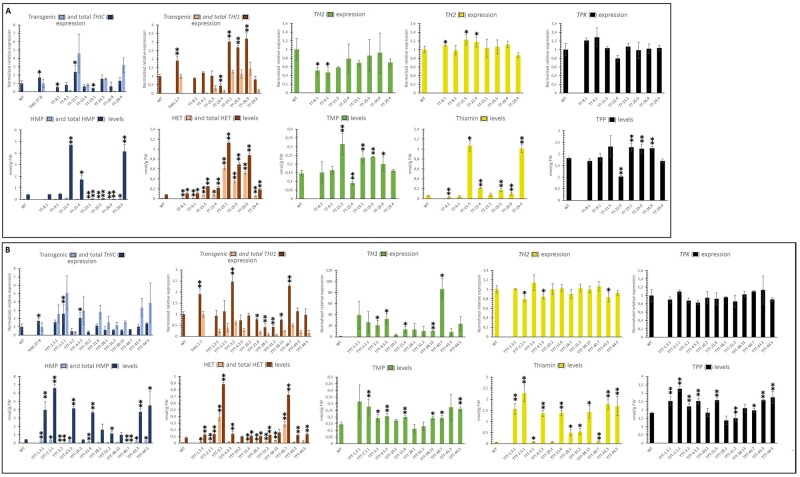
Thiamin (or thiamine) is a water-soluble B-vitamin (B1), which is required, in the form of thiamin pyrophosphate, as an essential cofactor in crucial carbon metabolism reactions in all forms of life. To ensure adequate metabolic functioning, humans rely on a sufficient dietary supply of thiamin. Increasing thiamin levels in plants via metabolic engineering is a powerful strategy to alleviate vitamin B1 malnutrition and thus improve global human health. These engineering strategies rely on comprehensive knowledge of plant thiamin metabolism and its regulation. Here, multiple metabolic engineering strategies were examined in the model plant Arabidopsis thaliana. This was achieved by constitutive overexpression of the three biosynthesis genes responsible for B1 synthesis, HMP-P synthase (THIC), HET-P synthase (THI1), and HMP-P kinase/TMP pyrophosphorylase (TH1), either separate or in combination. By monitoring the levels of thiamin, its phosphorylated entities, and its biosynthetic intermediates, we gained insight into the effect of either strategy on thiamin biosynthesis. Moreover, expression analysis of thiamin biosynthesis genes showed the plant's intriguing ability to respond to alterations in the pathway. Overall, we revealed the necessity to balance the pyrimidine and thiazole branches of thiamin biosynthesis and assessed its biosynthetic intermediates. Furthermore, the accumulation of nonphosphorylated intermediates demonstrated the inefficiency of endogenous thiamin salvage mechanisms. These results serve as guidelines in the development of novel thiamin metabolic engineering strategies.
硫胺素(或硫胺)是一种水溶性 B 族维生素(B1),以硫胺焦磷酸的形式作为所有生命形式中关键碳代谢反应的必需辅助因子。为了确保足够的代谢功能,人类依赖于充足的饮食供应硫胺素。通过代谢工程增加植物中的硫胺素水平是缓解维生素 B1 营养不良并因此改善全球人类健康的有力策略。这些工程策略依赖于对植物硫胺素代谢及其调控的全面了解。在这里,通过组成型过表达负责 B1 合成的三个生物合成基因 HMP-P 合酶(THIC)、HET-P 合酶(THI1)和 HMP-P 激酶/TMP 焦磷酸化酶(TH1),在模式植物拟南芥中检查了多种代谢工程策略。无论是单独还是组合使用这些基因,通过监测硫胺素、其磷酸化实体及其生物合成中间体的水平,我们深入了解了任何一种策略对硫胺素生物合成的影响。此外,硫胺素生物合成基因的表达分析显示了植物对途径改变的惊人响应能力。总的来说,我们揭示了平衡硫胺素生物合成的嘧啶和噻唑分支的必要性,并评估了其生物合成中间体。此外,非磷酸化中间体的积累表明内源性硫胺素补救机制效率低下。这些结果为新型硫胺素代谢工程策略的发展提供了指导。