Genome Sciences, University of Washington, Seattle, WA, 98195, USA.
Pathology, University of Washington, Seattle, WA, 98195, USA.
Nat Commun. 2018 Apr 13;9(1):1445. doi: 10.1038/s41467-018-03694-y.
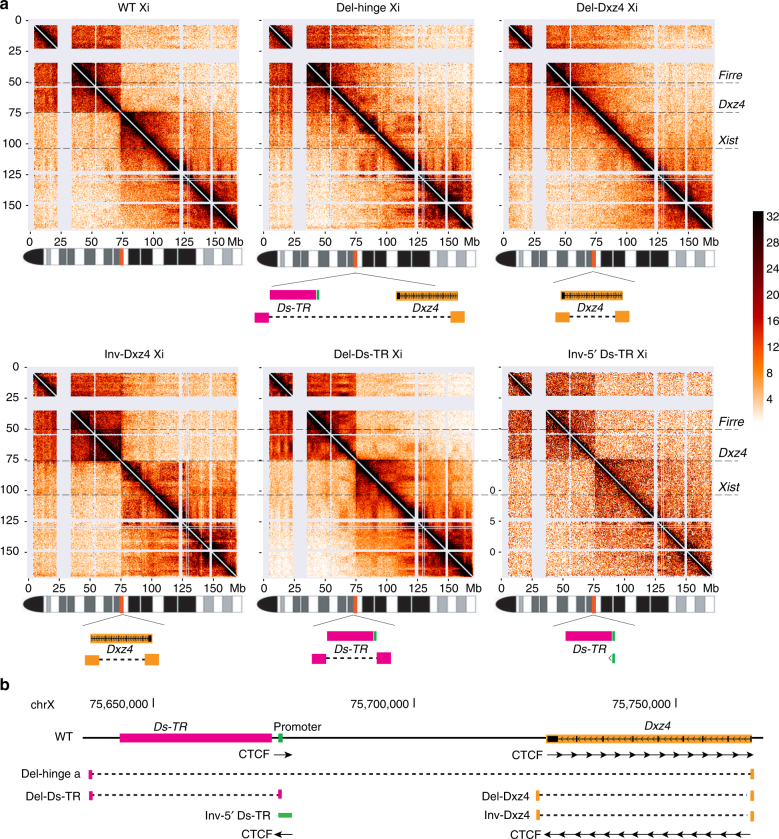
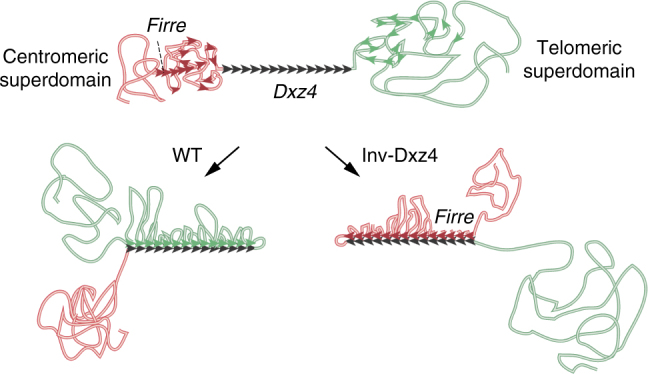
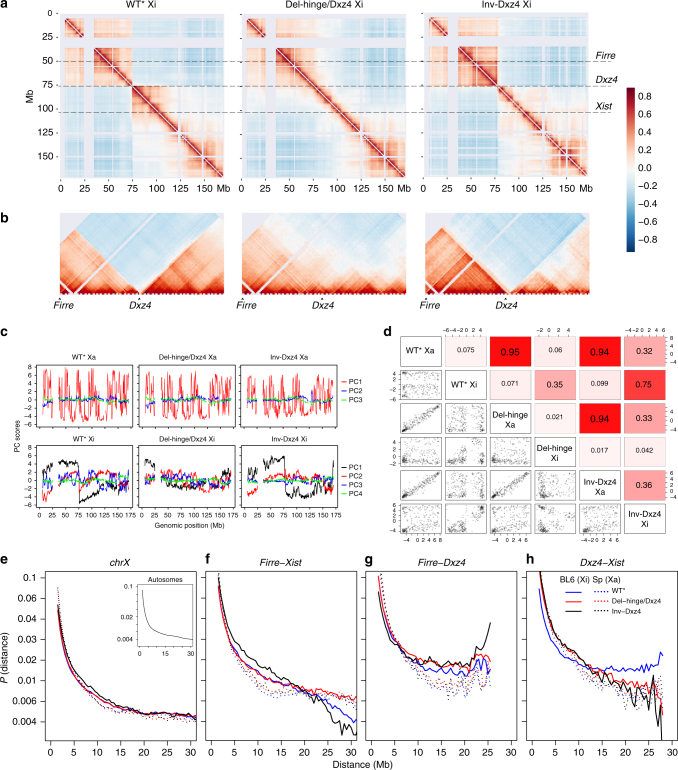
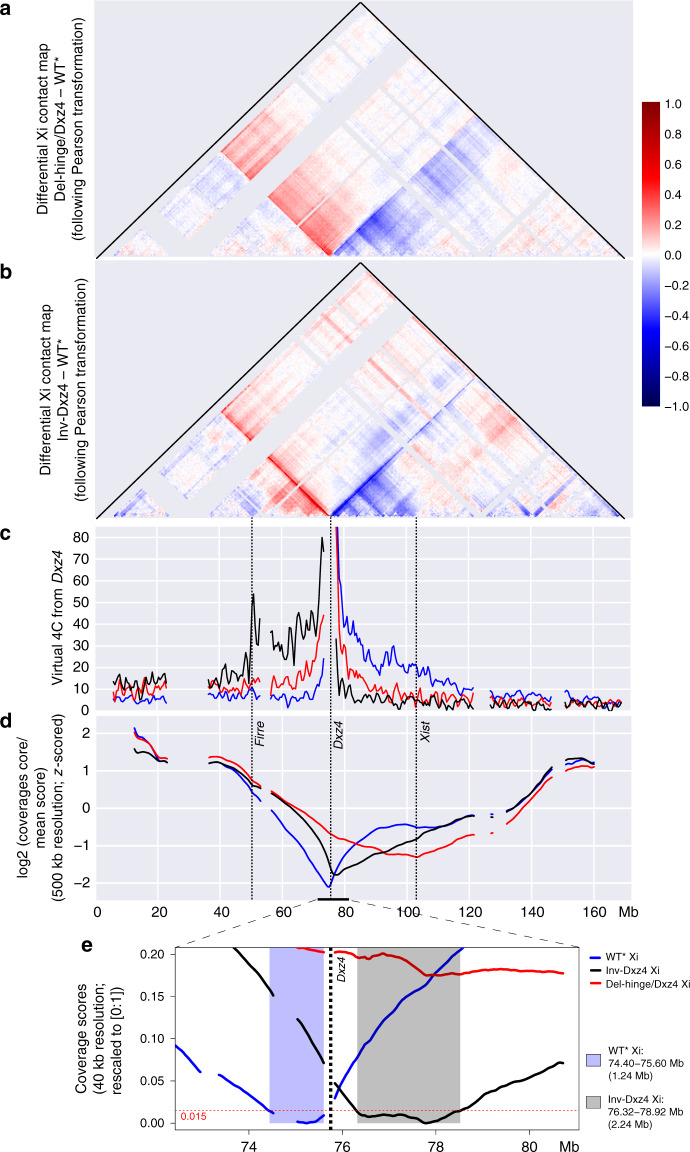
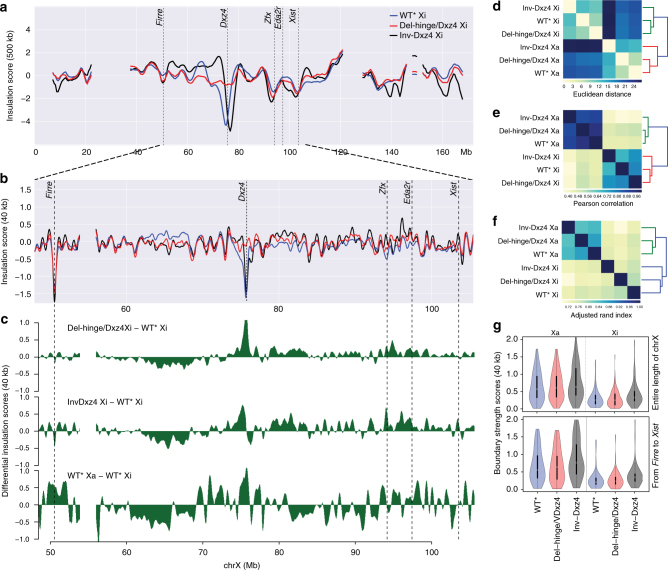
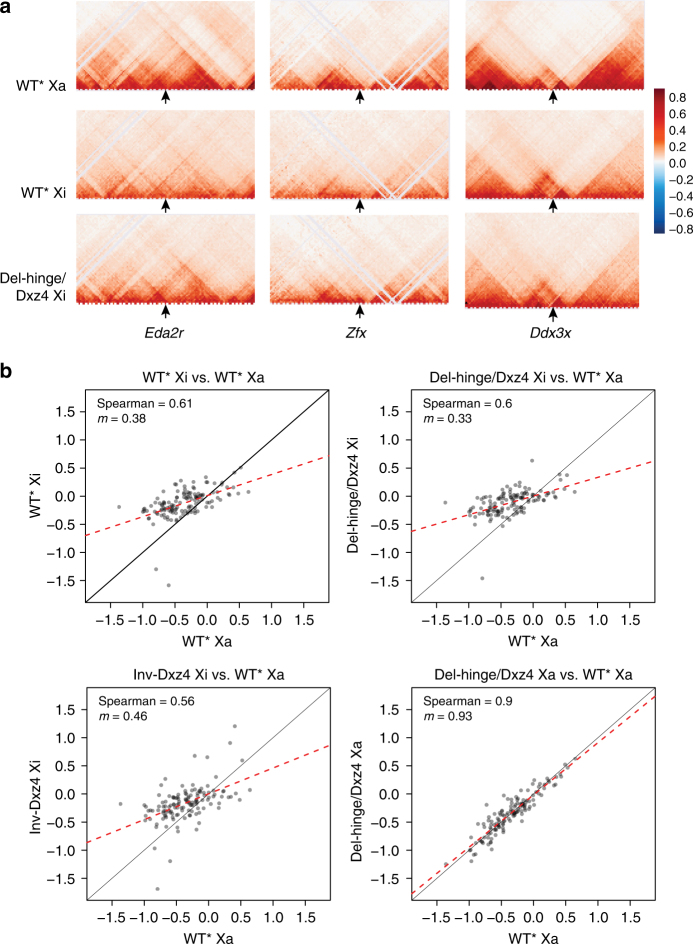
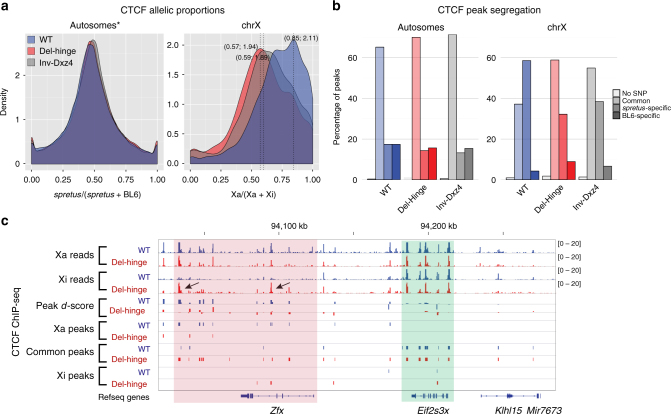
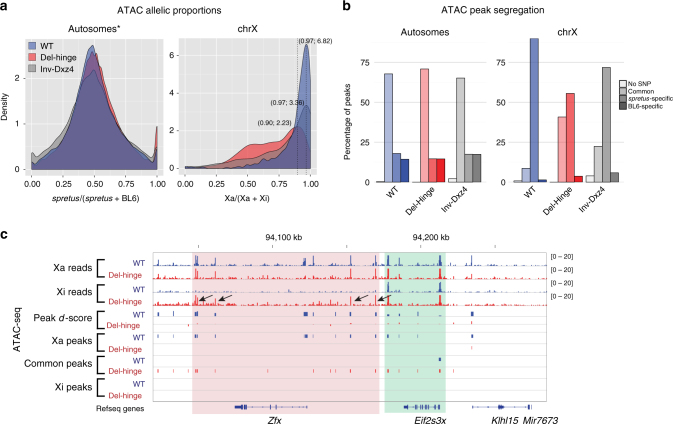
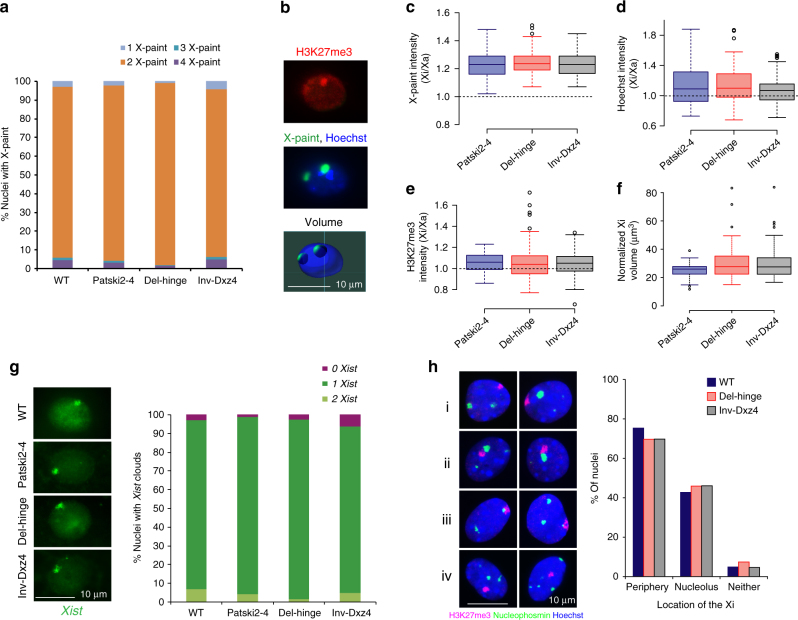
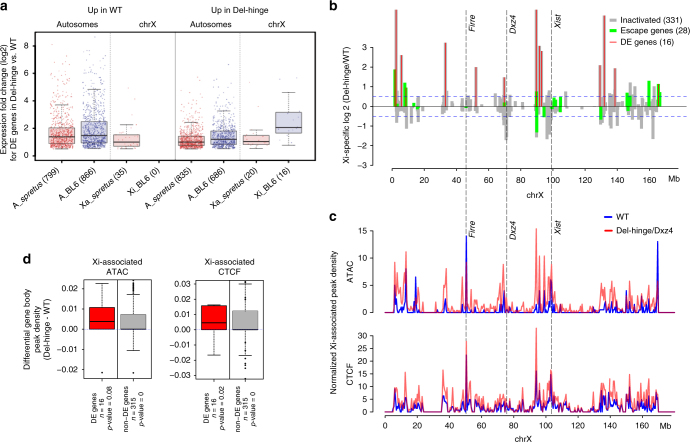
The mammalian inactive X chromosome (Xi) condenses into a bipartite structure with two superdomains of frequent long-range contacts, separated by a hinge region. Using Hi-C in edited mouse cells with allelic deletions or inversions within the hinge, here we show that the conserved Dxz4 locus is necessary to maintain this bipartite structure. Dxz4 orientation controls the distribution of contacts on the Xi, as shown by a massive reversal in long-range contacts after Dxz4 inversion. Despite an increase in CTCF binding and chromatin accessibility on the Xi in Dxz4-edited cells, only minor changes in TAD structure and gene expression were detected, in accordance with multiple epigenetic mechanisms ensuring X silencing. We propose that Dxz4 represents a structural platform for frequent long-range contacts with multiple loci in a direction dictated by the orientation of its bank of CTCF motifs, which may work as a ratchet to form the distinctive bipartite structure of the condensed Xi.
哺乳动物的失活 X 染色体 (Xi) 折叠成具有两个超结构域的二联体结构,这两个超结构域之间由一个铰链区隔开。利用编辑后的小鼠细胞中的 Hi-C 技术,在铰链区进行等位基因缺失或倒位,我们发现保守的 Dxz4 基因座对于维持这种二联体结构是必需的。Dxz4 的方向控制着 Xi 上的接触分布,这一点可以从 Dxz4 倒位后长距离接触的大规模反转中看出。尽管在 Dxz4 编辑的细胞中,Xi 上的 CTCF 结合和染色质可及性增加,但仅检测到 TAD 结构和基因表达的微小变化,这与确保 X 染色体沉默的多种表观遗传机制一致。我们提出 Dxz4 代表了一个结构平台,用于与多个位点进行频繁的长距离接触,其方向由其 CTCF 基序库的方向决定,这可能作为一个棘轮,形成折叠的 Xi 染色体特有的二联体结构。