Institute for Ethics, History, and the Humanities, Geneva University Medical School, Geneva, Switzerland.
Department of Bioethics, National Institutes of Health, Bethesda, MD, USA.
Health Expect. 2018 Oct;21(5):858-869. doi: 10.1111/hex.12680. Epub 2018 Apr 14.
Approaches to priority-setting for scarce resources have shifted to public deliberation as trade-offs become more difficult. We report results of a qualitative analysis of public deliberation in Switzerland, a country with high health-care costs, an individual health insurance mandate and a strong tradition of direct democracy with frequent votes related to health care.
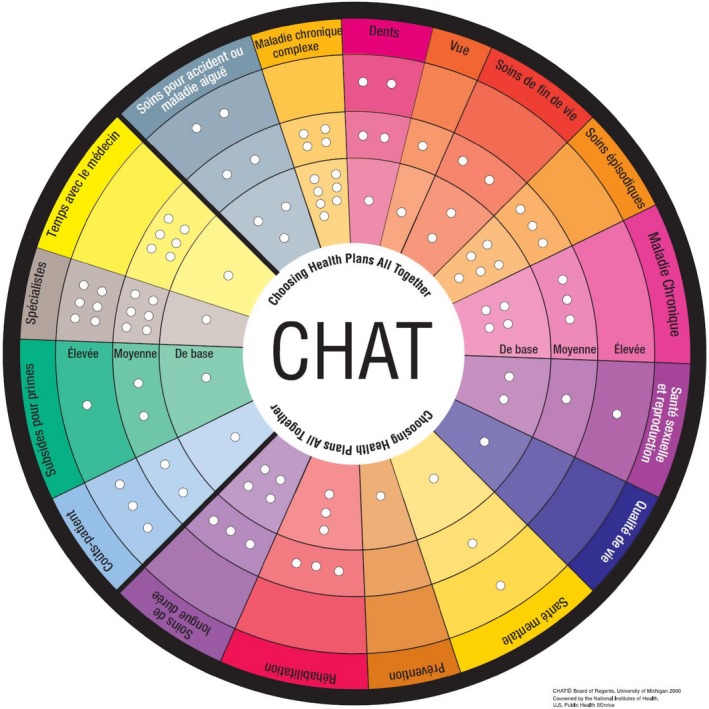
We adapted the Choosing Healthplans All Together (CHAT) tool, an exercise developed to transform complex health-care allocation decisions into easily understandable choices, for use in Switzerland. We conducted focus groups in twelve Swiss cities, recruiting from a range of socio-economic backgrounds in the three language regions.
Participants developed strategic arguments based on the importance of basic coverage for all, and of cost-benefit evaluation. They also expressed arguments relying on a principle of solidarity, in particular the importance of protection for vulnerable groups, and on the importance of medical care. They struggled with the place of personal responsibility in coverage decisions. In commenting on the exercise, participants found the degree of consensus despite differing opinions surprising and valuable.
The Swiss population is particularly attentive to the costs of health care and means of reducing these costs. Swiss citizens are capable of making trade-offs and setting priorities for complex health issues.
随着权衡变得更加困难,稀缺资源的优先排序方法已经转向公众讨论。我们报告了瑞士公众讨论的定性分析结果,瑞士是一个医疗费用高、实行个人医疗保险强制要求、具有直接民主传统且经常就医疗保健进行投票的国家。
我们对 Choosing Healthplans All Together(CHAT)工具进行了改编,该工具是为了将复杂的医疗保健分配决策转化为易于理解的选择而开发的,用于瑞士。我们在瑞士的 12 个城市进行了焦点小组讨论,从三个语言区的不同社会经济背景中招募参与者。
参与者根据所有人基本覆盖的重要性以及成本效益评估制定了策略性论点。他们还表达了依赖团结原则的论点,特别是弱势群体保护的重要性以及医疗保健的重要性。他们在个人责任在覆盖决策中的地位上存在争议。在对该练习进行评论时,参与者发现尽管意见不同,但达成共识的程度令人惊讶和有价值。
瑞士民众特别关注医疗保健的成本和降低这些成本的方法。瑞士公民能够为复杂的健康问题进行权衡和确定优先事项。