Azuma Naoto, Katada Yoshinori, Sano Hajime
1Division of Rheumatology, Department of Internal Medicine, Hyogo College of Medicine, 1-1 Mukogawa-cho, Nishinomiya, Hyogo 663-8501 Japan.
Division of General Medicine, Department of Internal Medicine, Sakai City Medical Center, 1-1-1 Ebaraji-cho, Nishi-ku, Sakai, 593-8304 Japan.
Inflamm Regen. 2018 Apr 9;38:6. doi: 10.1186/s41232-018-0062-0. eCollection 2018.
Sjögren's syndrome (SS) is a chronic inflammatory autoimmune disease characterized by lymphocytic infiltration of the exocrine glands, especially the salivary and lacrimal glands. As a result of salivary gland dysfunction, most patients with SS have xerostomia related to a reduced salivary flow rate. In addition to the discomfort due to xerostomia, dry mouth can cause various intraoral manifestations such as refractory stomatitis, ulcer, and atrophic changes in the oral mucosa and tongue, and the patient's quality of life (QoL) is severely impaired. These manifestations are believed to be caused mainly by a decrease in the clearance in the oral cavity owing to hyposalivation. However, because saliva has several beneficial physiological effects on the intraoral environment, qualitative changes in sialochemistry should also be considered a cause of the refractory intraoral manifestations in SS.
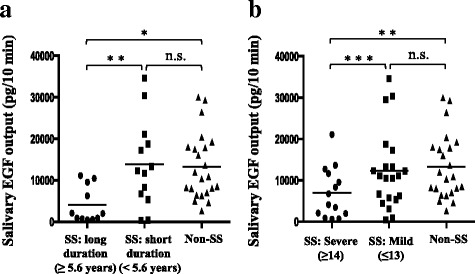
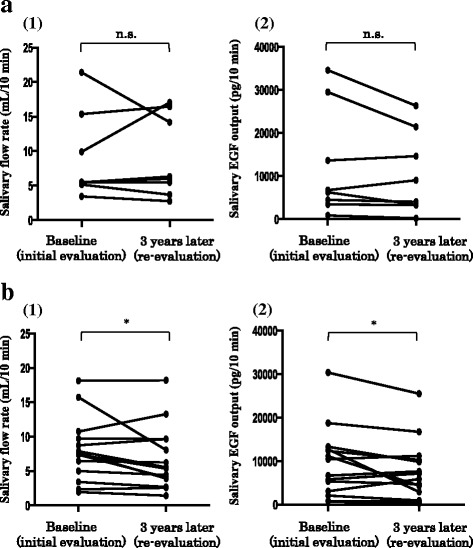
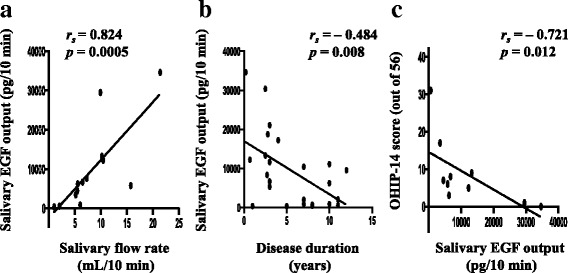
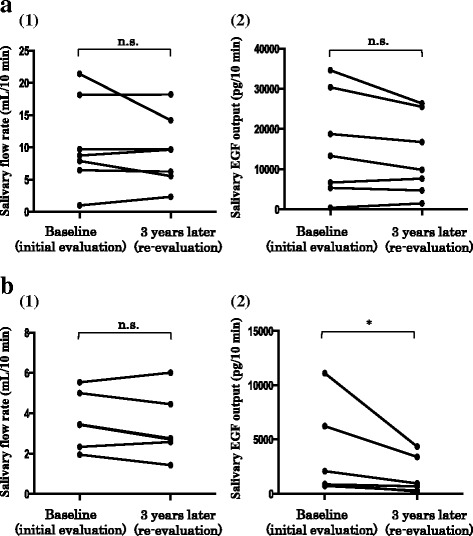
Salivary epidermal growth factor (EGF) is considered an important cytoprotective factor against injuries. It contributes to wound healing in the oral cavity and to maintenance of mucosal integrity in the oral cavity and gastrointestinal tract. We evaluated changes in salivary EGF levels and assessed the association between salivary EGF levels and the severity of intraoral manifestations in patients with SS. The following novel findings were obtained: (1) salivary EGF levels in SS patients were significantly lower than those in non-SS patients; (2) salivary EGF levels as well as the salivary flow rate decreased with the progression of SS; (3) with prolonged SS disease duration, salivary EGF levels decreased more rapidly than the salivary flow rate; and (4) decreases in salivary EGF levels significantly correlated with exacerbation of the oral health-related QoL in patients with SS.
The deterioration in saliva quality as well as lower intraoral clearance by hyposalivation could play a role in the pathogenesis of refractory intraoral manifestations in patients with SS. Our findings suggest a new target for therapeutic intervention for SS.
干燥综合征(SS)是一种慢性炎症性自身免疫性疾病,其特征是外分泌腺,尤其是唾液腺和泪腺出现淋巴细胞浸润。由于唾液腺功能障碍,大多数SS患者存在唾液流速降低相关的口干症状。除了口干带来的不适外,口干还可导致各种口腔内表现,如难治性口腔炎、溃疡以及口腔黏膜和舌部的萎缩性改变,患者的生活质量(QoL)严重受损。这些表现被认为主要是由于唾液分泌减少导致口腔内清除功能下降所致。然而,由于唾液对口腔内环境有多种有益的生理作用,唾液化学性质的改变也应被视为SS患者难治性口腔内表现的一个原因。
唾液表皮生长因子(EGF)被认为是一种重要的抗损伤细胞保护因子。它有助于口腔伤口愈合以及维持口腔和胃肠道黏膜的完整性。我们评估了SS患者唾液EGF水平的变化,并评估了唾液EGF水平与SS患者口腔内表现严重程度之间的关联。获得了以下新发现:(1)SS患者的唾液EGF水平显著低于非SS患者;(2)随着SS病情进展,唾液EGF水平以及唾液流速均下降;(3)随着SS病程延长,唾液EGF水平下降速度比唾液流速更快;(4)唾液EGF水平的下降与SS患者口腔健康相关生活质量的恶化显著相关。
唾液质量的恶化以及唾液分泌减少导致的口腔内清除功能降低可能在SS患者难治性口腔内表现的发病机制中起作用。我们的研究结果提示了SS治疗干预的一个新靶点。