D'Abaco Giovanna M, Mattei Cristiana, Nasr Babak, Hudson Emma J, Alshawaf Abdullah J, Chana Gursharan, Everall Ian P, Nayagam Bryony, Dottori Mirella, Skafidas Efstratios
Department of Biomedical Engineering, Melbourne School of Engineering, The University of Melbourne, Carlton, Victoria, Australia.
Centre for Neural Engineering, Melbourne School of Engineering, The University of Melbourne, Carlton, Victoria, Australia.
R Soc Open Sci. 2018 Mar 7;5(3):171364. doi: 10.1098/rsos.171364. eCollection 2018 Mar.
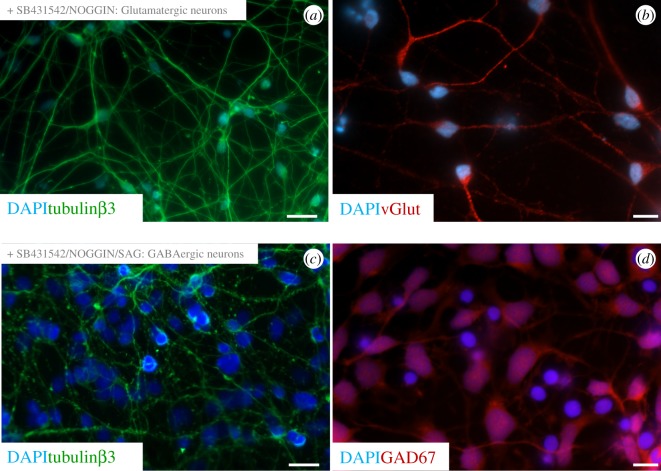
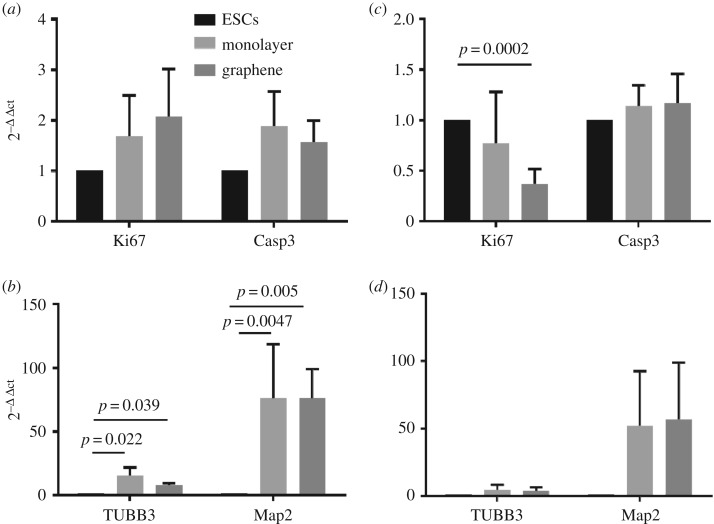
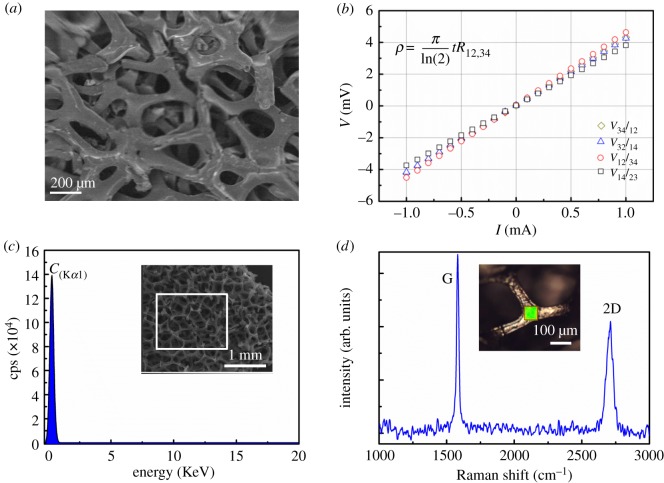
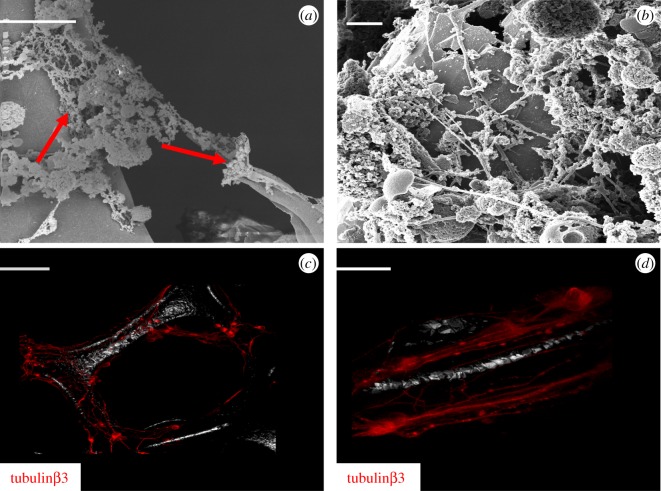
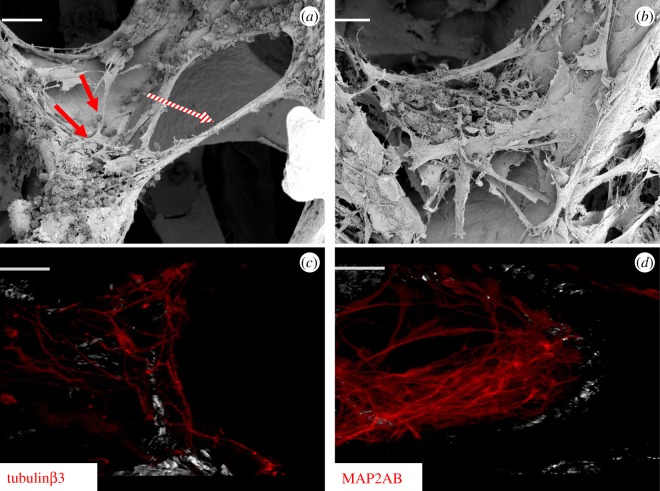
In this study, we explore the use of electrically active graphene foam as a scaffold for the culture of human-derived neurons. Human embryonic stem cell (hESC)-derived cortical neurons fated as either glutamatergic or GABAergic neuronal phenotypes were cultured on graphene foam. We show that graphene foam is biocompatible for the culture of human neurons, capable of supporting cell viability and differentiation of hESC-derived cortical neurons. Based on the findings, we propose that graphene foam represents a suitable scaffold for engineering neuronal tissue and warrants further investigation as a model for understanding neuronal maturation, function and circuit formation.
在本研究中,我们探索了使用电活性石墨烯泡沫作为人源神经元培养的支架。将注定为谷氨酸能或γ-氨基丁酸能神经元表型的人胚胎干细胞(hESC)来源的皮质神经元培养在石墨烯泡沫上。我们表明,石墨烯泡沫对人神经元培养具有生物相容性,能够支持hESC来源的皮质神经元的细胞活力和分化。基于这些发现,我们提出石墨烯泡沫是工程化神经元组织的合适支架,作为理解神经元成熟、功能和回路形成的模型值得进一步研究。