Hunault Myrtille O J Y, Harada Yoshihisa, Miyawaki Jun, Wang Jian, Meijerink Andries, de Groot Frank M F, van Schooneveld Matti M
Inorganic Chemistry and Catalysis, Debye Institute for Nanomaterials Science , Utrecht University , 3584CG Utrecht , The Netherlands.
Institute for Solid State Physics , University of Tokyo , Kashiwa , Chiba 277-8581 , Japan.
J Phys Chem A. 2018 May 10;122(18):4399-4413. doi: 10.1021/acs.jpca.8b00984. Epub 2018 Apr 26.
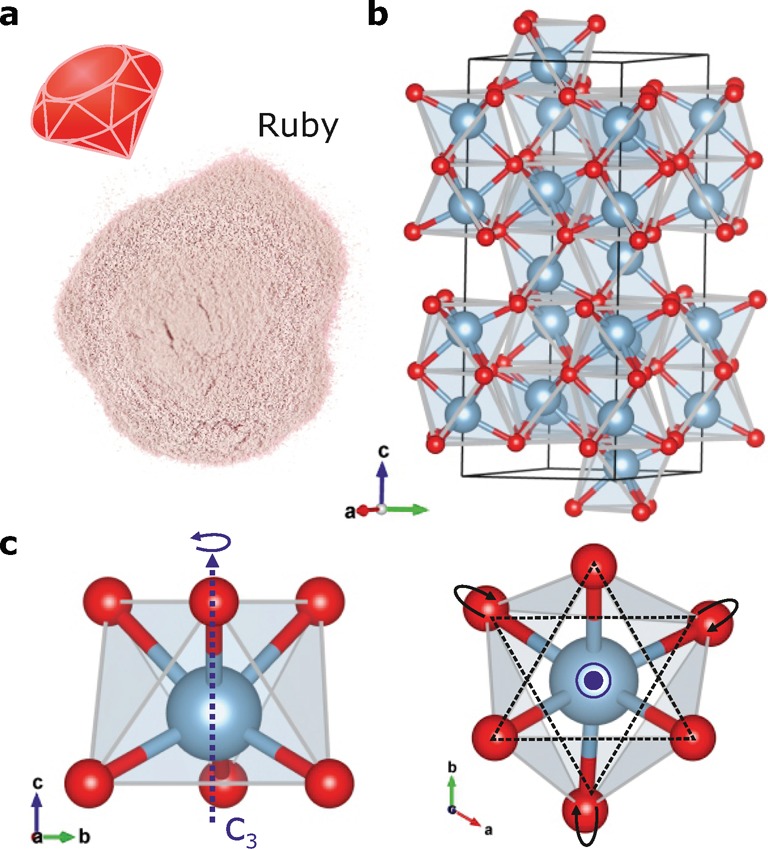
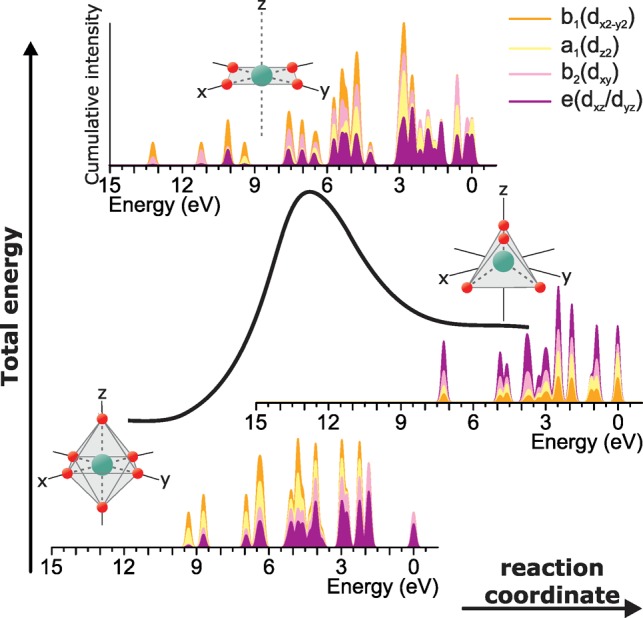
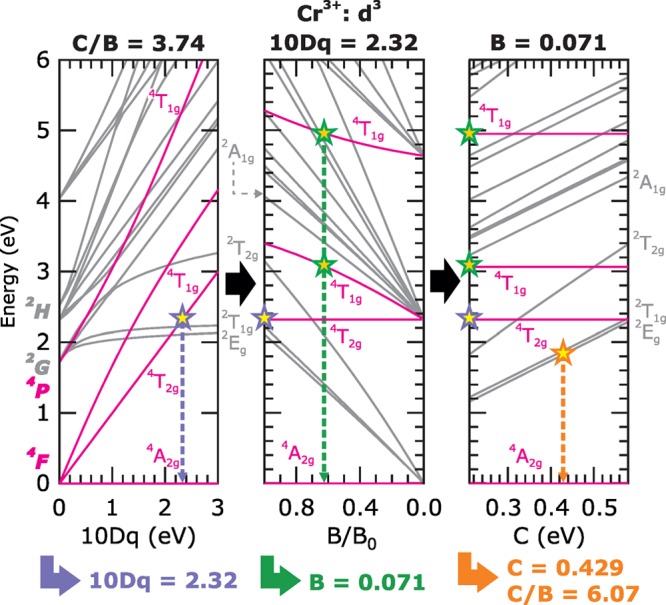
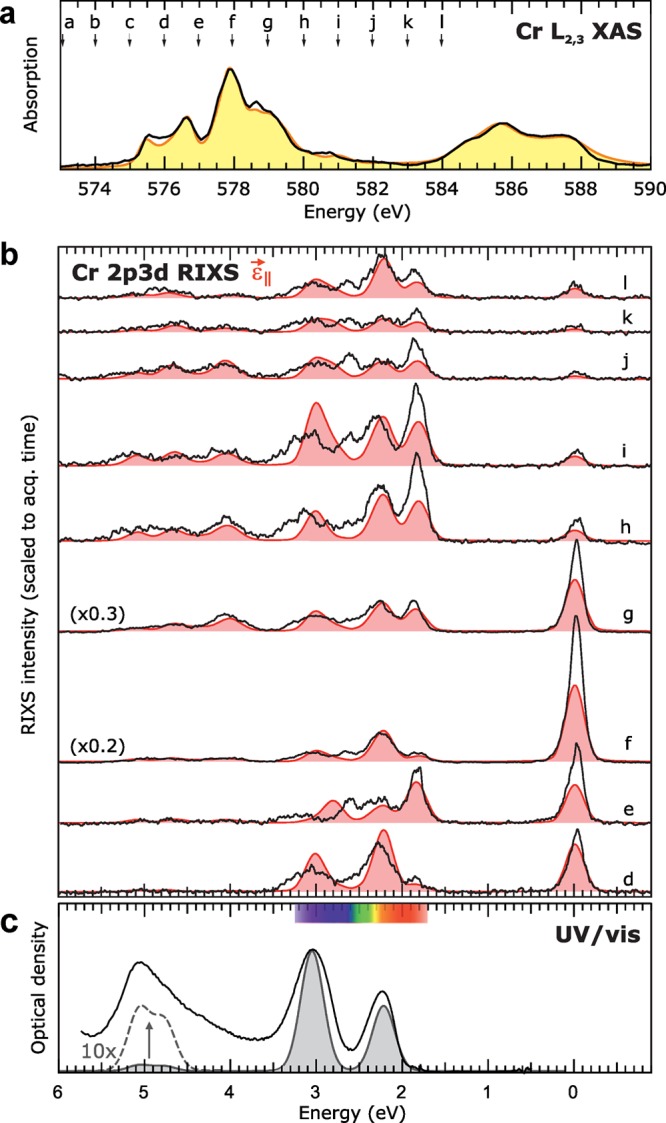
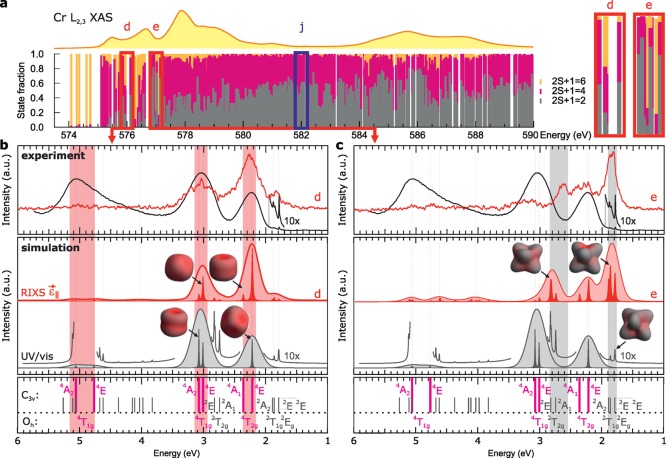
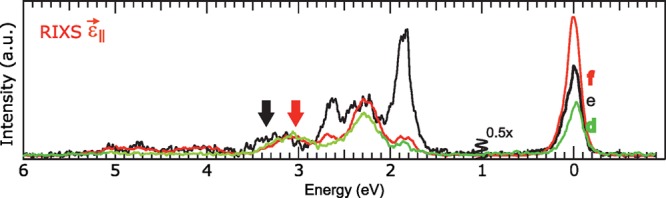
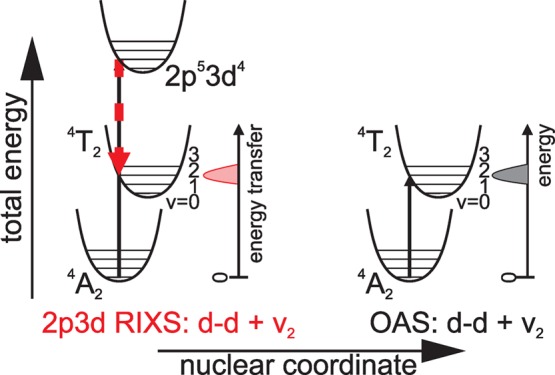
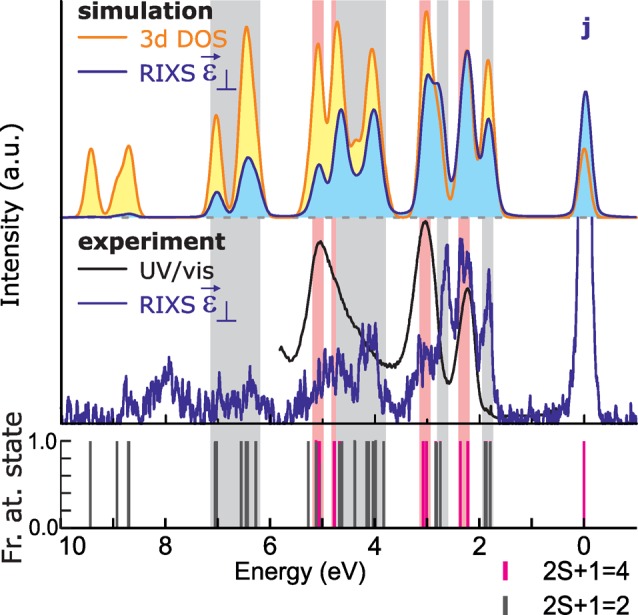
The role of transition metals in chemical reactions is often derived from probing the metal 3d states. However, the relation between metal site geometry and 3d electronic states, arising from multielectronic effects, makes the spectral data interpretation and modeling of these optical excited states a challenge. Here we show, using the well-known case of red ruby, that unique insights into the density of transition metal 3d excited states can be gained with 2p3d resonant inelastic X-ray scattering (RIXS). We compare the experimental determination of the 3d excited states of Cr impurities in AlO with 190 meV resolution 2p3d RIXS to optical absorption spectroscopy and to simulations. Using the crystal field multiplet theory, we calculate jointly for the first time the Cr multielectronic states, RIXS, and optical spectra based on a unique set of parameters. We demonstrate that (i) anisotropic 3d multielectronic interactions causes different scaling of Slater integrals, and (ii) a previously not observed doublet excited state exists around 3.35 eV. These results allow to discuss the influence of interferences in the RIXS intermediate state, of core-hole lifetime broadenings, and of selection rules on the RIXS intensities. Finally, our results demonstrate that using an intermediate excitation energy between L and L edges allows measurement of the density of 3d excited states as a fingerprint of the metal local structure. This opens up a new direction to pump-before-destroy investigations of transition metal complex structures and reaction mechanisms.
过渡金属在化学反应中的作用通常源于对金属3d态的探测。然而,由于多电子效应导致的金属位点几何结构与3d电子态之间的关系,使得对这些光学激发态的光谱数据解释和建模成为一项挑战。在此,我们以著名的红色红宝石为例表明,利用2p3d共振非弹性X射线散射(RIXS)可以获得对过渡金属3d激发态密度的独特见解。我们将Al₂O₃中Cr杂质的3d激发态以190 meV分辨率的2p3d RIXS实验测定结果与光吸收光谱及模拟结果进行比较。利用晶体场多重态理论,我们首次基于一组独特的参数联合计算了Cr的多电子态、RIXS和光谱。我们证明:(i)各向异性的3d多电子相互作用导致斯莱特积分的不同标度,以及(ii)在3.35 eV附近存在一个此前未观察到的双重激发态。这些结果有助于讨论RIXS中间态的干涉、芯孔寿命展宽以及选择规则对RIXS强度的影响。最后,我们的结果表明,使用L边和L₃边之间的中间激发能量能够测量3d激发态密度,作为金属局部结构的一个指纹。这为过渡金属络合物结构和反应机制的“泵浦-破坏前”研究开辟了一个新方向。