Department of Computer Science, University of Cádiz, Cádiz 11519, Spain.
Department of Computer Science, University of Jaén, Jaén 23071, Spain.
Sensors (Basel). 2018 Apr 14;18(4):1202. doi: 10.3390/s18041202.
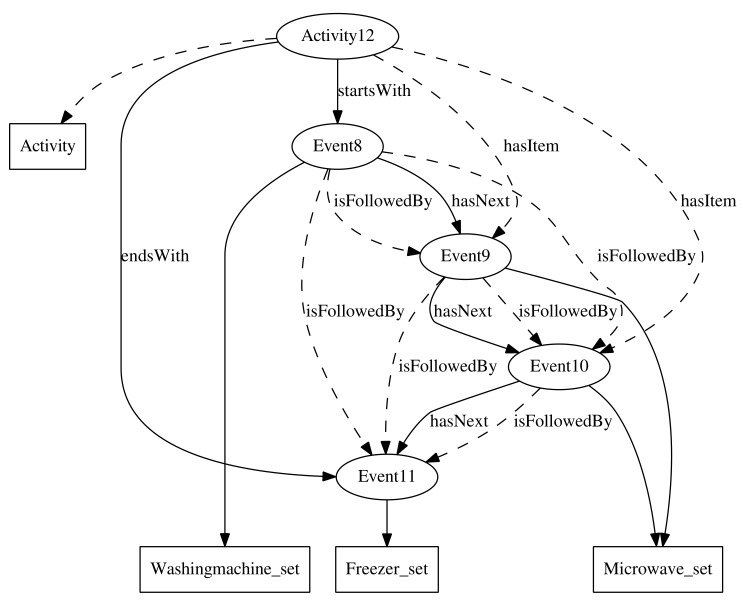
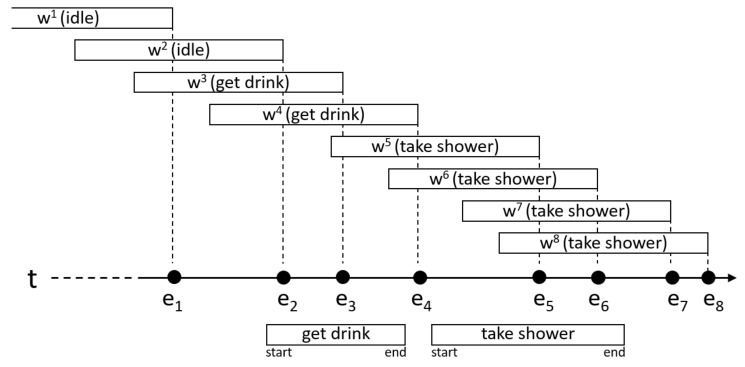
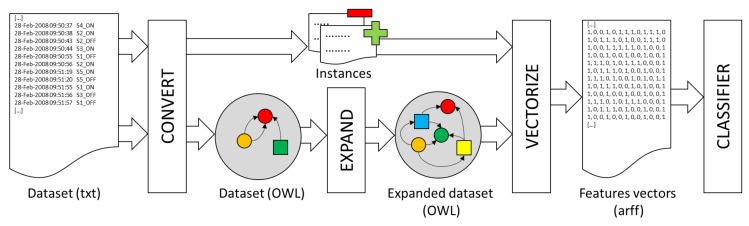
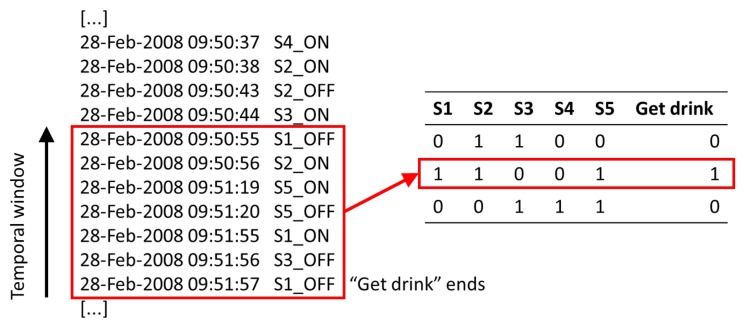
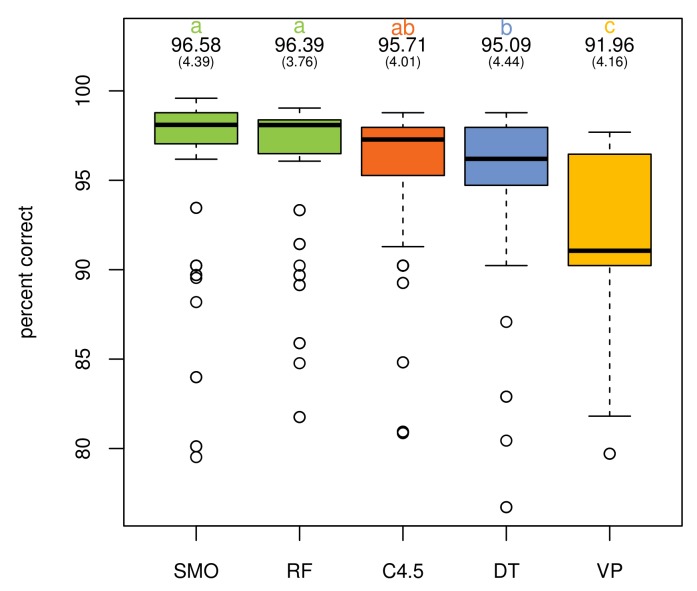
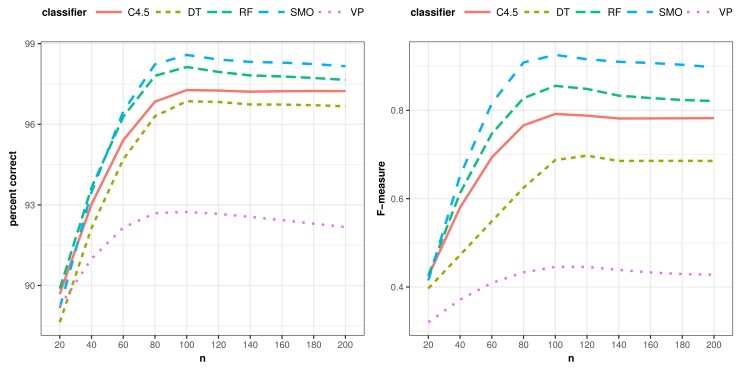
The recognition of activities of daily living is an important research area of interest in recent years. The process of activity recognition aims to recognize the actions of one or more people in a smart environment, in which a set of sensors has been deployed. Usually, all the events produced during each activity are taken into account to develop the classification models. However, the instant in which an activity started is unknown in a real environment. Therefore, only the most recent events are usually used. In this paper, we use statistics to determine the most appropriate length of that interval for each type of activity. In addition, we use ontologies to automatically generate features that serve as the input for the supervised learning algorithms that produce the classification model. The features are formed by combining the entities in the ontology, such as concepts and properties. The results obtained show a significant increase in the accuracy of the classification models generated with respect to the classical approach, in which only the state of the sensors is taken into account. Moreover, the results obtained in a simulation of a real environment under an event-based segmentation also show an improvement in most activities.
日常生活活动的识别是近年来一个重要的研究领域。活动识别的过程旨在识别智能环境中一个或多个人的动作,其中已经部署了一组传感器。通常,为了开发分类模型,会考虑在每个活动中产生的所有事件。然而,在实际环境中,活动开始的瞬间是未知的。因此,通常只使用最近的事件。在本文中,我们使用统计数据来确定每种活动的最合适的间隔长度。此外,我们使用本体自动生成特征,作为产生分类模型的监督学习算法的输入。这些特征是通过组合本体中的实体(如概念和属性)形成的。结果表明,与仅考虑传感器状态的经典方法相比,生成的分类模型的准确性有了显著提高。此外,在基于事件分割的真实环境模拟中得到的结果也表明,大多数活动的性能都有所提高。