Department of Cell Regeneration and Advanced Therapies, Andalusian Center for Molecular Biology and Regenerative Medicine-CABIMER, Junta de Andalucia-University of Pablo de Olavide-University of Seville-CSIC, Seville, 41092, Spain.
Unidad de Gestión Clínica Intercentros de Endocrinología y Nutrición, Instituto de Investigación Biomédica de Málaga (IBIMA) Hospital Regional Universitario de Málaga, Universidad de Málaga, Málaga, 29010, Spain.
Nat Commun. 2018 Apr 16;9(1):1488. doi: 10.1038/s41467-018-03943-0.
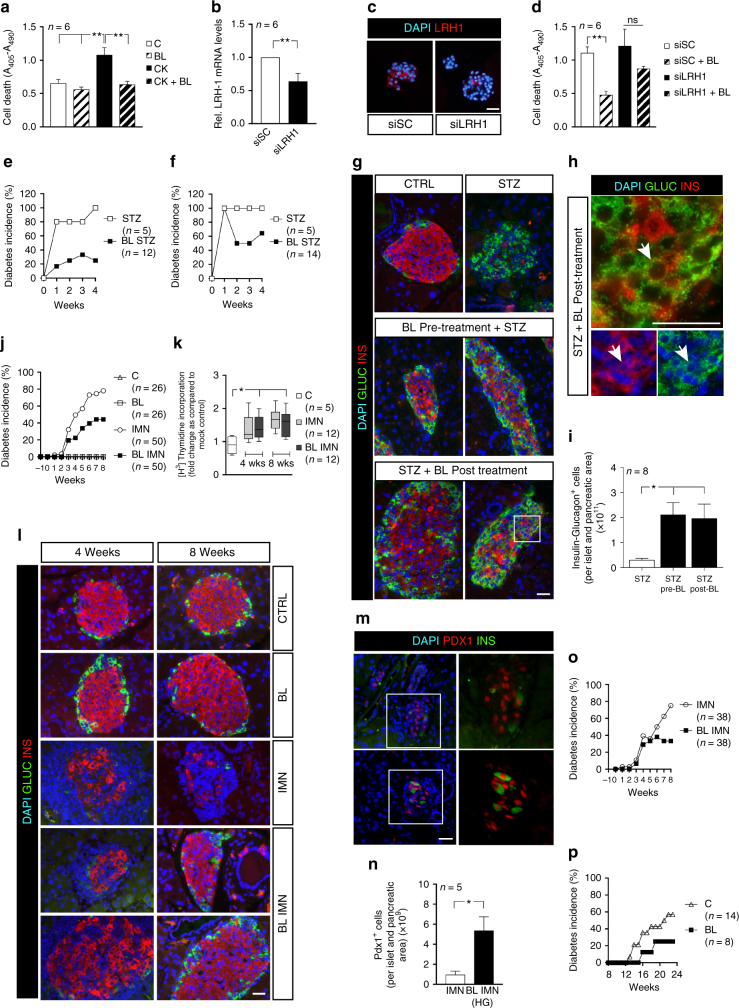
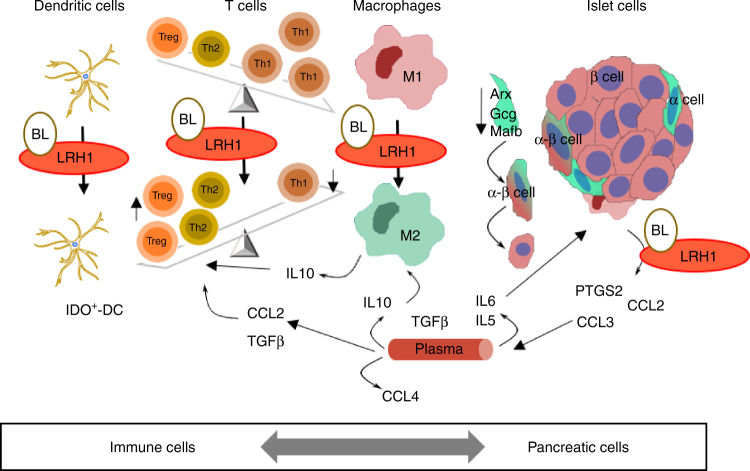
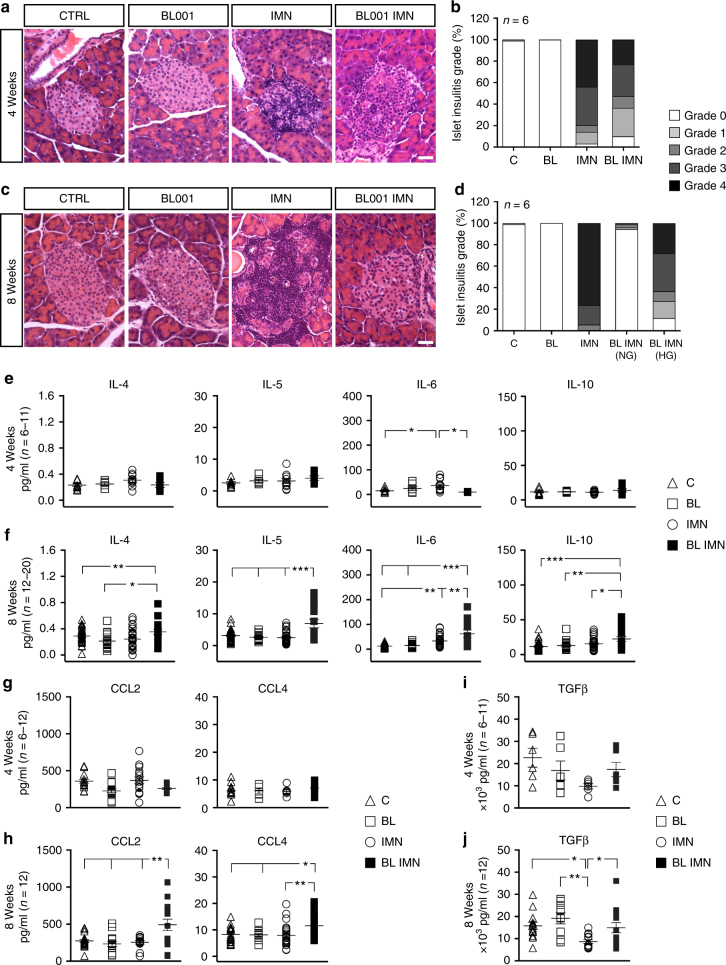
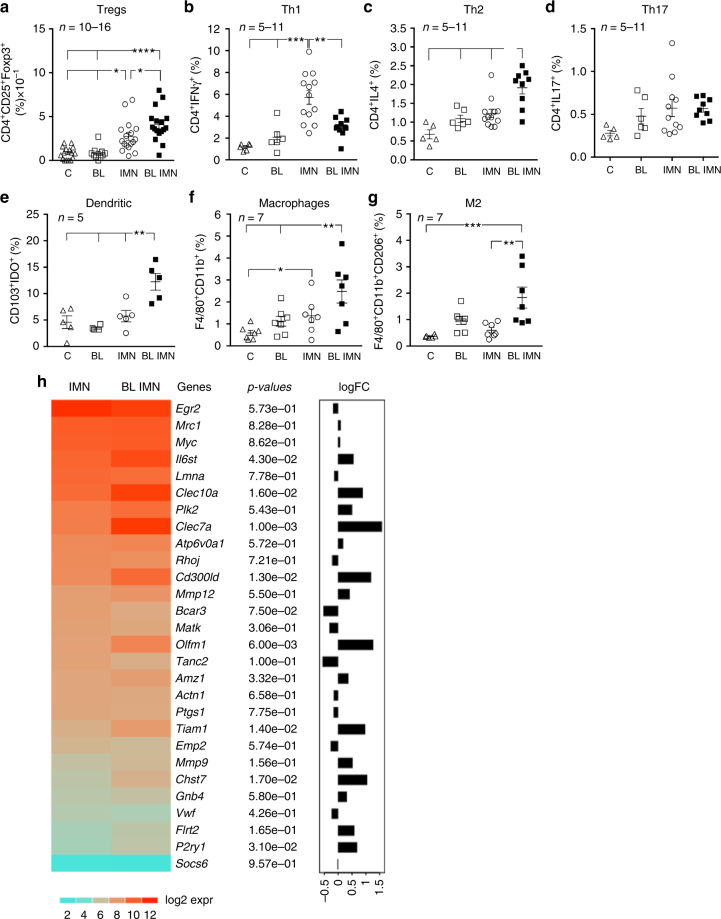
Type 1 diabetes mellitus (T1DM) is due to the selective destruction of islet beta cells by immune cells. Current therapies focused on repressing the immune attack or stimulating beta cell regeneration still have limited clinical efficacy. Therefore, it is timely to identify innovative targets to dampen the immune process, while promoting beta cell survival and function. Liver receptor homologue-1 (LRH-1) is a nuclear receptor that represses inflammation in digestive organs, and protects pancreatic islets against apoptosis. Here, we show that BL001, a small LRH-1 agonist, impedes hyperglycemia progression and the immune-dependent inflammation of pancreas in murine models of T1DM, and beta cell apoptosis in islets of type 2 diabetic patients, while increasing beta cell mass and insulin secretion. Thus, we suggest that LRH-1 agonism favors a dialogue between immune and islet cells, which could be druggable to protect against diabetes mellitus.
1 型糖尿病(T1DM)是由于免疫细胞选择性破坏胰岛β细胞所致。目前的治疗方法主要集中在抑制免疫攻击或刺激β细胞再生,但临床疗效仍有限。因此,及时确定创新的靶点以抑制免疫过程,同时促进β细胞的存活和功能是十分必要的。肝受体同系物-1(LRH-1)是一种核受体,可抑制消化道炎症,并保护胰岛抵抗细胞凋亡。在这里,我们发现,小分子 LRH-1 激动剂 BL001 可阻碍 T1DM 小鼠模型中高血糖的进展和免疫依赖性胰腺炎症,以及 2 型糖尿病患者胰岛中β细胞的凋亡,同时增加β细胞的质量和胰岛素的分泌。因此,我们认为 LRH-1 激动剂有利于免疫和胰岛细胞之间的对话,这可能成为一种有潜力的治疗方法,以预防糖尿病。