Department of Genetics and Genome Biology, University of Leicester, Leicester, UK.
Department of Infection, Immunity and Inflammation, University of Leicester, Leicester, UK.
Nat Microbiol. 2018 May;3(5):600-610. doi: 10.1038/s41564-018-0147-1. Epub 2018 Apr 16.
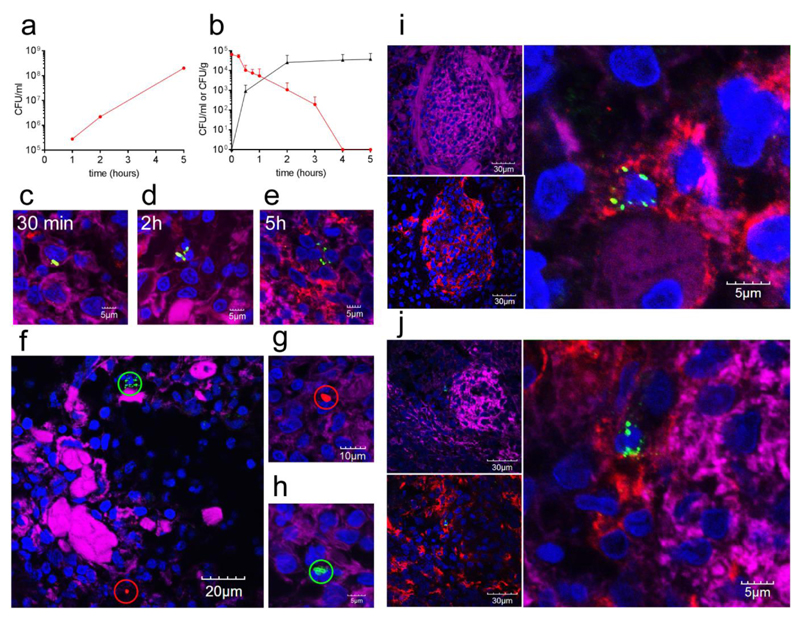
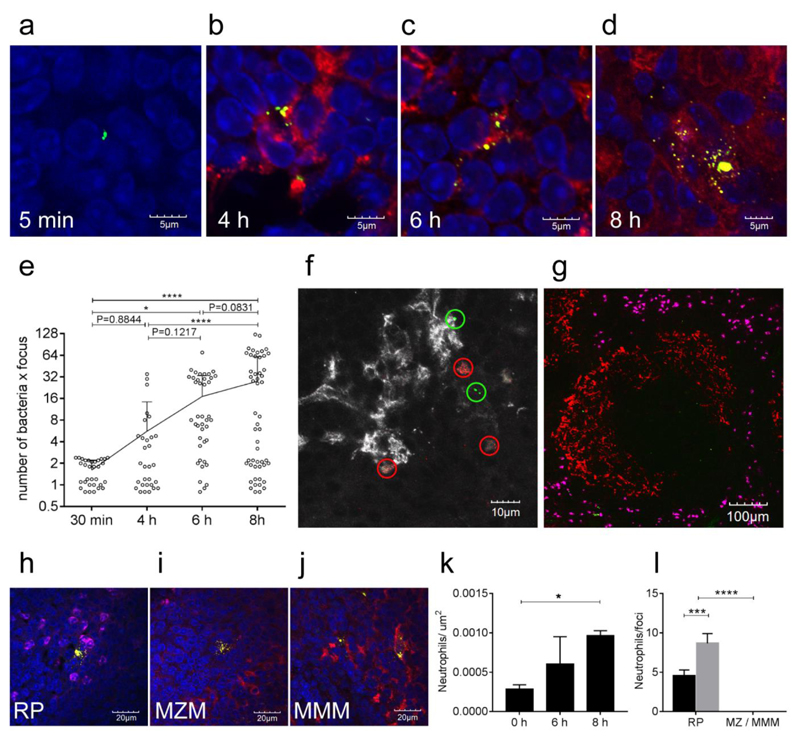
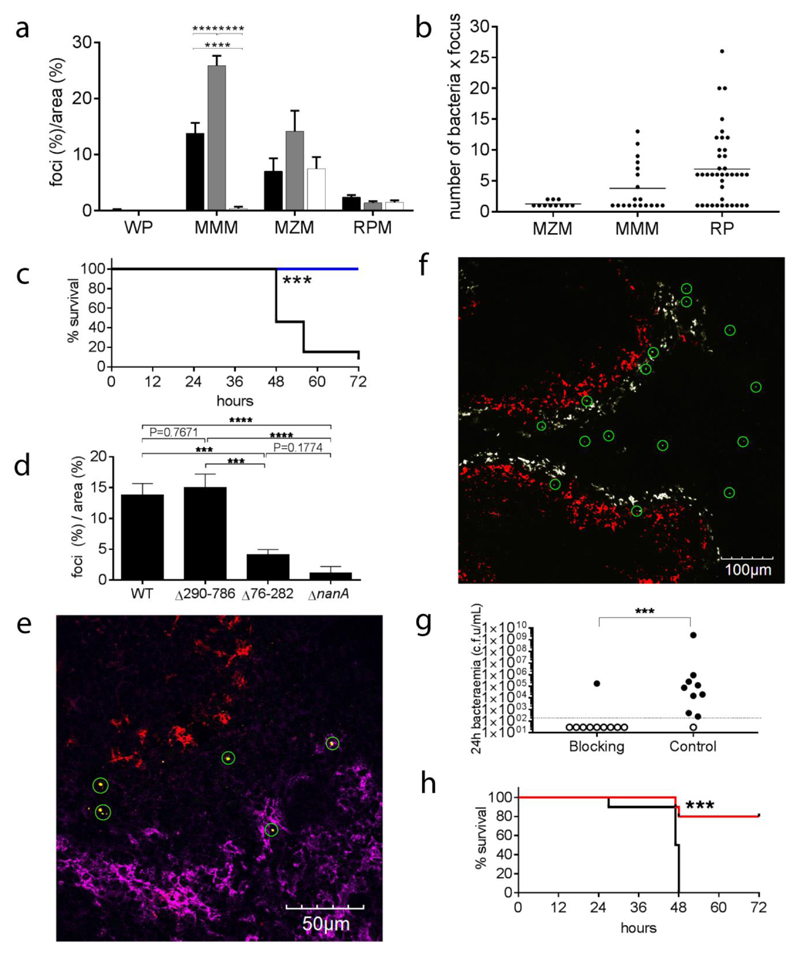
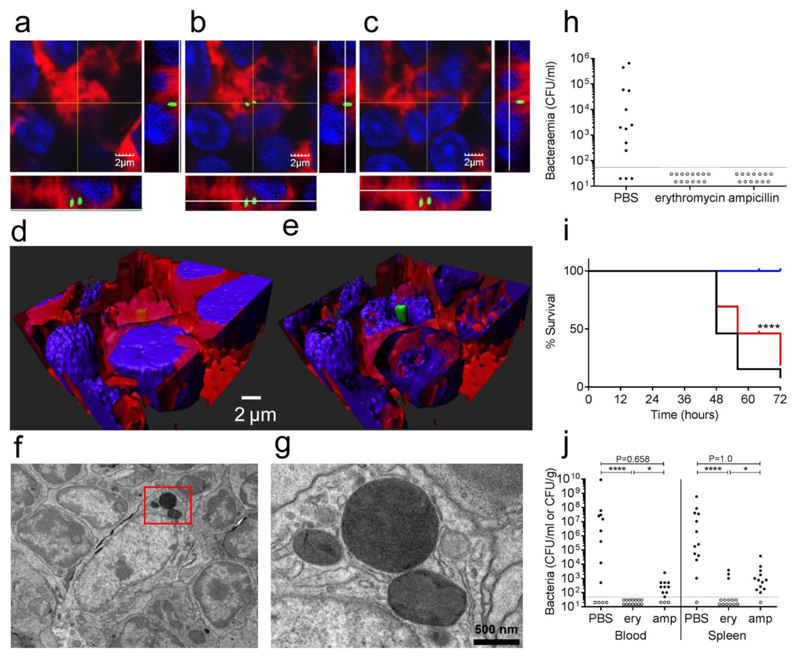
Bacterial septicaemia is a major cause of mortality, but its pathogenesis remains poorly understood. In experimental pneumococcal murine intravenous infection, an initial reduction of bacteria in the blood is followed hours later by a fatal septicaemia. These events represent a population bottleneck driven by efficient clearance of pneumococci by splenic macrophages and neutrophils, but as we show in this study, accompanied by occasional intracellular replication of bacteria that are taken up by a subset of CD169 splenic macrophages. In this model, proliferation of these sequestered bacteria provides a reservoir for dissemination of pneumococci into the bloodstream, as demonstrated by its prevention using an anti-CD169 monoclonal antibody treatment. Intracellular replication of pneumococci within CD169 splenic macrophages was also observed in an ex vivo porcine spleen, where the microanatomy is comparable with humans. We also showed that macrolides, which effectively penetrate macrophages, prevented septicaemia, whereas beta-lactams, with inefficient intracellular penetration, failed to prevent dissemination to the blood. Our findings define a shift in our understanding of the pneumococcus from an exclusively extracellular pathogen to one with an intracellular phase. These findings open the door to the development of treatments that target this early, previously unrecognized intracellular phase of bacterial sepsis.
细菌性败血症是导致死亡的主要原因,但发病机制仍不清楚。在实验性肺炎球菌小鼠静脉感染中,血液中的细菌最初会减少,数小时后会发生致命的败血症。这些事件代表了由脾巨噬细胞和中性粒细胞有效清除肺炎球菌驱动的群体瓶颈,但正如我们在本研究中所示,这伴随着被一部分 CD169 脾巨噬细胞摄取的细菌偶尔发生的细胞内复制。在这种模型中,这些被隔离的细菌的增殖为肺炎球菌传播到血液中提供了一个蓄水池,这可以通过使用抗 CD169 单克隆抗体治疗来预防。在与人类相似的体外猪脾脏中也观察到 CD169 脾巨噬细胞内肺炎球菌的细胞内复制。我们还表明,能够有效穿透巨噬细胞的大环内酯类药物可预防败血症,而β-内酰胺类药物(细胞内穿透效率低下)无法预防向血液传播。我们的发现将人们对肺炎球菌的理解从一种完全的细胞外病原体转变为一种具有细胞内阶段的病原体。这些发现为开发针对这种早期、以前未被认识的细菌败血症细胞内阶段的治疗方法打开了大门。