Department of Genetics and Genome Biology, University of Leicester, Leicester, UK.
Department of Hepatobiliary and Pancreatic Surgery, University Hospitals of Leicester, Leicester, UK.
EBioMedicine. 2021 Oct;72:103601. doi: 10.1016/j.ebiom.2021.103601. Epub 2021 Oct 4.
Severe community-acquired pneumococcal pneumonia is commonly associated with bacteraemia. Although it is assumed that the bacteraemia solely derives from pneumococci entering the blood from the lungs it is unknown if other organs are important in the pathogenesis of bacteraemia. Using three models, we tested the relevance of the spleen in pneumonia-associated bacteraemia.
We used human spleens perfused ex vivo to explore permissiveness to bacterial replication, a non-human primate model to check for splenic involvement during pneumonia and a mouse pneumonia-bacteraemia model to demonstrate that splenic involvement correlates with invasive disease.
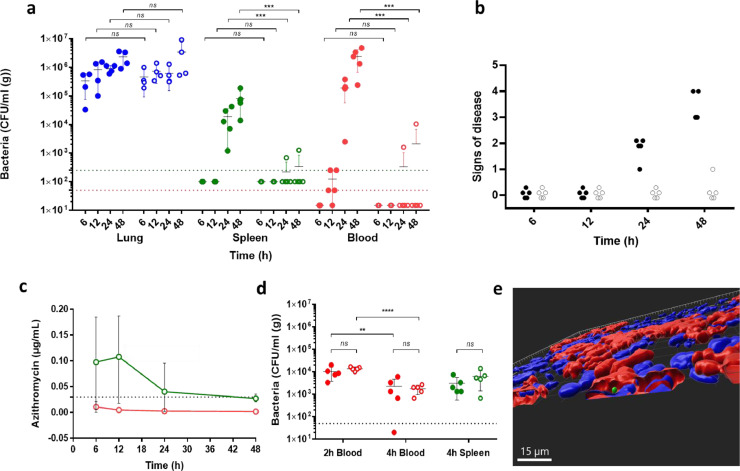
Here we present evidence that the spleen is the reservoir of bacteraemia during pneumonia. We found that in the human spleen infected with pneumococci, clusters with increasing number of bacteria were detectable within macrophages. These clusters also were detected in non-human primates. When intranasally infected mice were treated with a non-therapeutic dose of azithromycin, which had no effect on pneumonia but concentrated inside splenic macrophages, bacteria were absent from the spleen and blood and importantly mice had no signs of disease.
We conclude that the bacterial load in the spleen, and not lung, correlates with the occurrence of bacteraemia. This supports the hypothesis that the spleen, and not the lungs, is the major source of bacteria during systemic infection associated with pneumococcal pneumonia; a finding that provides a mechanistic basis for using combination therapies including macrolides in the treatment of severe community-acquired pneumococcal pneumonia.
Oxford University, Wolfson Foundation, MRC, NIH, NIHR, and MRC and BBSRC studentships supported the work.
严重社区获得性肺炎常伴有菌血症。虽然人们认为菌血症仅源自于肺部的肺炎球菌进入血液,但尚不清楚其他器官在菌血症发病机制中是否重要。本研究使用三种模型,检测了脾脏在肺炎相关菌血症中的作用。
我们使用体外灌注的人类脾脏来探索细菌复制的易感性,使用非人类灵长类动物模型来检查肺炎期间脾脏的受累情况,使用肺炎-菌血症小鼠模型来证明脾脏受累与侵袭性疾病相关。
本研究提供了脾脏是肺炎期间菌血症储库的证据。我们发现,在感染肺炎球菌的人类脾脏中,巨噬细胞内可检测到数量不断增加的细菌簇。这些簇也在非人类灵长类动物中被检测到。当经鼻腔感染的小鼠用非治疗剂量的阿奇霉素治疗时,该药物对肺炎没有影响,但集中在脾脏巨噬细胞内,细菌从脾脏和血液中消失,重要的是,小鼠没有疾病迹象。
脾脏而不是肺部的细菌负荷与菌血症的发生相关。这支持了这样一种假说,即脾脏而不是肺部是与肺炎球菌性肺炎相关的全身感染中细菌的主要来源;这一发现为使用包括大环内酯类药物在内的联合疗法治疗严重社区获得性肺炎球菌性肺炎提供了机制基础。
牛津大学、沃尔夫森基金会、MRC、NIH、NIHR、MRC 和 BBSRC 学生奖学金支持了这项工作。