Ryan Matthew R, Crews Timothy E, Culman Steven W, DeHaan Lee R, Hayes Richard C, Jungers Jacob M, Bakker Matthew G
School of Integrative Plant Science, Cornell University, Ithaca, New York.
Research and lead scientist of the Ecology Program.
Bioscience. 2018 Apr 1;68(4):294-304. doi: 10.1093/biosci/biy014. Epub 2018 Mar 21.
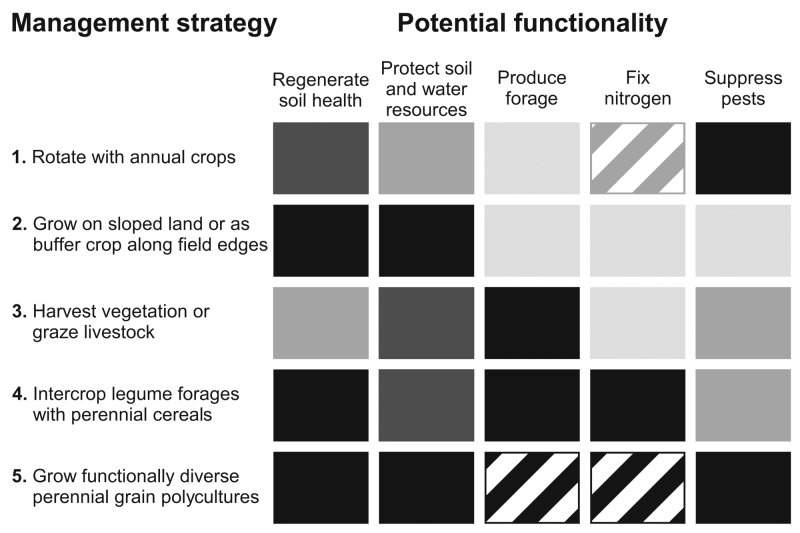
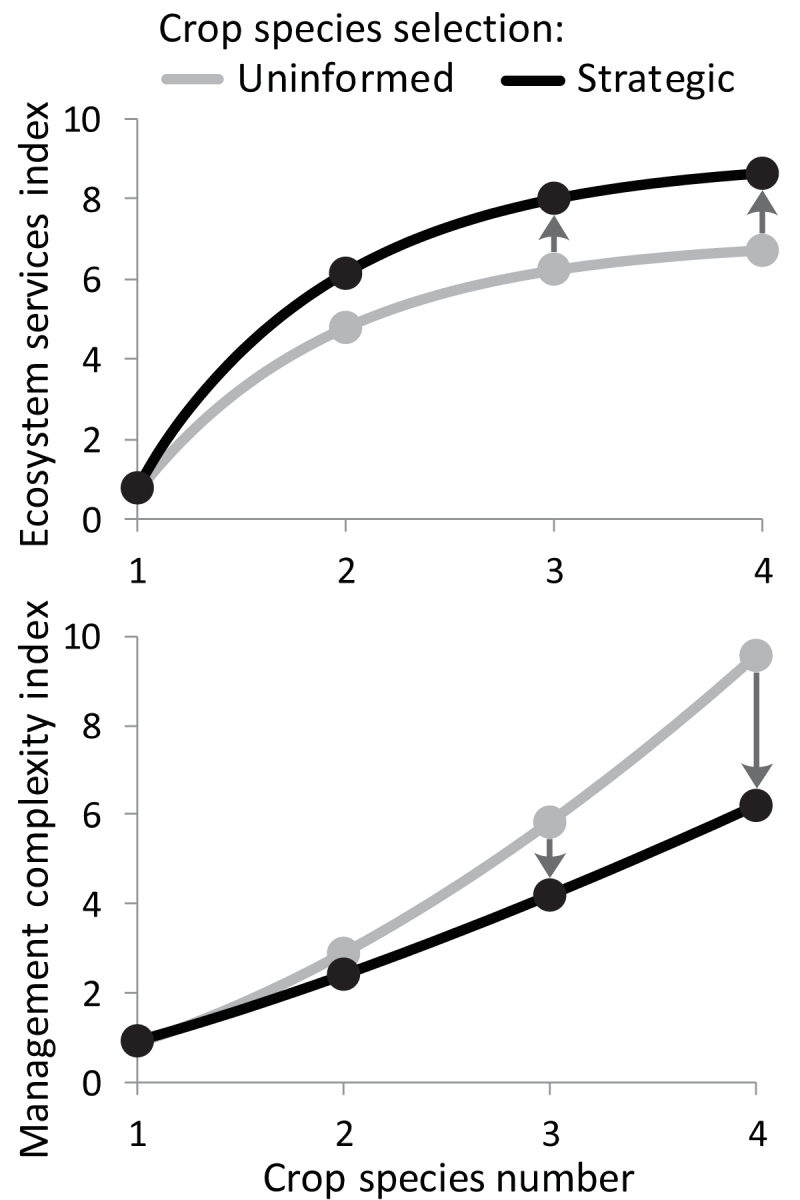
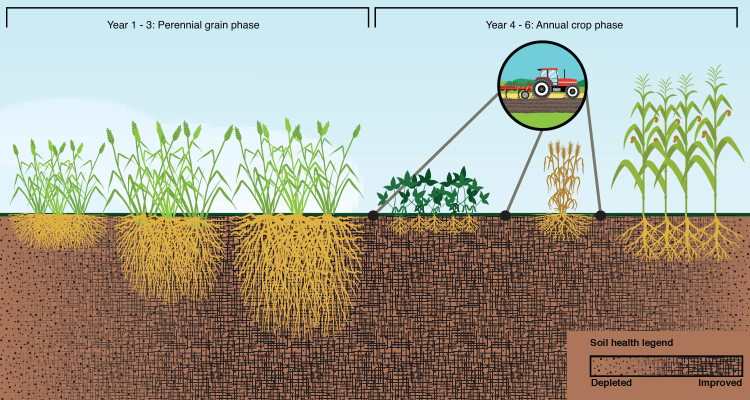
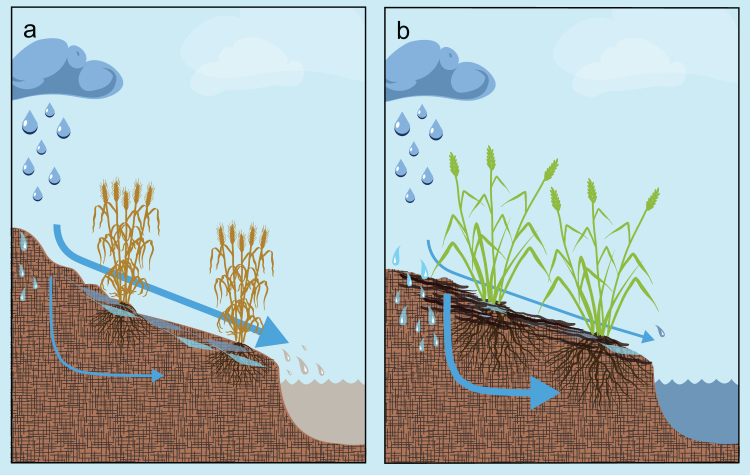
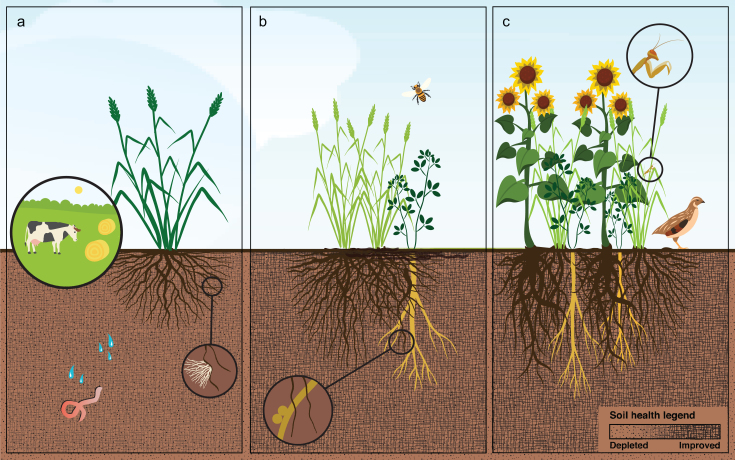
Plant breeders are increasing yields and improving agronomic traits in several perennial grain crops, the first of which is now being incorporated into commercial food products. Integration strategies and management guidelines are needed to optimize production of these new crops, which differ substantially from both annual grain crops and perennial forages. To offset relatively low grain yields, perennial grain cropping systems should be multifunctional. Growing perennial grains for several years to regenerate soil health before rotating to annual crops and growing perennial grains on sloped land and ecologically sensitive areas to reduce soil erosion and nutrient losses are two strategies that can provide ecosystem services and support multifunctionality. Several perennial cereals can be used to produce both grain and forage, and these dual-purpose crops can be intercropped with legumes for additional benefits. Highly diverse perennial grain polycultures can further enhance ecosystem services, but increased management complexity might limit their adoption.
植物育种家正在提高几种多年生谷物作物的产量并改善其农艺性状,其中第一种现已被纳入商业食品中。需要整合策略和管理指南来优化这些新作物的生产,这些新作物与一年生谷物作物和多年生牧草都有很大不同。为了弥补相对较低的谷物产量,多年生谷物种植系统应该具有多功能性。在轮作一年生作物之前种植多年生谷物数年以恢复土壤健康,以及在坡地和生态敏感地区种植多年生谷物以减少土壤侵蚀和养分流失,这两种策略可以提供生态系统服务并支持多功能性。几种多年生谷物可以用来生产谷物和饲料,这些两用作物可以与豆类间作以获得更多益处。高度多样化的多年生谷物混作可以进一步增强生态系统服务,但管理复杂性的增加可能会限制它们的采用。