Department of Rheumatology and Clinical Immunology, University of Groningen and University Medical Center Groningen, Groningen, Netherlands.
Department of Clinical Immunology and Rheumatology, Academic Medical Center and University of Amsterdam, Amsterdam, Netherlands.
Front Immunol. 2018 Mar 12;9:491. doi: 10.3389/fimmu.2018.00491. eCollection 2018.
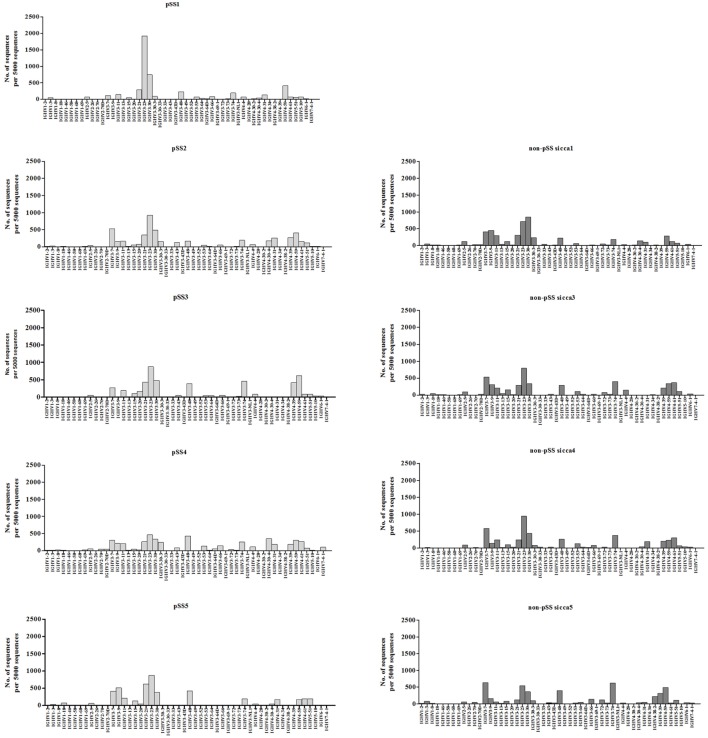
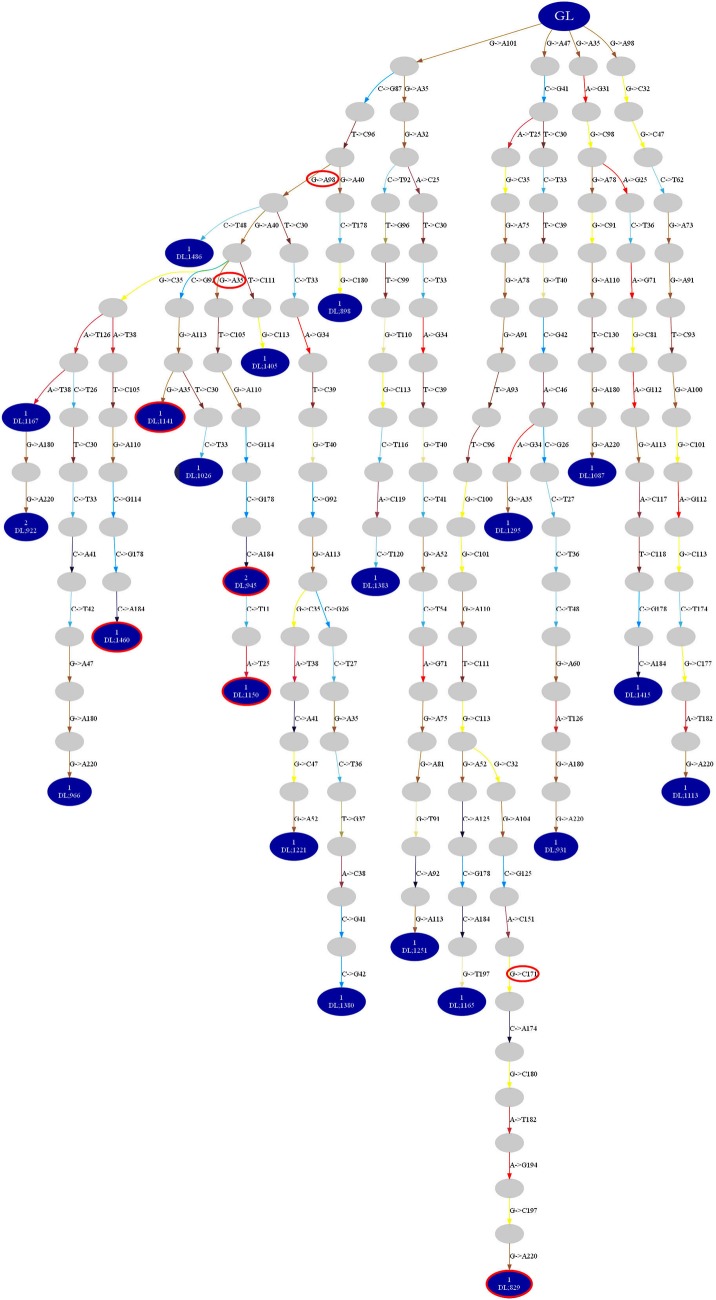
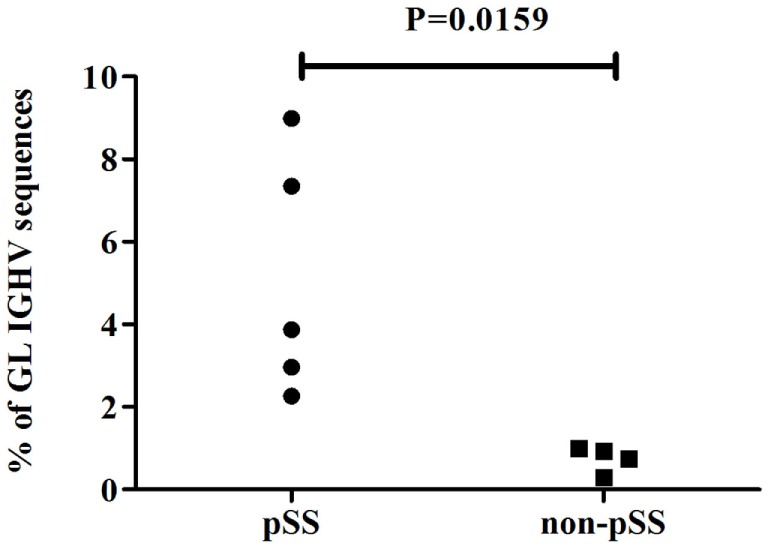
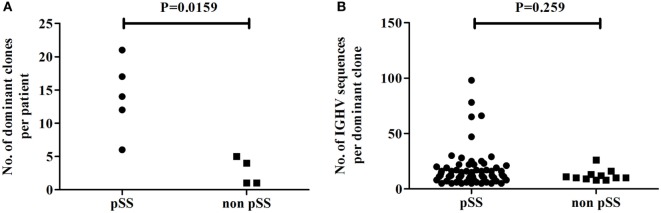
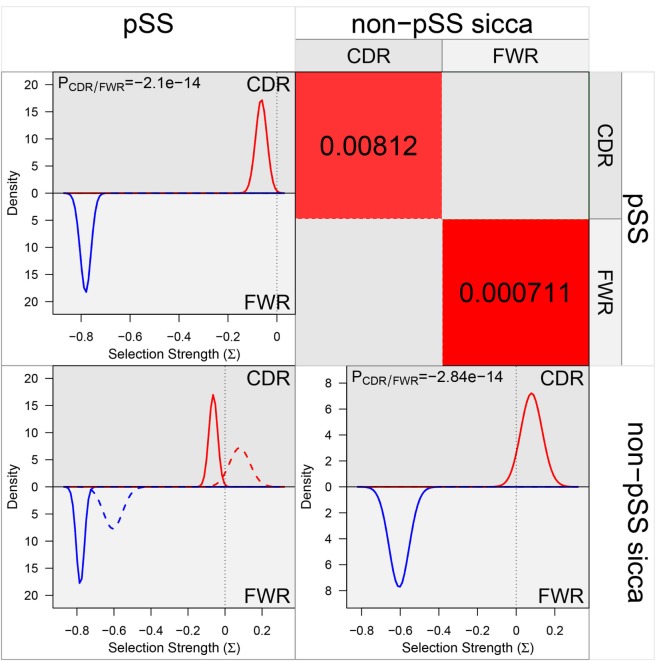
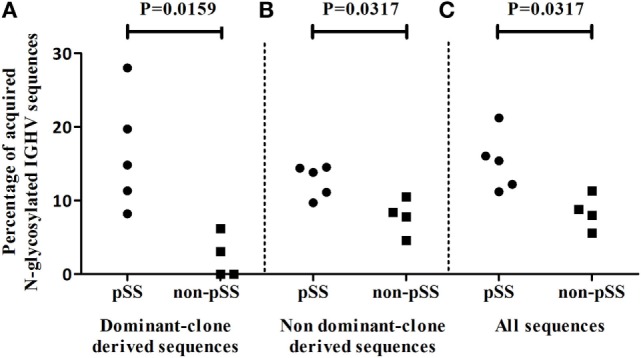
Previous studies revealed high incidence of acquired N-glycosylation sites acquired N-glycosylation sites in RNA transcripts encoding immunoglobulin heavy variable region (IGHV) 3 genes from parotid glands of primary Sjögren's syndrome (pSS) patients. In this study, next generation sequencing was used to study the extent of ac-Nglycs among clonally expanded cells from all IGVH families in the salivary glands of pSS patients. RNA was isolated from parotid gland biopsies of five pSS patients and five non-pSS sicca controls. IGHV sequences covering all functional IGHV genes were amplified, sequenced, and analyzed. Each biopsy recovered 1,800-4,000 unique IGHV sequences. No difference in IGHV gene usage was observed between pSS and non-pSS sequences. Clonally related sequences with more than 0.3% of the total number of sequences per patient were referred to as dominant clone. Overall, 70 dominant clones were found in pSS biopsies, compared to 15 in non-pSS. No difference in percentage mutation in dominant clone-derived IGHV sequences was seen between pSS and non-pSS. In pSS, no evidence for antigen-driven selection in dominant clones was found. We observed a significantly higher amount of ac-Nglycs among pSS dominant clone-derived sequences compared to non-pSS. Ac-Nglycs were, however, not restricted to dominant clones or IGHV gene. Most ac-Nglycs were detected in the framework 3 region. No stereotypic rheumatoid factor rearrangements were found in dominant clones. Lineage tree analysis showed in four pSS patients, but not in non-pSS, the presence of the germline sequence from a dominant clone. Presence of germline sequence and mutated IGHV sequences in the same dominant clone provide evidence that this clone originated from a naïve B-cell recruited into the parotid gland to expand and differentiate locally into plasma cells. The increased presence of ac-Nglycs in IGHV sequences, due to somatic hypermutation, might provide B-cells an escape mechanism to survive during immune response. We speculate that glycosylation of the B-cell receptor makes the cell sensitive to environmental lectin signals to contribute to aberrant B-cell selection in pSS parotid glands.
先前的研究表明,原发性干燥综合征 (pSS) 患者腮腺中免疫球蛋白重可变区 (IGHV) 3 基因编码的 RNA 转录本中存在高发生率的获得性 N-糖基化位点。在这项研究中,使用下一代测序技术研究了 pSS 患者唾液腺中所有 IGVH 家族克隆扩增细胞中 ac-Nglycs 的程度。从五名 pSS 患者和五名非 pSS 干燥对照的腮腺活检中分离 RNA。扩增、测序和分析涵盖所有功能 IGHV 基因的 IGHV 序列。每个活检都回收了 1800-4000 个独特的 IGHV 序列。在 pSS 和非 pSS 序列之间没有观察到 IGHV 基因使用的差异。每个患者的总序列数超过 0.3%的克隆相关序列被称为优势克隆。总体而言,在 pSS 活检中发现了 70 个优势克隆,而非 pSS 中则发现了 15 个。在 pSS 和非 pSS 中,优势克隆衍生的 IGHV 序列的突变百分比没有差异。在 pSS 中,没有发现优势克隆中存在抗原驱动的选择证据。与非 pSS 相比,我们在 pSS 优势克隆衍生序列中观察到更高量的 ac-Nglycs。然而,ac-Nglycs 不仅限于优势克隆或 IGHV 基因。大多数 ac-Nglycs 检测到框架 3 区域。在优势克隆中未发现典型的类风湿因子重排。谱系树分析显示,在四名 pSS 患者中,但在非 pSS 中,存在来自优势克隆的胚系序列。在同一优势克隆中存在胚系序列和突变的 IGHV 序列,为该克隆源自募集到腮腺中进行局部扩增和分化为浆细胞的幼稚 B 细胞提供了证据。由于体细胞超突变,IGHV 序列中 ac-Nglycs 的增加可能为 B 细胞提供了一种逃避机制,使其在免疫反应期间存活下来。我们推测 B 细胞受体的糖基化使细胞对环境凝集素信号敏感,有助于 pSS 腮腺中异常 B 细胞的选择。