Department of Pathogenic Biology and Immunology, Medical School of Southeast University, Nanjing, Jiangsu, China.
Department of Colorectal Surgery, Jiangyin People's Hospital affiliated to Southeast University, Jiangyin, Jiangsu, China.
Sci Rep. 2018 Apr 17;8(1):6076. doi: 10.1038/s41598-018-24306-1.
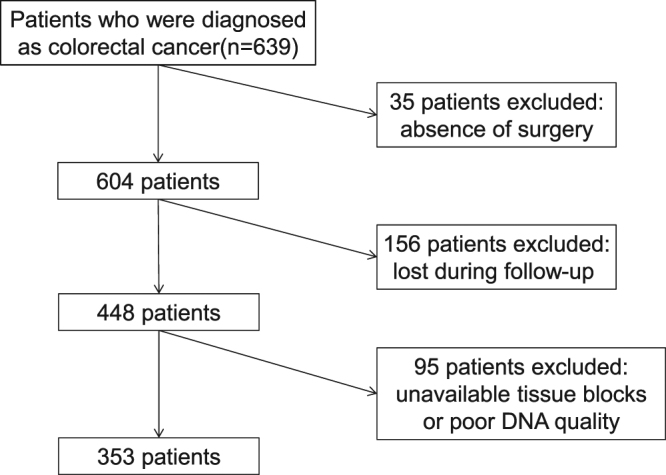
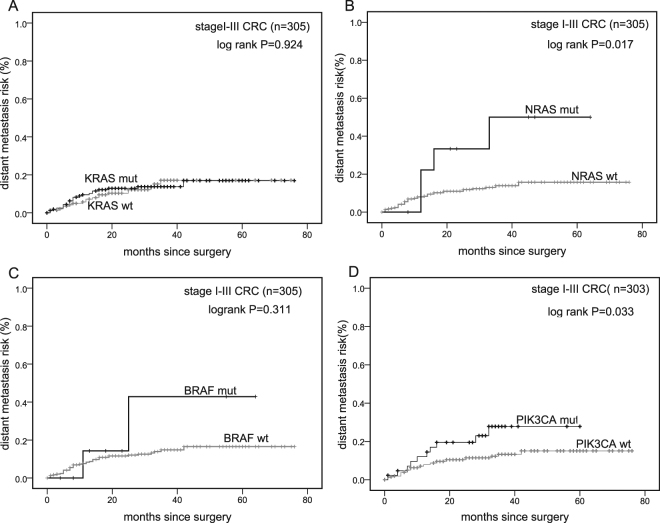
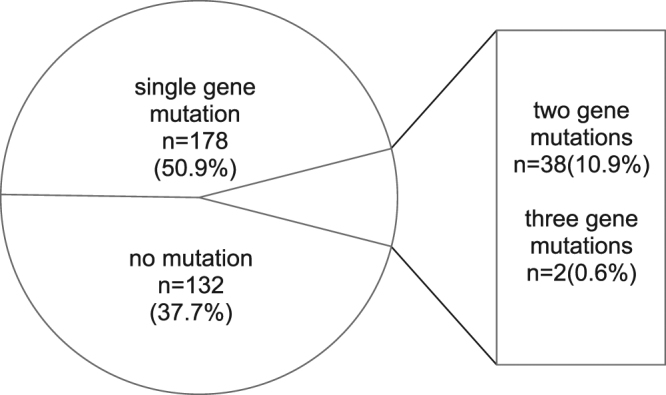
Mutations in KRAS exon 2, BRAF and PIK3CA are commonly present in colorectal cancer (CRC) worldwide, but few data about RAS mutations outside KRAS exon 2 are available for Chinese CRCs. We, therefore, determined the mutation frequencies and prognostic values of KRAS exon 2, 3 and 4, NRAS exon 2 and 3, PIK3CA exon 9 and 20, and BRAF exon 15 by PCR and direct sequencing in 353 CRC patients from two Chinese clinical centers. KRAS exon 2, BRAF, PIK3CA mutations were identified in 42.2%, 4.5%, 12.3% of the cases, respectively. We found "rare mutations" in RAS genes in nearly 14% of CRCs-i.e., in almost a quarter (24.0%) of KRAS exon 2 wild type CRCs, including 2.3% in KRAS exon 3, 8.2% in KRAS exon 4 and 3.4% in NRAS. Stage I-III patients with PIK3CA or NRAS mutations developed more distant metastases (3-year risk in PIK3CA mutated and wild type patients: 23.3% vs 11.5%, P = 0.03; multivariate Hazard ratio (HR) = 3.129, P = 0.003; 3-year risk in NRAS mutated and wild type patients: 40.0% vs 12.2%, P = 0.012; multivariate HR = 5.152, P = 0.003). Our data emphasizes the importance of these novel molecular features in CRCs.
KRAS 外显子 2、BRAF 和 PIK3CA 的突变在全球范围内常见于结直肠癌 (CRC),但有关中国 CRC 中 KRAS 外显子 2 以外的 RAS 突变的数据较少。因此,我们通过聚合酶链反应和直接测序,在中国两个临床中心的 353 例 CRC 患者中,确定了 KRAS 外显子 2、3 和 4、NRAS 外显子 2 和 3、PIK3CA 外显子 9 和 20 以及 BRAF 外显子 15 的突变频率和预后价值。KRAS 外显子 2、BRAF、PIK3CA 突变分别在 42.2%、4.5%和 12.3%的病例中被发现。我们在近 14%的 CRC 中发现了 RAS 基因的“罕见突变”,即在近四分之一(24.0%)的 KRAS 外显子 2 野生型 CRC 中,包括 2.3%的 KRAS 外显子 3、8.2%的 KRAS 外显子 4 和 3.4%的 NRAS。PIK3CA 或 NRAS 突变的 I-III 期患者发生更远处转移的风险更高(PIK3CA 突变和野生型患者的 3 年风险分别为 23.3%和 11.5%,P=0.03;多变量危险比(HR)分别为 3.129,P=0.003;NRAS 突变和野生型患者的 3 年风险分别为 40.0%和 12.2%,P=0.012;多变量 HR 分别为 5.152,P=0.003)。我们的数据强调了这些新的分子特征在 CRC 中的重要性。