Gomel State Medical University, 5 Lange Street, 246050, Gomel, Belarus.
Mozyr Central City polyclinic, 14a Kotlovtsa Street, 247760, Mozyr, Belarus.
Arch Osteoporos. 2018 Apr 17;13(1):42. doi: 10.1007/s11657-018-0454-4.
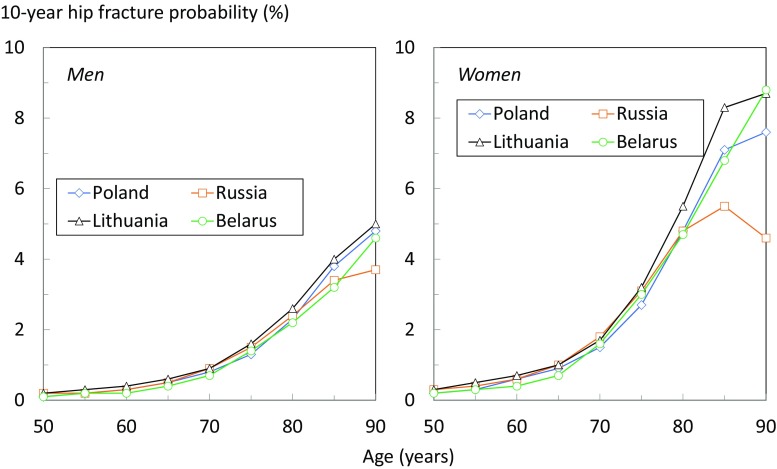
Fracture probabilities resulting from the newly generated FRAX model for Belarus based on regional estimates of the hip fracture incidence were compared with FRAX models of neighboring countries. Differences between the country-specific FRAX patterns and the rank orders of fracture probabilities were modest.
This paper describes the epidemiology of hip fractures in Belarus that was used to develop the country-specific fracture prediction FRAX® tool and illustrates its features compared to models for the neighboring countries of Poland, Russia, and Lithuania.
We carried out a population-based study in a region of Belarus (the city of Mozyr) representing approximately 1.2% of the country's population. We aimed to identify all hip fractures in 2011-2012 from hospital registers and primary care sources. Age- and sex-specific incidence and national mortality rates were incorporated into a FRAX model for Belarus. Fracture probabilities were compared with those derived from FRAX models in neighboring countries.
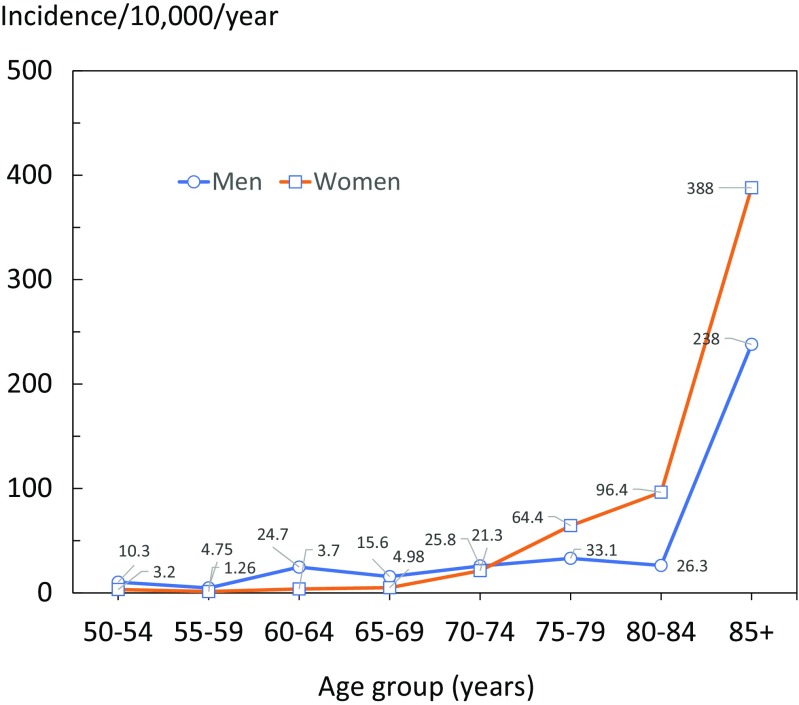
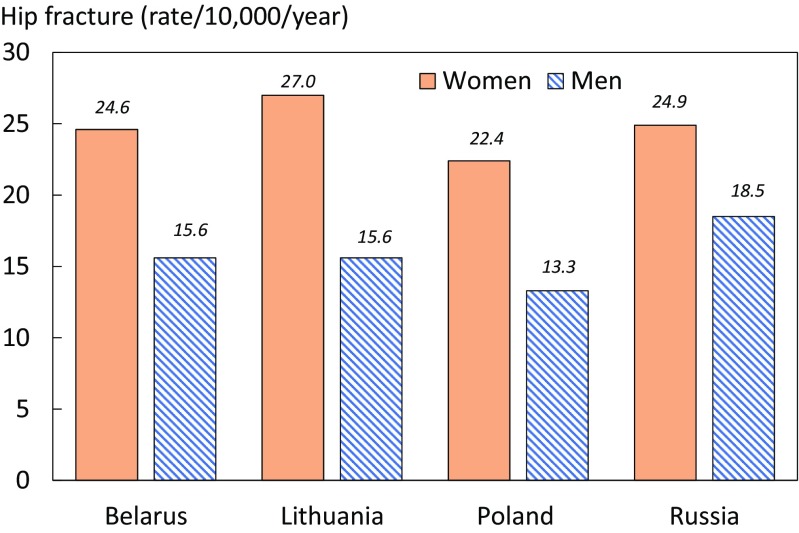
The estimated number of hip fractures nationwide in persons over the age of 50 years for 2015 was 8250 in 2015 and is predicted to increase to 12,918 in 2050. The annual incidence of fragility hip fractures in individuals aged 50 years or more was 24.6/10,000 for women and 14.6/10,000 for men, standardized to the world population. The comparison with FRAX models in neighboring countries showed that hip fracture probabilities in men and women in Belarus were similar to those in Poland, Russia, and Lithuania. The difference in incidence rates between the surveys including or excluding data from primary care suggested that 29.1% of patients sustaining a hip fracture were not hospitalized and, therefore, did not receive specialized medical care.
A substantial proportion of hip fractures in Belarus does not come to hospital attention. The FRAX model should enhance accuracy of determining fracture probability among the Belarus population and help guide decisions about treatment.
本文描述了白俄罗斯髋部骨折的流行病学情况,这些数据被用于开发该国特有的骨折预测 FRAX®工具,并与波兰、俄罗斯和立陶宛邻国的模型进行比较,展示其特点。
我们在白俄罗斯的一个地区(莫济里市)进行了一项基于人群的研究,该地区代表了该国约 1.2%的人口。我们旨在从医院登记处和初级保健来源中确定 2011-2012 年所有髋部骨折。将年龄和性别特异性发病率和国家死亡率纳入白俄罗斯的 FRAX 模型。比较了骨折概率与邻国 FRAX 模型得出的概率。
全国范围内,2015 年 50 岁以上人群髋部骨折的估计数量为 8250 例,预计到 2050 年将增加到 12918 例。2015 年,年龄在 50 岁及以上的个体中,脆性髋部骨折的年发病率为女性 24.6/10000,男性 14.6/10000,按世界人口标准化。与邻国的 FRAX 模型比较表明,白俄罗斯男女髋部骨折的概率与波兰、俄罗斯和立陶宛相似。包括或不包括初级保健数据的调查之间的发病率差异表明,29.1%的髋部骨折患者未住院,因此未接受专门的医疗护理。
白俄罗斯相当一部分髋部骨折未引起医院关注。FRAX 模型应提高在白俄罗斯人群中确定骨折概率的准确性,并有助于指导治疗决策。