Ning Xuhui, Peng Chuanqi, Li Eric S., Xu Jing, Vinluan III Rodrigo D., Yu Mengxiao, Zheng Jie
Department of Chemistry and Biochemistry, The University of Texas at Dallas, 800 W Campbell Rd., Richardson, Texas 75080, USA
APL Mater. 2017 May;5(5). doi: 10.1063/1.4978381. Epub 2017 Mar 15.
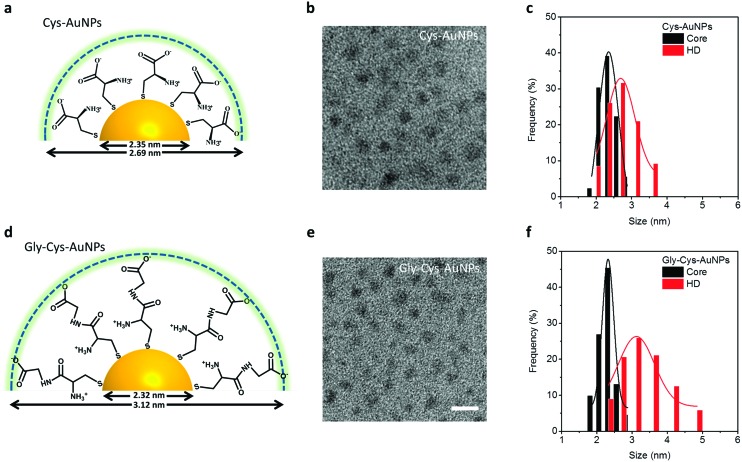
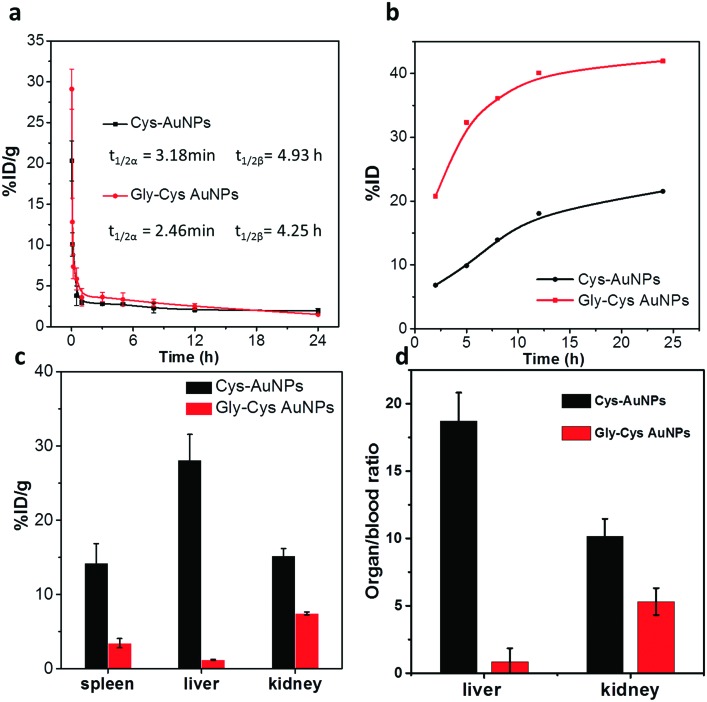
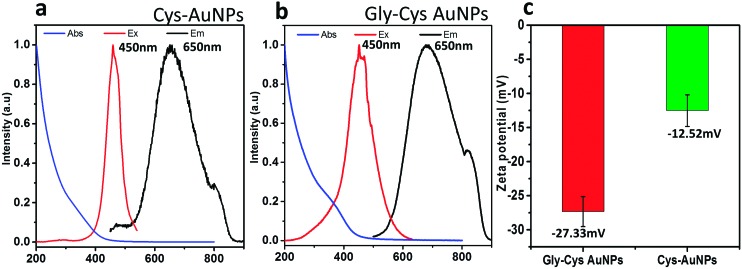
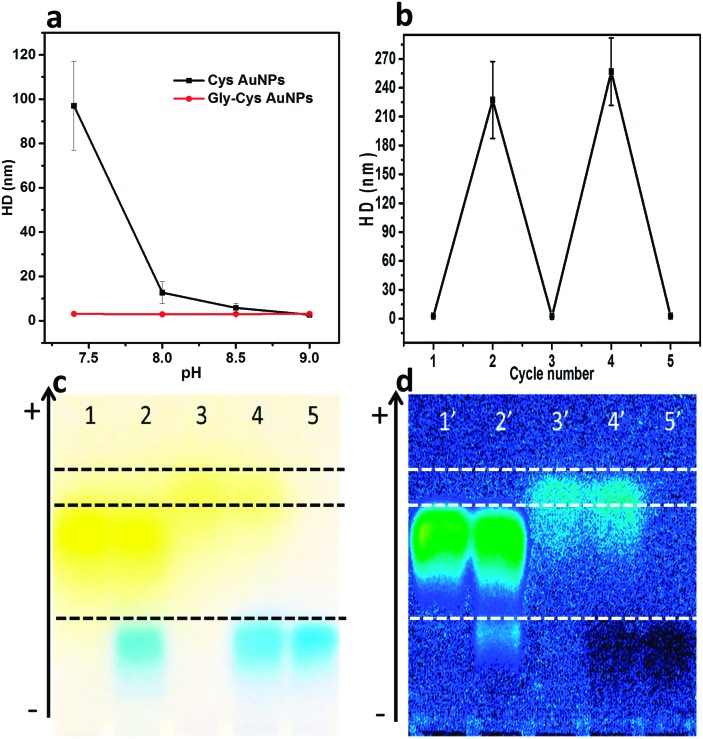
Efficient renal clearance has been observed from ultrasmall zwitterionic glutathione-coated gold nanoparticles (GS-AuNPs), which have broad preclinical applications in cancer diagnosis and kidney functional imaging. However, origin of such efficient renal clearance is still not clear. Herein, we conducted head-to-head comparison on physiological stability and renal clearance of two zwitterionic luminescent AuNPs coated with cysteine and glycine-cysteine (Cys-AuNPs and Gly-Cys-AuNPs), respectively. While both of them exhibited similar surface charges and the same core sizes, additional glycine slightly increased the hydrodynamic diameter of the AuNPs by 0.4 nm but significantly enhanced physiological stability of the AuNPs as well as altered their clearance pathways. These studies indicate that the ligand length, in addition to surface charges and size, also plays a key role in the physiological stability and renal clearance of ultrasmall zwitterionic inorganic NPs.
已观察到超小两性离子型谷胱甘肽包被的金纳米颗粒(GS-AuNPs)具有高效的肾清除率,其在癌症诊断和肾功能成像方面具有广泛的临床前应用。然而,这种高效肾清除率的起源仍不清楚。在此,我们对分别用半胱氨酸和甘氨酸-半胱氨酸包被的两种两性离子型发光金纳米颗粒(Cys-AuNPs和Gly-Cys-AuNPs)的生理稳定性和肾清除率进行了直接比较。虽然它们都表现出相似的表面电荷和相同的核心尺寸,但额外的甘氨酸使金纳米颗粒的流体动力学直径略微增加了0.4纳米,但显著增强了金纳米颗粒的生理稳定性,并改变了它们的清除途径。这些研究表明,除了表面电荷和尺寸外,配体长度在超小两性离子型无机纳米颗粒的生理稳定性和肾清除率中也起着关键作用。