Department of Microbiology and Center for Cellular Immunotherapies, Perelman School of Medicine, University of Pennsylvania, Philadelphia, PA 19104, USA.
Department of Pharmacology, Perelman School of Medicine, University of Pennsylvania, Philadelphia, PA 19104, USA.
Cell Rep. 2018 Apr 17;23(3):741-755. doi: 10.1016/j.celrep.2018.03.084.
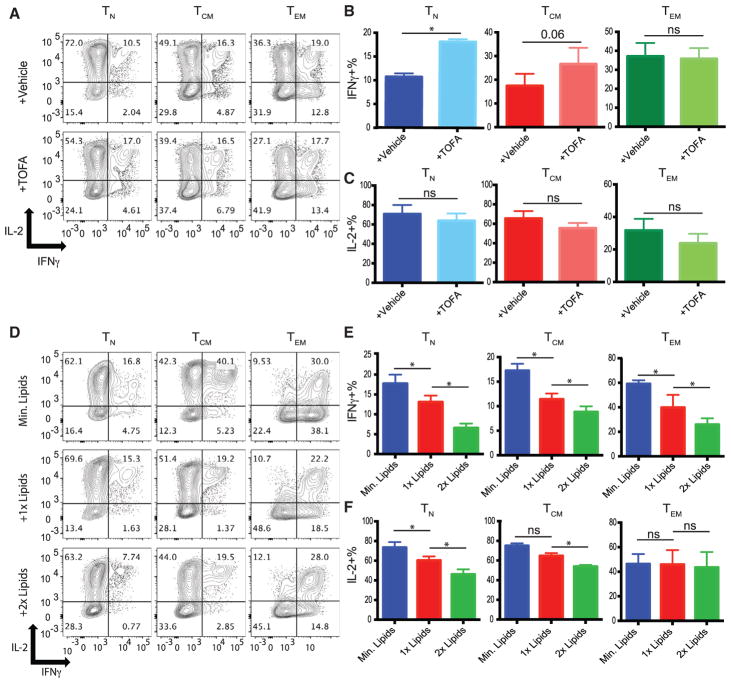
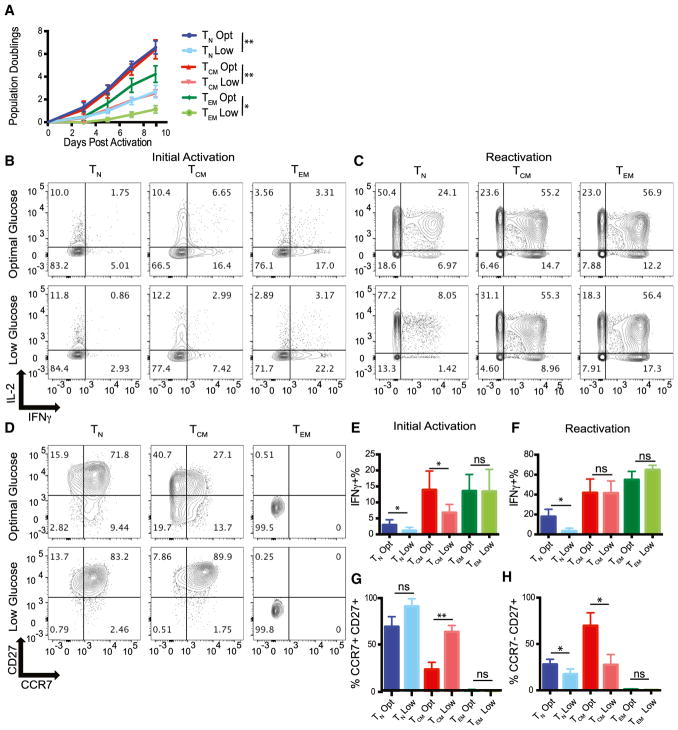
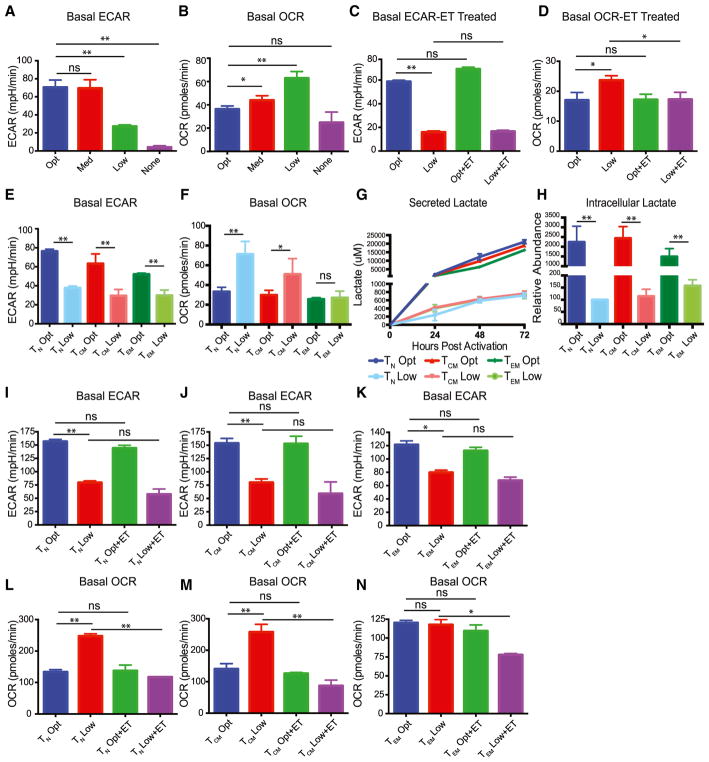
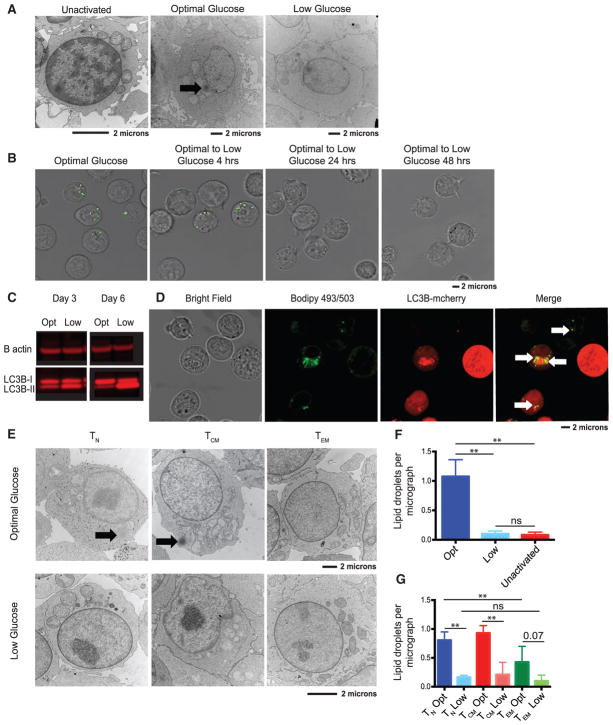
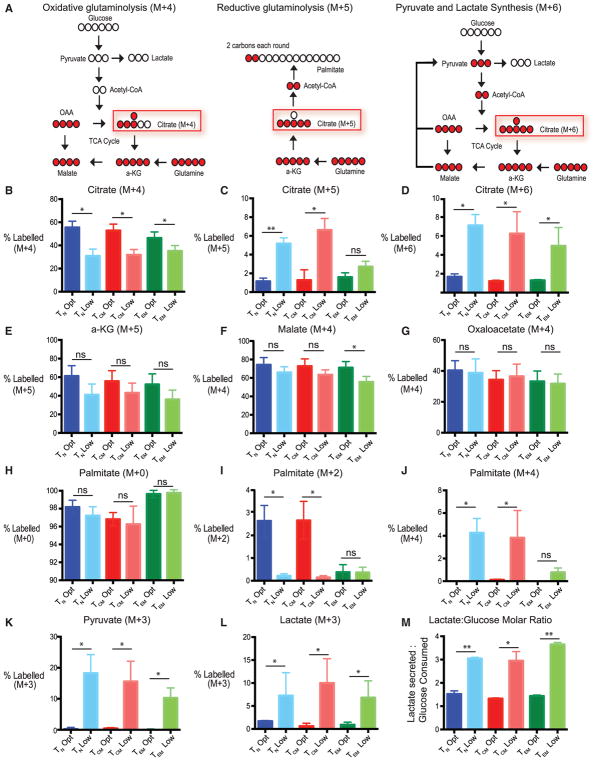
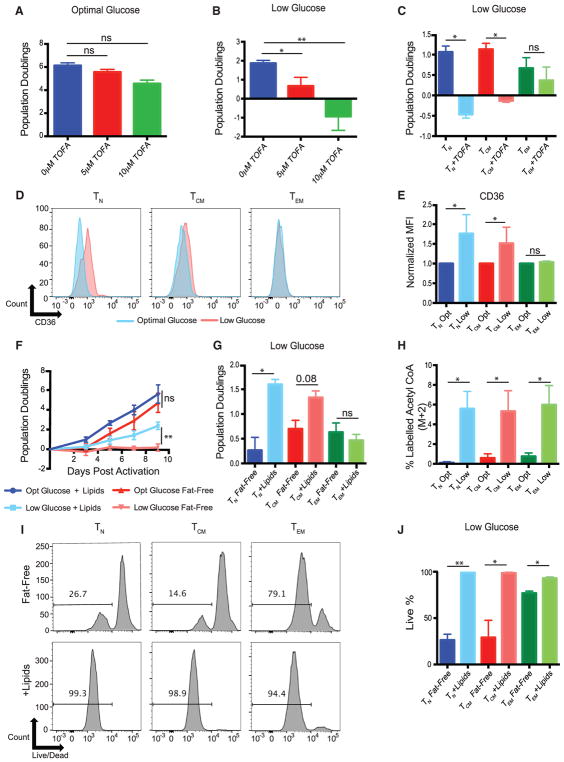
T cells compete with malignant cells for limited nutrients within the solid tumor microenvironment. We found that effector memory CD4 T cells respond distinctly from other T cell subsets to limiting glucose and can maintain high levels of interferon-γ (IFN-γ) production in a nutrient-poor environment. Unlike naive (T) or central memory T (T) cells, effector memory T (T) cells fail to upregulate fatty acid synthesis, oxidative phosphorylation, and reductive glutaminolysis in limiting glucose. Interference of fatty acid synthesis in naive T cells dramatically upregulates IFN-γ, while increasing exogenous lipids in media inhibits production of IFN-γ by all subsets, suggesting that relative ratio of fatty acid metabolism to glycolysis is a direct predictor of T cell effector activity. Together, these data suggest that effector memory T cells are programmed to have limited ability to synthesize and metabolize fatty acids, which allows them to maintain T cell function in nutrient-depleted microenvironments.
T 细胞与恶性细胞在实体瘤微环境中争夺有限的营养物质。我们发现,效应记忆 CD4 T 细胞对限制葡萄糖的反应明显不同于其他 T 细胞亚群,并且可以在营养贫乏的环境中维持高水平的干扰素-γ(IFN-γ)产生。与幼稚(T)或中央记忆 T(T)细胞不同,效应记忆 T(T)细胞在限制葡萄糖的情况下无法上调脂肪酸合成、氧化磷酸化和还原性谷氨酰胺分解。在幼稚 T 细胞中干扰脂肪酸合成会显著上调 IFN-γ,而在外源脂质增加培养基中会抑制所有亚群产生 IFN-γ,这表明脂肪酸代谢与糖酵解的相对比率是 T 细胞效应活性的直接预测因子。总之,这些数据表明,效应记忆 T 细胞被编程为具有有限的合成和代谢脂肪酸的能力,这使它们能够在营养缺乏的微环境中维持 T 细胞功能。