Farm Animal Genetic Resource Exploration and Innovation Key Laboratory of Sichuan Province, Sichuan Agricultural University, Chengdu 611130, China.
Chengdu Polytechnic, Chengdu 610041, China.
Int J Mol Sci. 2018 Apr 18;19(4):1233. doi: 10.3390/ijms19041233.
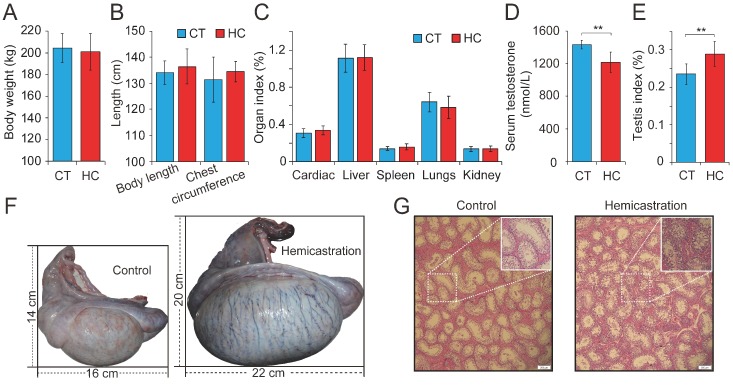
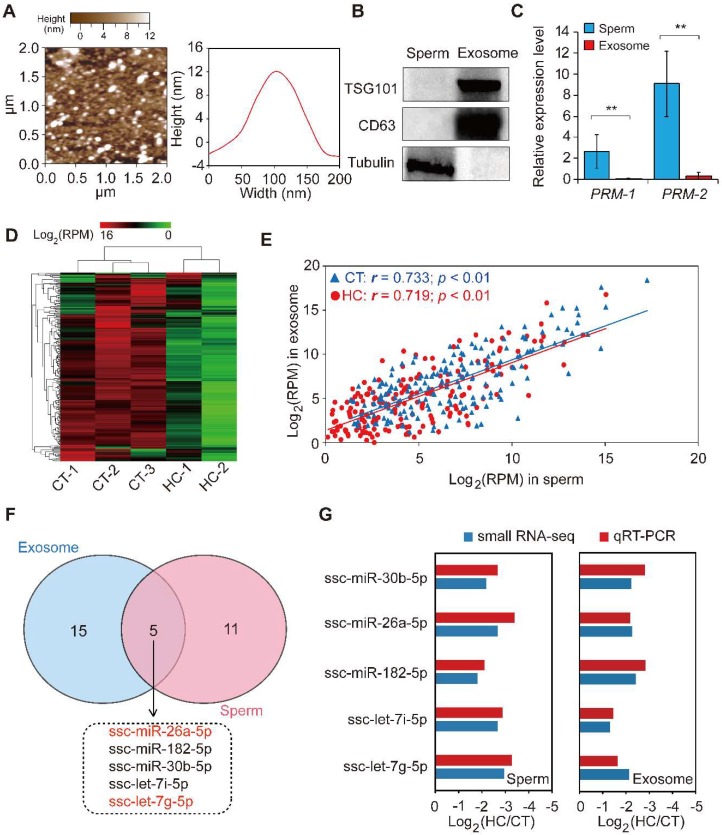
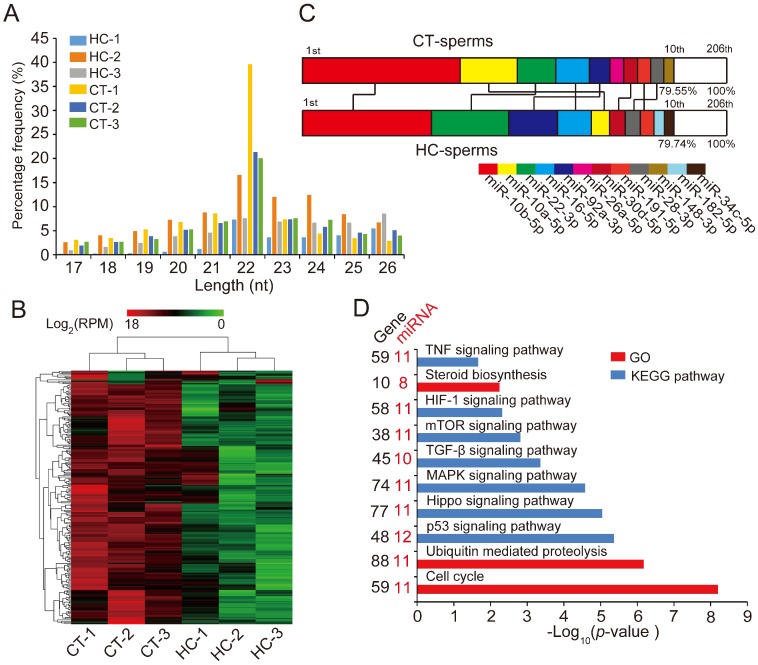
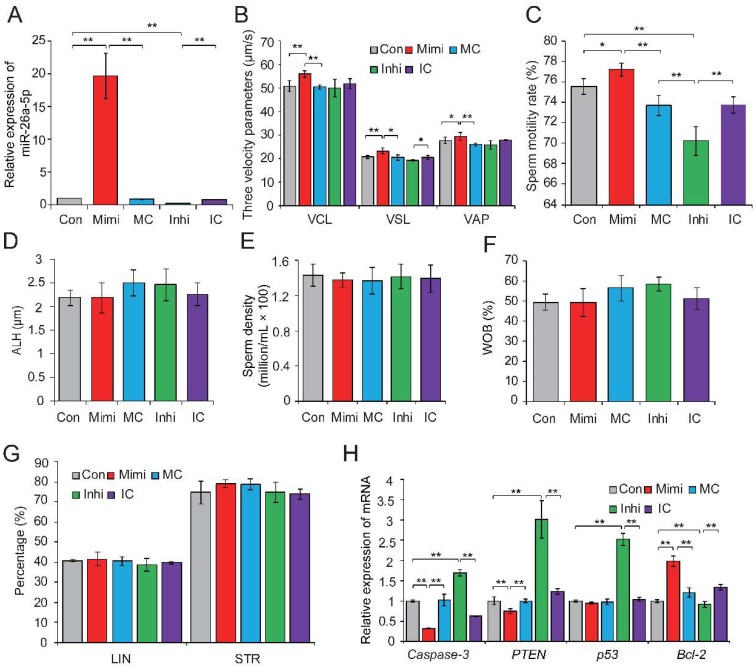
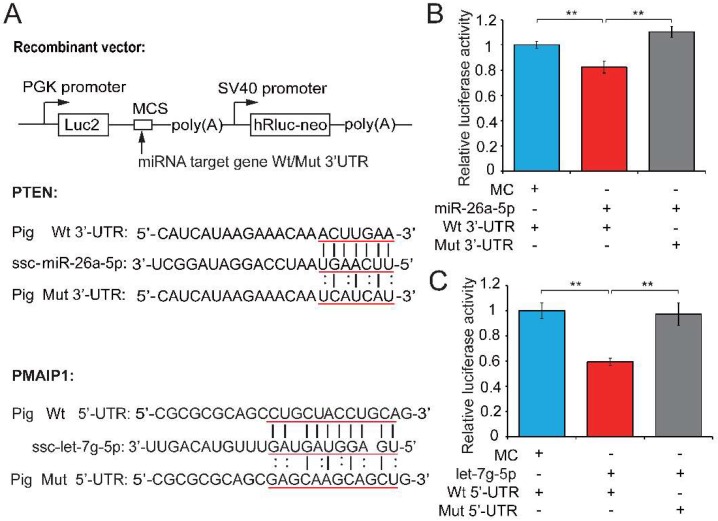
Recent evidence suggests that testosterone deficiency can dramatically decrease the quality of sperm. MicroRNAs (miRNAs) are conserved mediators of post-transcriptional gene regulation in eukaryotes. However, the systemic regulation and function of miRNAs in sperm quality decline induced by testosterone deficiency has not been investigated. Here, we found that the sperm apoptosis was significantly enhanced and the sperm motility was dramatically decreased in hemicastrated pigs. We then used small RNA sequencing to detect miRNA profiles of sperm from pigs with prepubertal hemicastration (HC) and compared them with control libraries. We identified 16 differentially expressed (DE) miRNAs between the sperm of prepubertal HC and control (CT) pigs. Functional enrichment analysis indicated that the target genes of these DE miRNAs were mainly enriched in apoptosis-related pathways including the p53, mitogen-activated protein kinase (MAPK), and mammalian target of rapamycin (mTOR) pathways. Furthermore, gain- and loss-of-function analyses demonstrated potential anti-apoptotic effects of the DE miRNAs miR-26a-5p and let-7g-5p on sperm cells. The luciferase reporter assay confirmed that and are targets of miR-26a-5p and let-7g-5p, respectively. Spearman’s correlation analysis revealed significantly positive correlations between the sperm and its corresponding seminal plasma exosomes regarding the miRNA expression levels. In conclusion, testosterone deficiency-induced changes in the miRNA components of seminal plasma exosomes secreted by the genital tract may partially elucidate sperm miRNAome alterations, which are further responsible for the decline of sperm motility.
最近的证据表明,睾丸激素缺乏会显著降低精子的质量。microRNAs(miRNAs)是真核生物中转录后基因调控的保守介质。然而,雄激素缺乏诱导的精子质量下降中 miRNAs 的系统调节和功能尚未得到研究。在这里,我们发现去势公猪的精子凋亡明显增强,精子活力显著下降。然后,我们使用小 RNA 测序来检测去势公猪的精子 miRNA 图谱,并将其与对照文库进行比较。我们在去势公猪的精子和对照(CT)猪的精子之间鉴定出 16 个差异表达(DE)miRNAs。功能富集分析表明,这些 DE miRNAs 的靶基因主要富集在凋亡相关途径中,包括 p53、丝裂原活化蛋白激酶(MAPK)和哺乳动物雷帕霉素靶蛋白(mTOR)途径。此外,功能增益和功能丧失分析表明 DE miRNAs miR-26a-5p 和 let-7g-5p 对精子细胞具有潜在的抗凋亡作用。荧光素酶报告实验证实了和分别是 miR-26a-5p 和 let-7g-5p 的靶基因。Spearman’s 相关分析显示,精子与其相应的精液外泌体中的 miRNA 表达水平之间存在显著的正相关。总之,生殖道分泌的精液外泌体中 miRNA 成分的变化可能部分阐明了精子 miRNAome 的改变,这进一步导致了精子活力的下降。