Institute of Neuroscience, Department of Biology, University of Oregon, Eugene, OR, 97403, USA.
Nat Commun. 2018 Apr 18;9(1):1534. doi: 10.1038/s41467-018-03994-3.
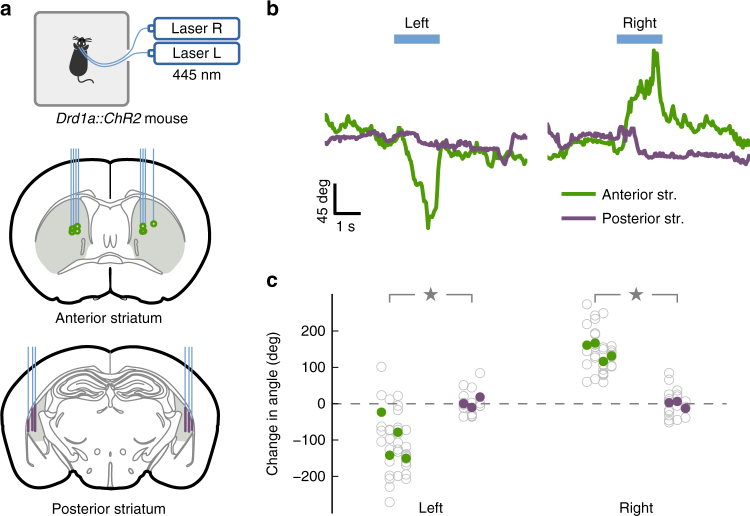
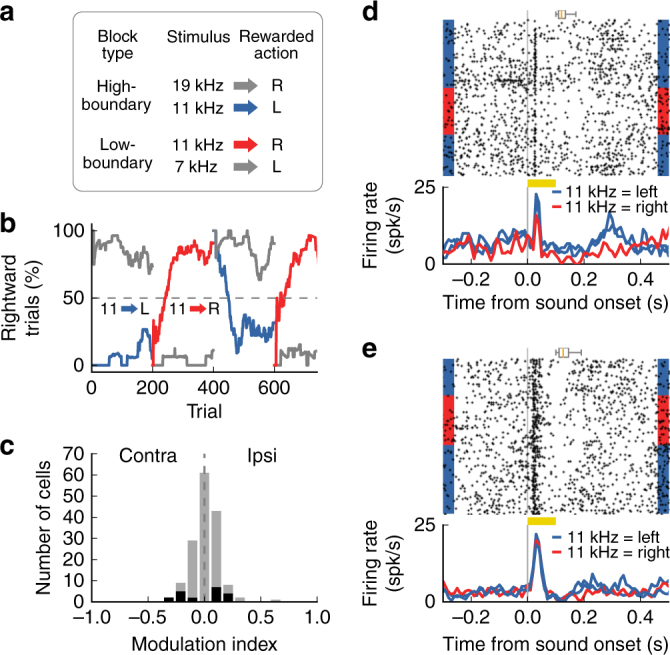
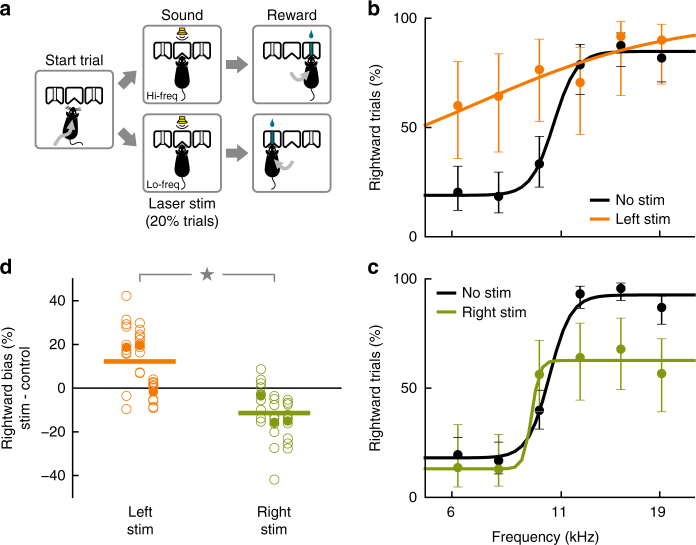
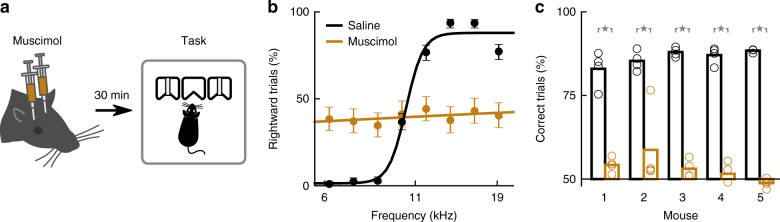
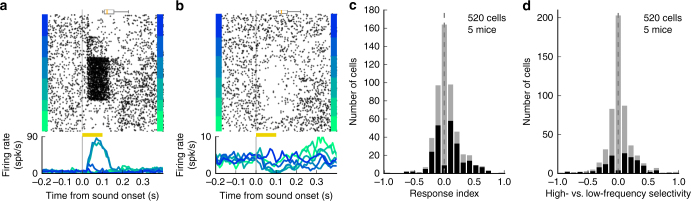
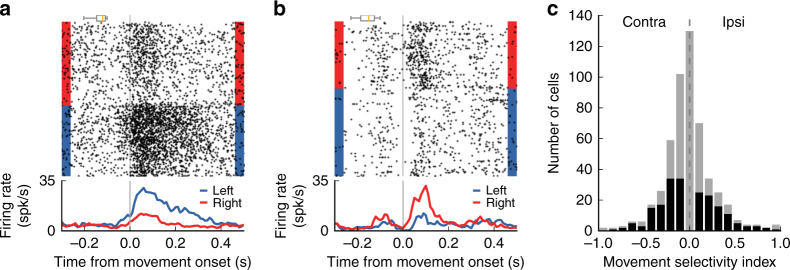
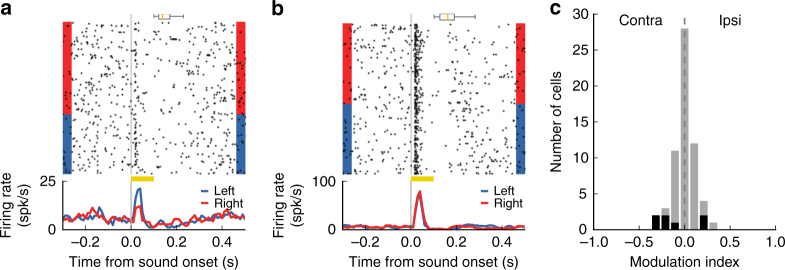
The neuronal pathways that link sounds to rewarded actions remain elusive. For instance, it is unclear whether neurons in the posterior tail of the dorsal striatum (which receive direct input from the auditory system) mediate action selection, as other striatal circuits do. Here, we examine the role of posterior striatal neurons in auditory decisions in mice. We find that, in contrast to the anterior dorsal striatum, activation of the posterior striatum does not elicit systematic movement. However, activation of posterior striatal neurons during sound presentation in an auditory discrimination task biases the animals' choices, and transient inactivation of these neurons largely impairs sound discrimination. Moreover, the activity of these neurons during sound presentation reliably encodes stimulus features, but is only minimally influenced by the animals' choices. Our results suggest that posterior striatal neurons play an essential role in auditory decisions, and provides a stable representation of sounds during auditory tasks.
将声音与奖励动作联系起来的神经元通路仍然难以捉摸。例如,尚不清楚背侧纹状体尾部(直接接收来自听觉系统的输入)的神经元是否像其他纹状体回路那样介导动作选择。在这里,我们研究了小鼠听觉决策中后部纹状体神经元的作用。我们发现,与前背侧纹状体相反,背侧纹状体尾部的激活不会引起系统运动。然而,在听觉辨别任务中,在声音呈现期间激活后部纹状体神经元会使动物的选择产生偏差,而这些神经元的短暂失活则会极大地损害声音辨别能力。此外,这些神经元在声音呈现期间的活动可靠地编码刺激特征,但受动物选择的影响很小。我们的研究结果表明,后部纹状体神经元在听觉决策中起着至关重要的作用,并且在听觉任务中提供了声音的稳定表示。