State Key Laboratory of Plant Cell and Chromosome Engineering, CAS Centre for Excellence in Molecular Plant Biology, Institute of Genetics and Developmental Biology, Chinese Academy of Sciences, Beijing, 100101, China.
School of Life Sciences, Anhui Agricultural University, Hefei, 230036, China.
Nat Commun. 2018 Apr 18;9(1):1522. doi: 10.1038/s41467-018-03884-8.
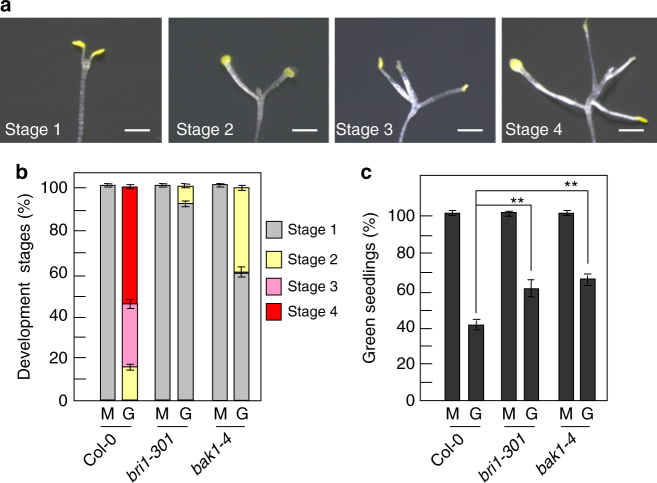
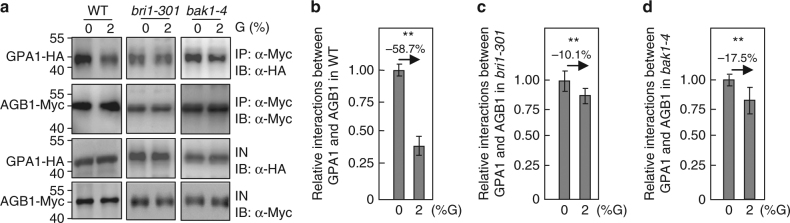
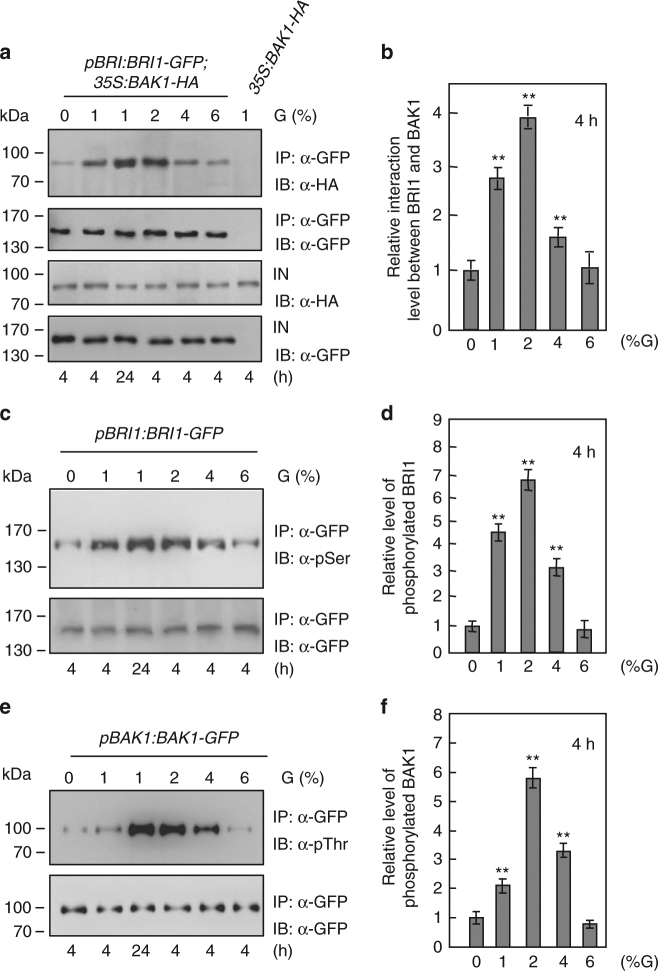
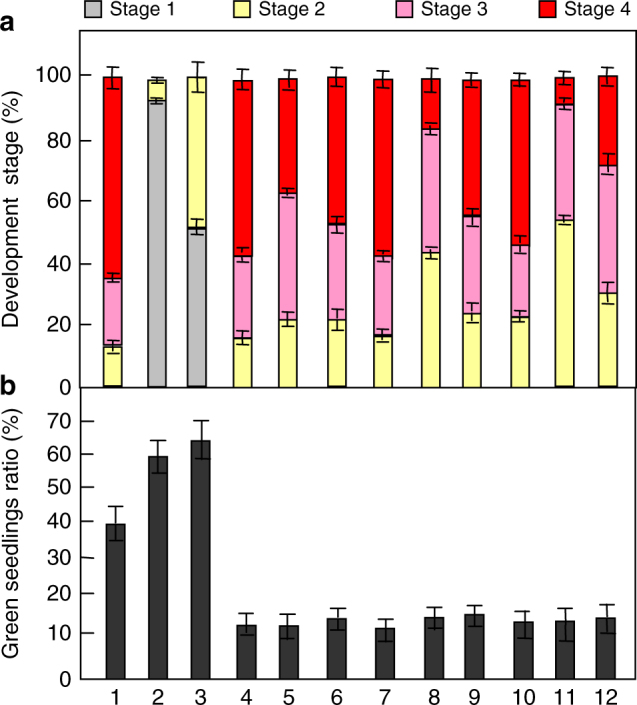
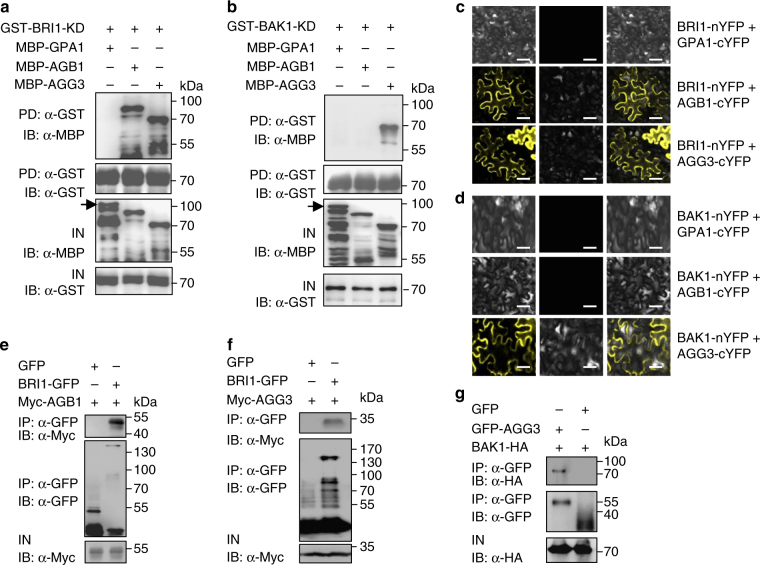
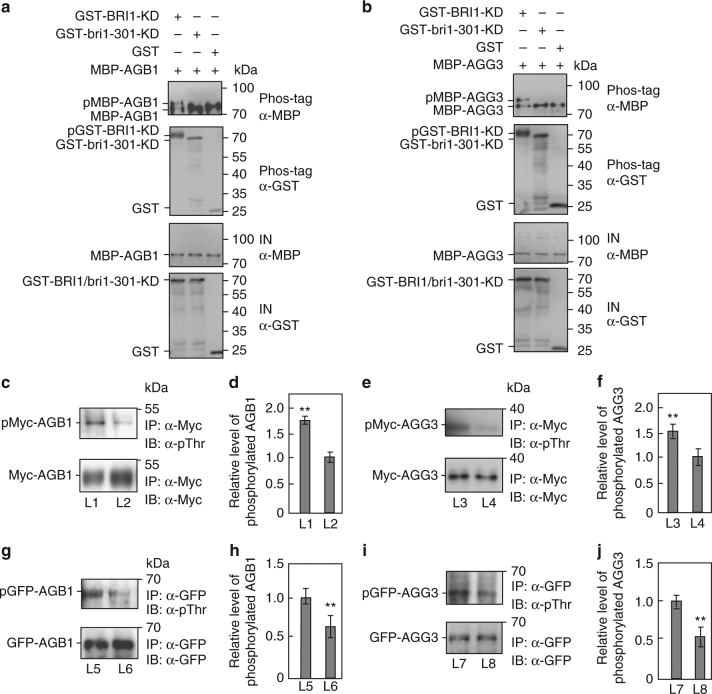
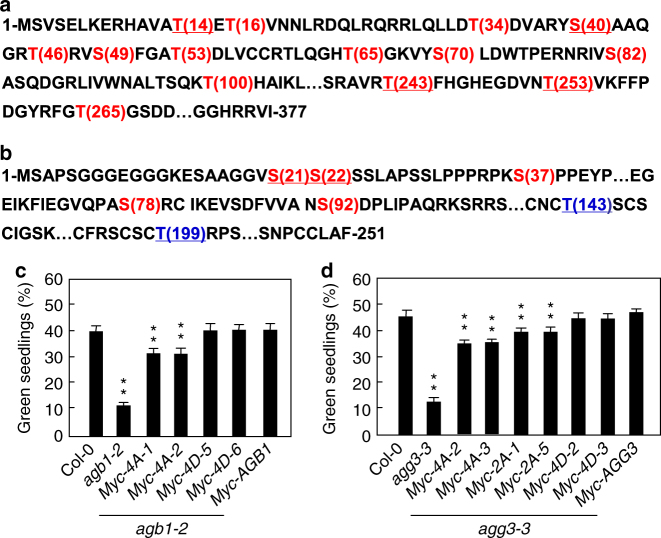
Sugars function as signal molecules to regulate growth, development, and gene expression in plants, yeasts, and animals. A coordination of sugar availability with phytohormone signals is crucial for plant growth and development. The molecular link between sugar availability and hormone-dependent plant growth are largely unknown. Here we report that BRI1 and BAK1 are involved in sugar-responsive growth and development. Glucose influences the physical interactions and phosphorylations of BRI1 and BAK1 in a concentration-dependent manner. BRI1 and BAK1 physically interact with G proteins that are essential for mediating sugar signaling. Biochemical data show that BRI1 can phosphorylate G protein β subunit and γ subunits, and BAK1 can phosphorylate G protein γ subunits. Genetic analyses suggest that BRI1 and BAK1 function in a common pathway with G-protein subunits to regulate sugar responses. Thus, our findings reveal an important genetic and molecular mechanism by which BR receptors associate with G proteins to regulate sugar-responsive growth and development.
糖作为信号分子,调节植物、酵母和动物的生长、发育和基因表达。糖的可用性与植物激素信号的协调对于植物的生长和发育至关重要。糖的可用性与激素依赖性植物生长之间的分子联系在很大程度上是未知的。在这里,我们报告 BRII1 和 BAK1 参与了糖响应性生长和发育。葡萄糖以浓度依赖的方式影响 BRII1 和 BAK1 的物理相互作用和磷酸化。BRII1 和 BAK1 与 G 蛋白相互作用,G 蛋白对于介导糖信号至关重要。生化数据表明,BRII1 可以磷酸化 G 蛋白β亚基和γ亚基,BAK1 可以磷酸化 G 蛋白 γ 亚基。遗传分析表明,BRII1 和 BAK1 与 G 蛋白亚基一起在一个共同的途径中发挥作用,以调节糖的反应。因此,我们的发现揭示了一个重要的遗传和分子机制,即 BR 受体与 G 蛋白结合,以调节糖响应性生长和发育。