Caricato Roberto, Giordano M Elena, Schettino Trifone, Lionetto M Giulia
Department of Biological and Environmental Sciences and Technologies, University of Salento, Lecce, Italy.
Front Physiol. 2018 Apr 4;9:319. doi: 10.3389/fphys.2018.00319. eCollection 2018.
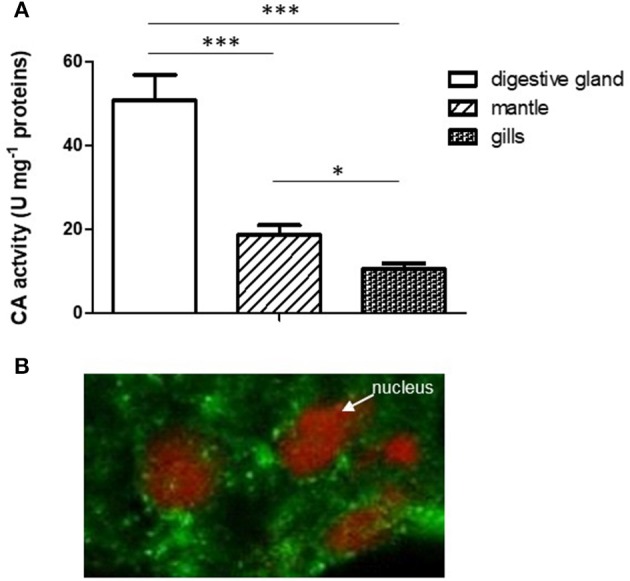
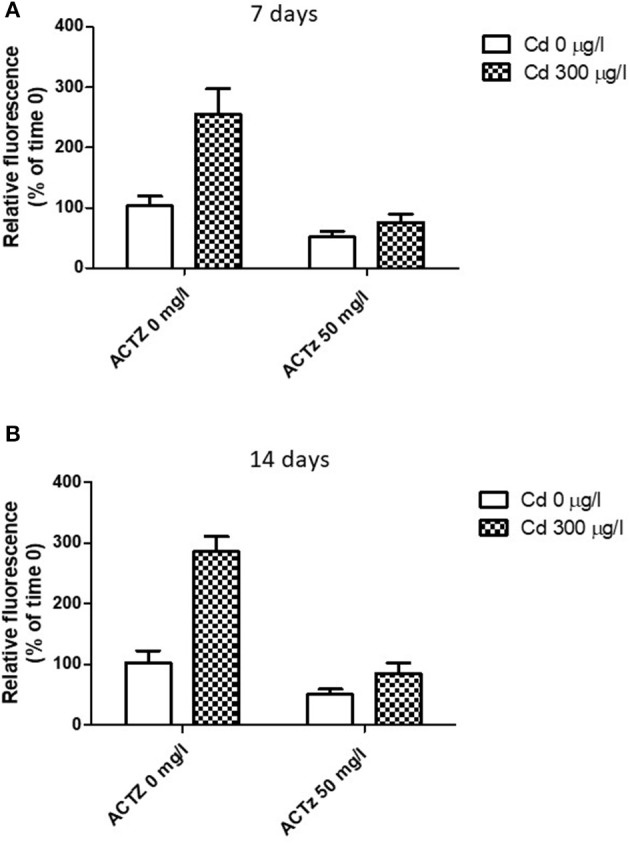
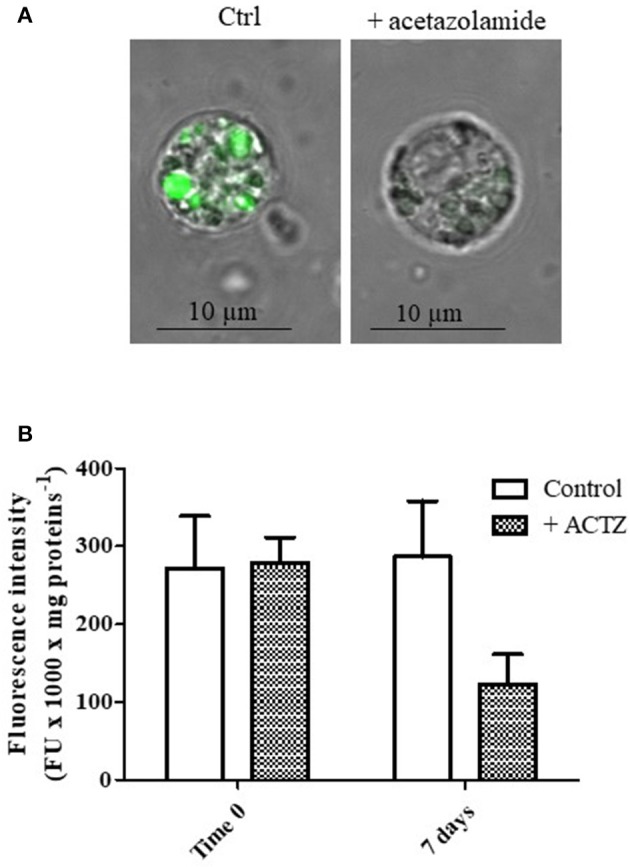
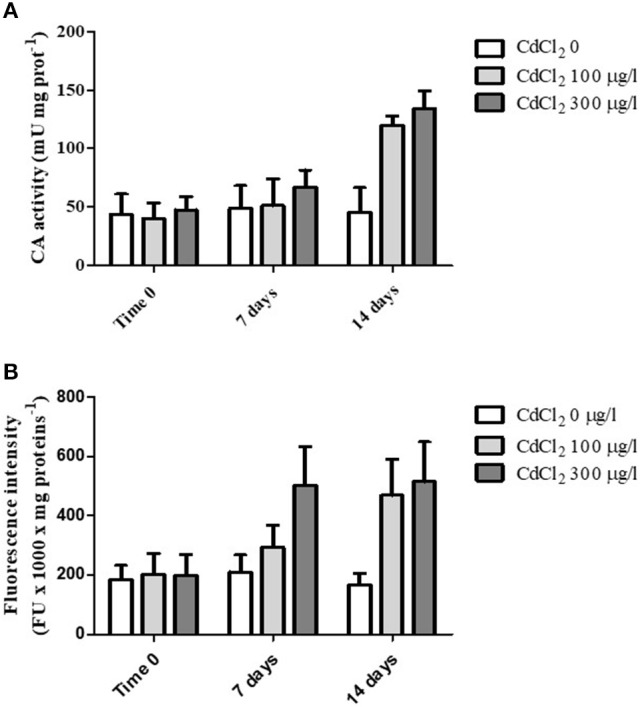
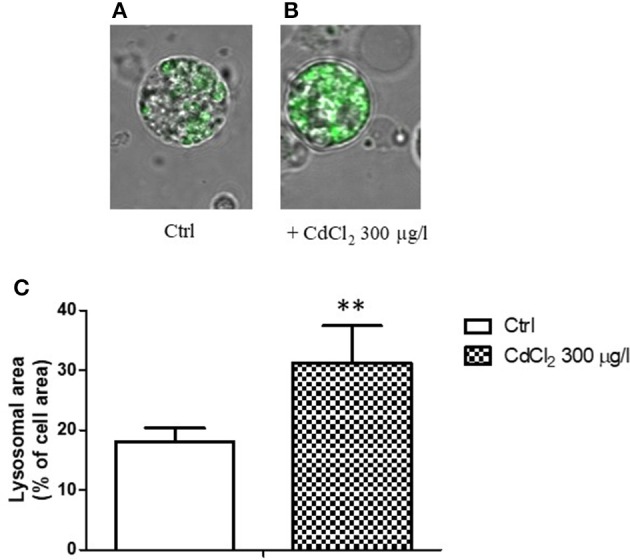
Carbonic anhydrase (CA) is a ubiquitous metalloenzyme, whose functions in animals span from respiration to pH homeostasis, electrolyte transport, calcification, and biosynthetic reactions. CA is sensitive to trace metals in a number of species. In mussels, a previous study demonstrated CA activity and protein expression to be enhanced in digestive gland by cadmium exposure. The aim of the present work was to investigate the functional meaning, if any, of this response. To this end the study addressed the possible involvement of CA in the lysosomal system response of digestive gland cells to metal exposure. The exposure to acetazolamide, specific CA inhibitor, significantly inhibited the acidification of the lysosomal compartment in the digestive gland cells charged with the acidotropic probe LysoSensor Green D-189, demonstrating the physiological contribution of CA to the acidification of the lysosomes. Under CdCl exposure, CA activity significantly increased in parallel to the increase of the fluorescence of LysoSensor Green charged cells, which is in turn indicative of proliferation and/or increase in size of lysosomes. Acetazolamide exposure was able to completely inhibit the cadmium induced Lysosensor fluorescence increase in digestive gland cells. In conclusion, our results demonstrated the functional role of CA in the lysosomal acidification of digestive gland and its involvement in the lysosomal activation following cadmium exposure. CA induction could physiologically respond to a prolonged increased requirement of H for supporting lysosomal acidification during lysosomal activation.
碳酸酐酶(CA)是一种广泛存在的金属酶,其在动物体内的功能涵盖呼吸作用、pH稳态、电解质转运、钙化及生物合成反应等多个方面。在许多物种中,CA对痕量金属敏感。在贻贝中,先前的一项研究表明,镉暴露会使消化腺中的CA活性和蛋白质表达增强。本研究的目的是探究这种反应(若存在)的功能意义。为此,该研究探讨了CA在消化腺细胞溶酶体系统对金属暴露的反应中可能发挥的作用。用特异性CA抑制剂乙酰唑胺处理后,显著抑制了用嗜酸性探针溶酶体传感器绿色D - 189标记的消化腺细胞溶酶体区室的酸化,这表明CA对溶酶体酸化具有生理贡献。在氯化镉暴露下,CA活性显著增加,同时溶酶体传感器绿色标记细胞的荧光增强,这反过来表明溶酶体增殖和/或体积增大。乙酰唑胺处理能够完全抑制镉诱导的消化腺细胞中溶酶体传感器荧光增加。总之,我们的结果证明了CA在消化腺溶酶体酸化中的功能作用及其在镉暴露后溶酶体激活中的参与。CA的诱导可能是对溶酶体激活过程中为支持溶酶体酸化而对H需求长期增加的一种生理反应。