Group of Reproductive Biology, Institute of Biotechnology, Czech Academy of Sciences, v.v.i., BIOCEV, Prumyslova 595, 252 50 Vestec, Czech Republic.
Department of Veterinary Sciences, Faculty of Agrobiology, Food and Natural Resources, University of Life Sciences Prague, Kamycka 129, 165 00 Prague, Czech Republic.
Int J Mol Sci. 2018 Apr 19;19(4):1236. doi: 10.3390/ijms19041236.
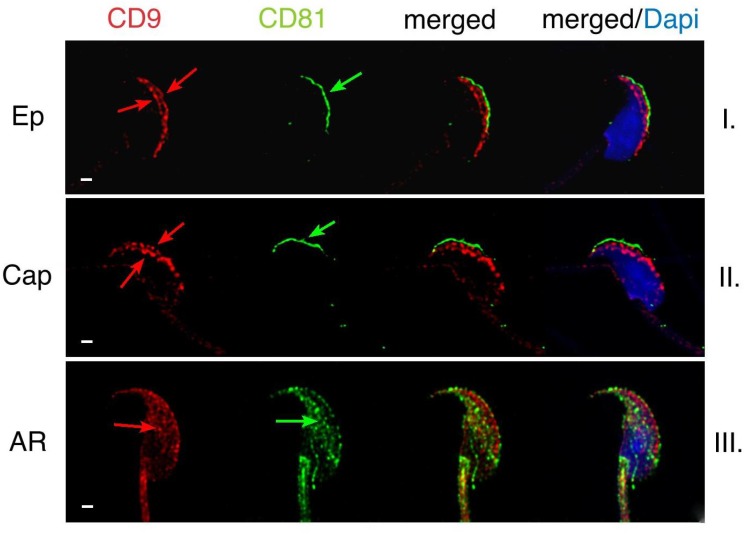
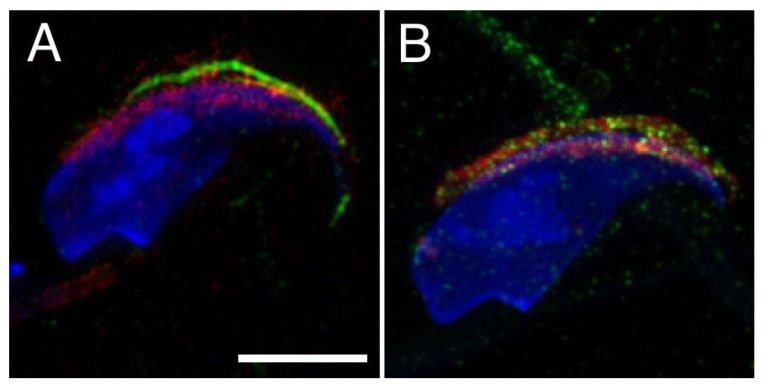
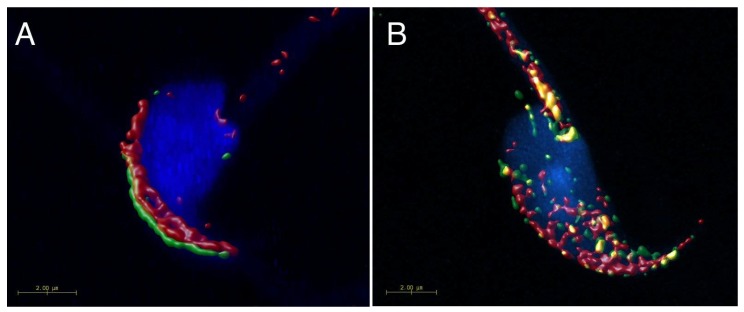
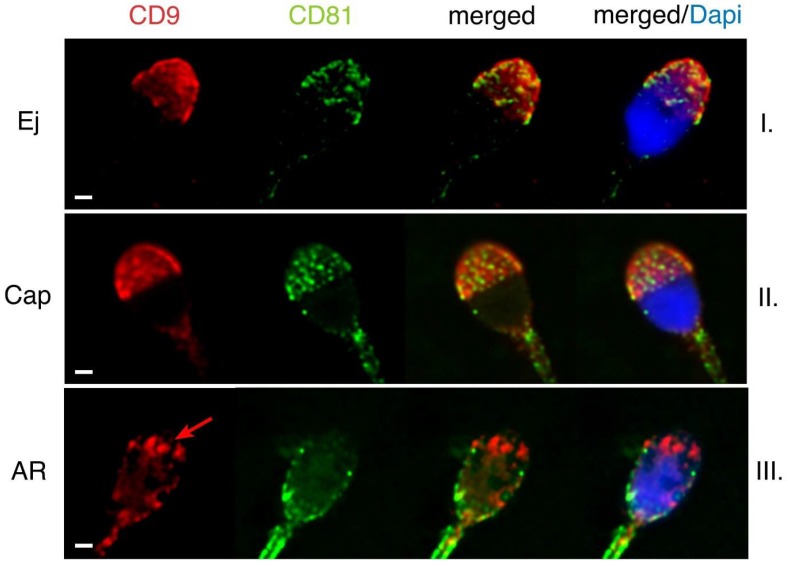
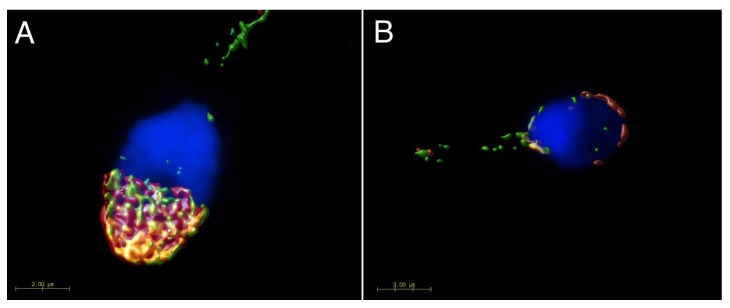
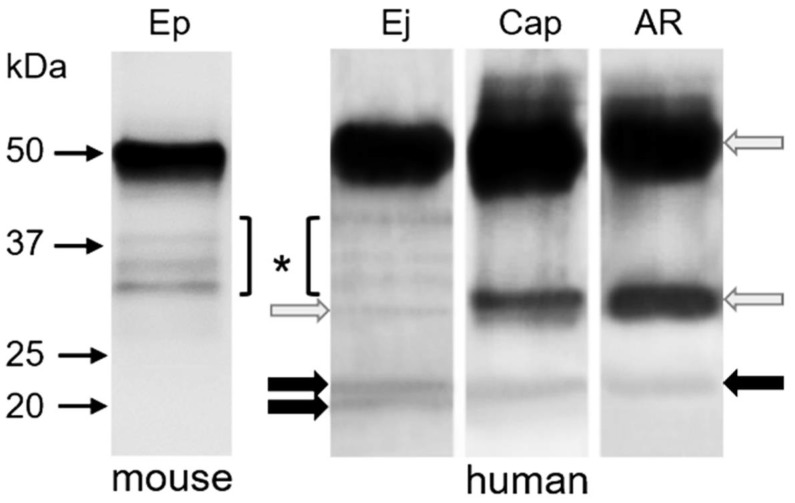
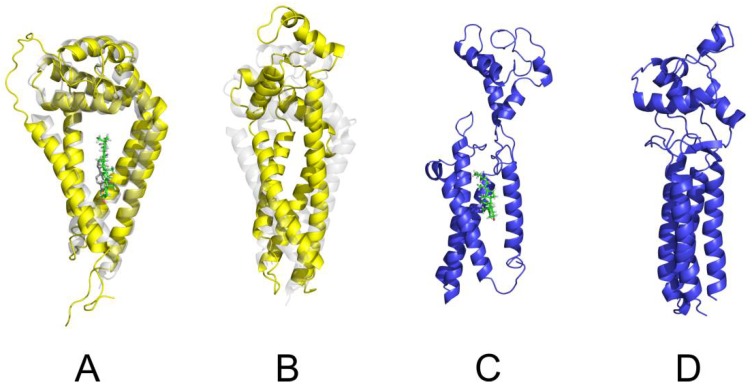
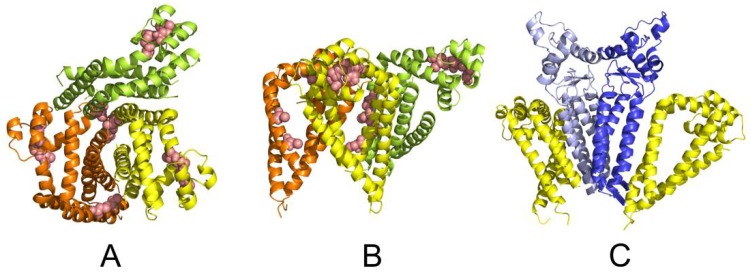
Proteins CD9 and CD81 are members of the tetraspanin superfamily and were detected in mammalian sperm, where they are suspected to form an active tetraspanin web and to participate in sperm⁻egg membrane fusion. The importance of these two proteins during the early stages of fertilization is supported by the complete sterility of CD9/CD81 double null female mice. In this study, the putative mechanism of CD9/CD81 involvement in tetraspanin web formation in sperm and its activity prior to fertilization was addressed. Confocal microscopy and colocalization assay was used to determine a mutual CD9/CD81 localization visualised in detail by super-resolution microscopy, and their interaction was address by co-immunoprecipitation. The species-specific traits in CD9 and CD81 distribution during sperm maturation were compared between mice and humans. A mutual position of CD9/CD81 is shown in human spermatozoa in the acrosomal cap, however in mice, CD9 and CD81 occupy a distinct area. During the acrosome reaction in human sperm, only CD9 is relocated, compared to the relocation of both proteins in mice. The structural modelling of CD9 and CD81 homologous and possibly heterologous network formation was used to propose their lateral Cis as well as Trans interactions within the sperm membrane and during sperm⁻egg membrane fusion.
蛋白 CD9 和 CD81 是四跨膜超家族的成员,存在于哺乳动物精子中,被怀疑形成一个活跃的四跨膜网络,并参与精子-卵膜融合。这两种蛋白在受精早期的重要性得到了 CD9/CD81 双敲除雌性小鼠完全不育的支持。在这项研究中,我们研究了 CD9/CD81 参与精子中四跨膜网络形成及其在受精前活性的潜在机制。共聚焦显微镜和共定位分析用于确定通过超分辨率显微镜详细可视化的 CD9/CD81 相互定位,并通过共免疫沉淀来研究它们的相互作用。我们比较了小鼠和人类精子成熟过程中 CD9 和 CD81 分布的种间特征。在人精子的顶体帽中显示了 CD9/CD81 的相互位置,但在小鼠中,CD9 和 CD81 占据了不同的区域。在人精子的顶体反应中,只有 CD9 被重新定位,而在小鼠中,两种蛋白都被重新定位。我们使用 CD9 和 CD81 同源和可能的异源网络形成的结构建模来提出它们在精子膜内以及在精子-卵膜融合过程中的横向 Cis 和 Trans 相互作用。