Nguyen Thanh Hung, Kugler Jan-Michael
Institute of Cellular and Molecular Medicine, University of Copenhagen, Blegdamsvej 3, 2200 Copenhagen, Denmark.
Cancers (Basel). 2018 Apr 17;10(4):121. doi: 10.3390/cancers10040121.
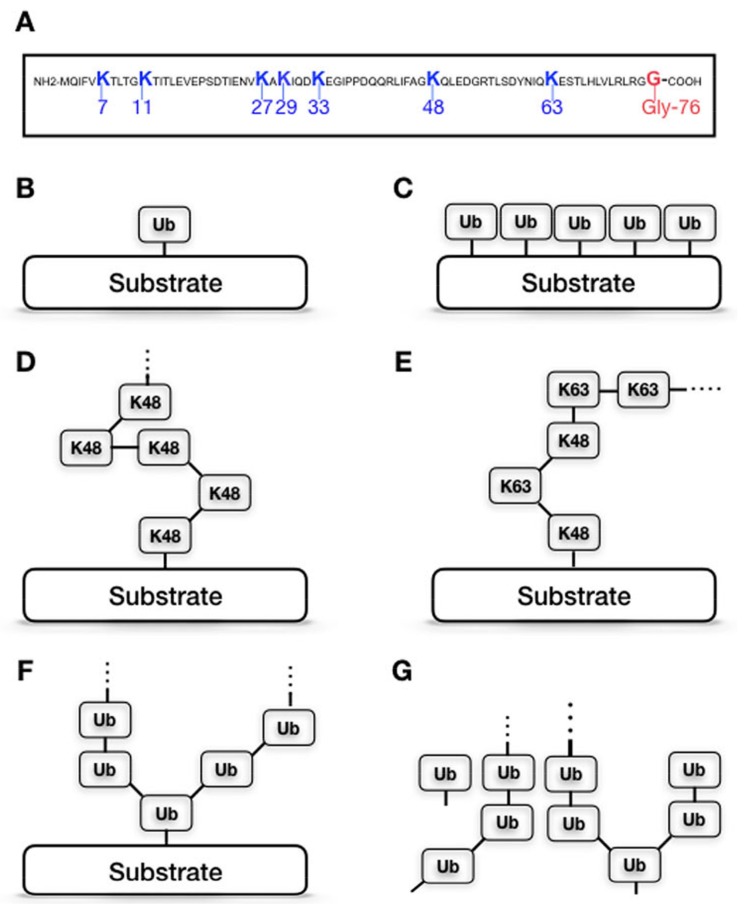
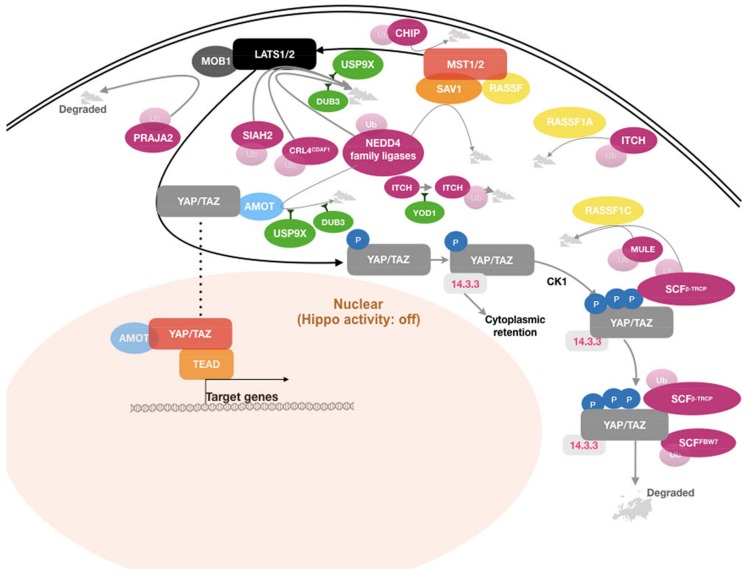
The Hippo pathway serves as a key barrier for oncogenic transformation. It acts by limiting the activity of the proto-oncogenes YAP and TAZ. Reduced Hippo signaling and elevated YAP/TAZ activities are frequently observed in various types of tumors. Emerging evidence suggests that the ubiquitin system plays an important role in regulating Hippo pathway activity. Deregulation of ubiquitin ligases and of deubiquitinating enzymes has been implicated in increased YAP/TAZ activity in cancer. In this article, we review recent insights into the ubiquitin-mediated regulation of the mammalian Hippo pathway, its deregulation in cancer, and possibilities for targeting the Hippo pathway through the ubiquitin system.
河马通路是致癌转化的关键屏障。它通过限制原癌基因YAP和TAZ的活性发挥作用。在各种类型的肿瘤中经常观察到河马信号传导减少和YAP/TAZ活性升高。新出现的证据表明,泛素系统在调节河马通路活性中起重要作用。泛素连接酶和去泛素化酶的失调与癌症中YAP/TAZ活性增加有关。在本文中,我们综述了关于泛素介导的哺乳动物河马通路调节、其在癌症中的失调以及通过泛素系统靶向河马通路的可能性的最新见解。