Ibayashi Kenji, Kunii Naoto, Matsuo Takeshi, Ishishita Yohei, Shimada Seijiro, Kawai Kensuke, Saito Nobuhito
Department of Neurosurgery, The University of Tokyo Hospital, Tokyo, Japan.
Department of Neurosurgery, Tokyo Metropolitan Neurological Hospital, Tokyo, Japan.
Front Neurosci. 2018 Apr 5;12:221. doi: 10.3389/fnins.2018.00221. eCollection 2018.
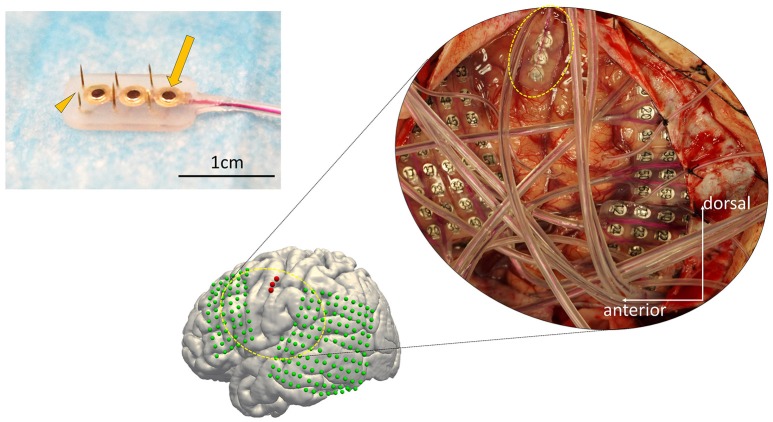
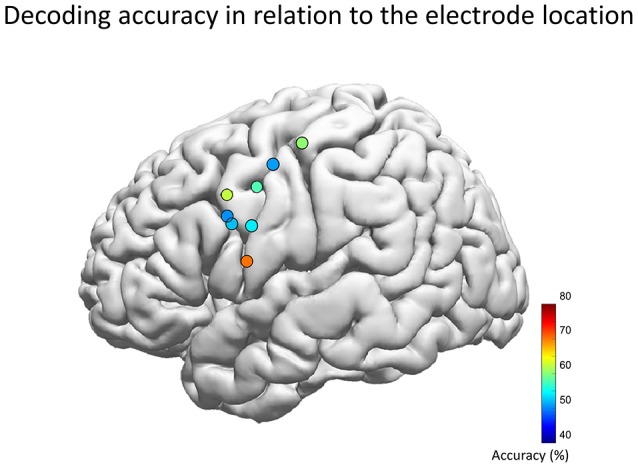
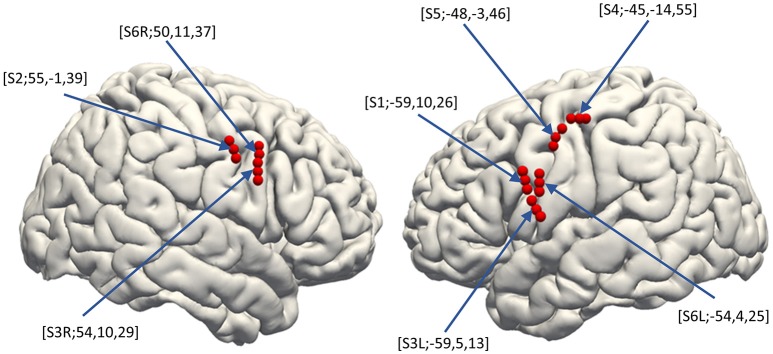
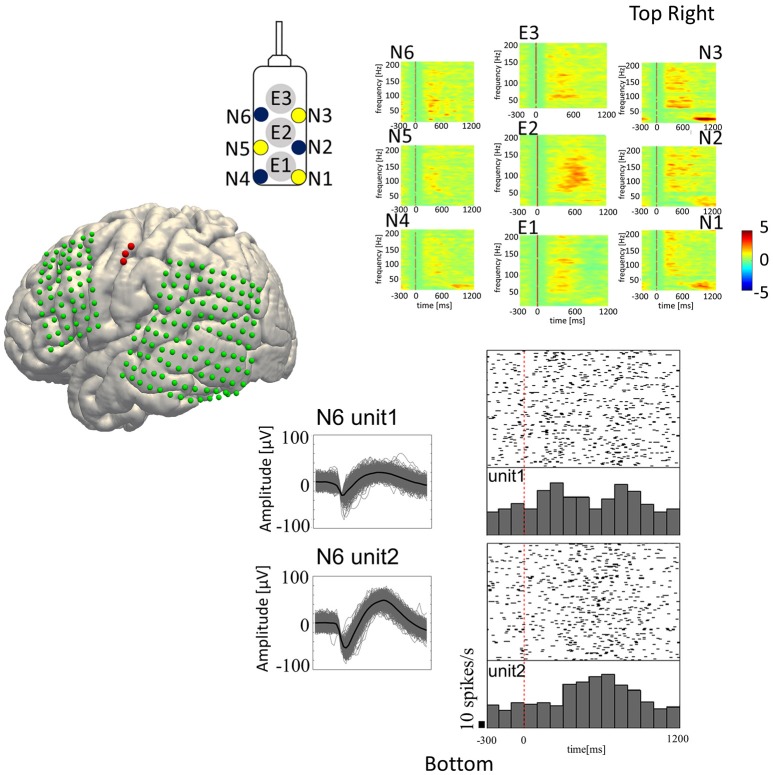
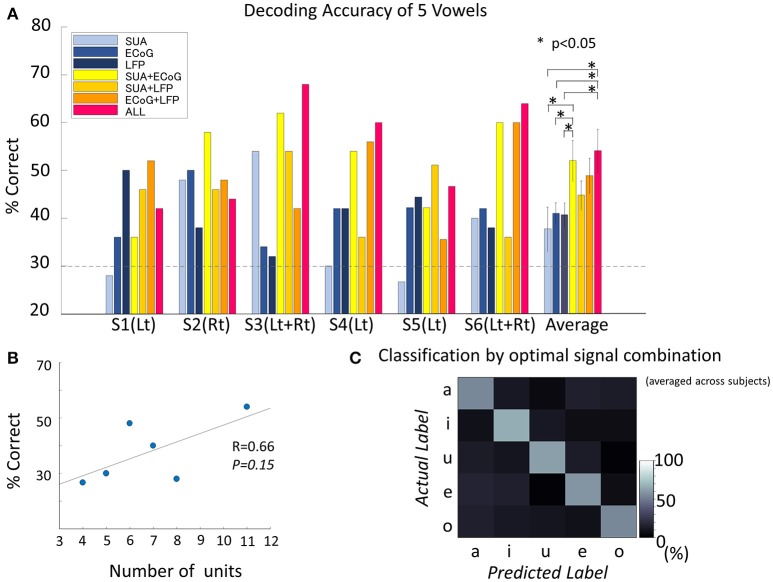
Restoration of speech communication for locked-in patients by means of brain computer interfaces (BCIs) is currently an important area of active research. Among the neural signals obtained from intracranial recordings, single/multi-unit activity (SUA/MUA), local field potential (LFP), and electrocorticography (ECoG) are good candidates for an input signal for BCIs. However, the question of which signal or which combination of the three signal modalities is best suited for decoding speech production remains unverified. In order to record SUA, LFP, and ECoG simultaneously from a highly localized area of human ventral sensorimotor cortex (vSMC), we fabricated an electrode the size of which was 7 by 13 mm containing sparsely arranged microneedle and conventional macro contacts. We determined which signal modality is the most capable of decoding speech production, and tested if the combination of these signals could improve the decoding accuracy of spoken phonemes. Feature vectors were constructed from spike frequency obtained from SUAs and event-related spectral perturbation derived from ECoG and LFP signals, then input to the decoder. The results showed that the decoding accuracy for five spoken vowels was highest when features from multiple signals were combined and optimized for each subject, and reached 59% when averaged across all six subjects. This result suggests that multi-scale signals convey complementary information for speech articulation. The current study demonstrated that simultaneous recording of multi-scale neuronal activities could raise decoding accuracy even though the recording area is limited to a small portion of cortex, which is advantageous for future implementation of speech-assisting BCIs.
通过脑机接口(BCI)恢复闭锁综合征患者的言语交流是当前一个重要的积极研究领域。在从颅内记录获得的神经信号中,单/多单元活动(SUA/MUA)、局部场电位(LFP)和皮层脑电图(ECoG)是BCI输入信号的良好候选者。然而,三种信号模式中的哪种信号或哪种信号组合最适合解码言语产生的问题仍未得到验证。为了从人类腹侧感觉运动皮层(vSMC)的高度局部区域同时记录SUA、LFP和ECoG,我们制作了一个尺寸为7×13毫米的电极,其中包含稀疏排列的微针和传统的宏观触点。我们确定了哪种信号模式最能解码言语产生,并测试了这些信号的组合是否能提高口语音素的解码准确性。特征向量由从SUA获得的尖峰频率以及从ECoG和LFP信号导出的事件相关频谱扰动构建,然后输入到解码器中。结果表明,当针对每个受试者组合并优化多个信号的特征时,五个口语元音的解码准确率最高,在所有六个受试者中平均达到59%。这一结果表明多尺度信号为言语发音传达了互补信息。当前的研究表明,即使记录区域仅限于皮层的一小部分,同时记录多尺度神经元活动也可以提高解码准确率,这对未来言语辅助BCI的实施是有利的。