Department of Endocrinology, Affiliated Hospital of Southwest Medical University, Luzhou, Sichuan 646000, China.
The Graduate School of Southwest Medical University, Luzhou, Sichuan 646000, China.
J Diabetes Res. 2018 Feb 20;2018:7078214. doi: 10.1155/2018/7078214. eCollection 2018.
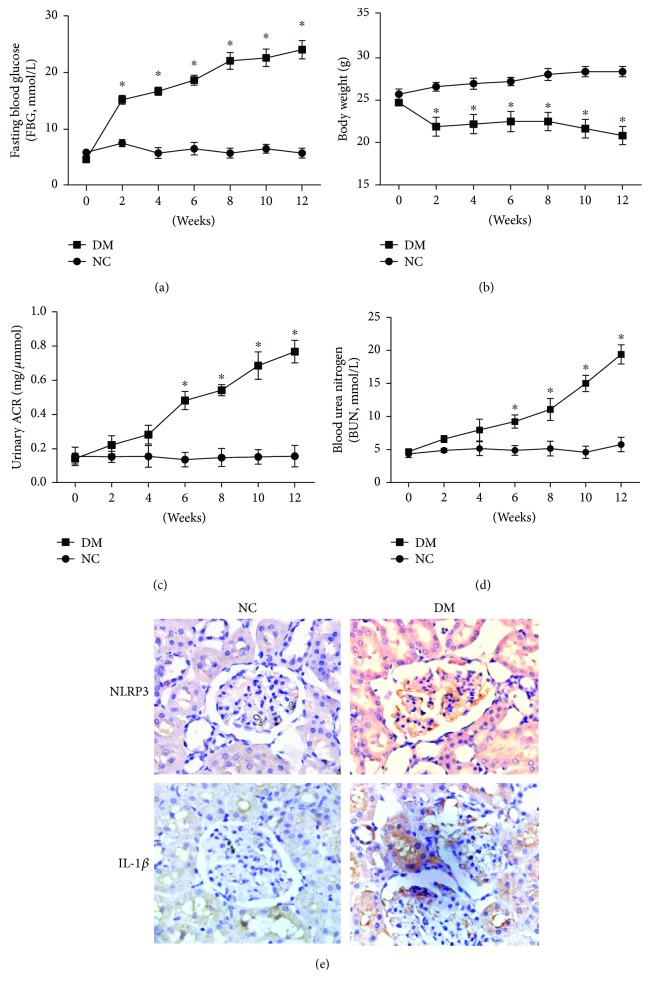
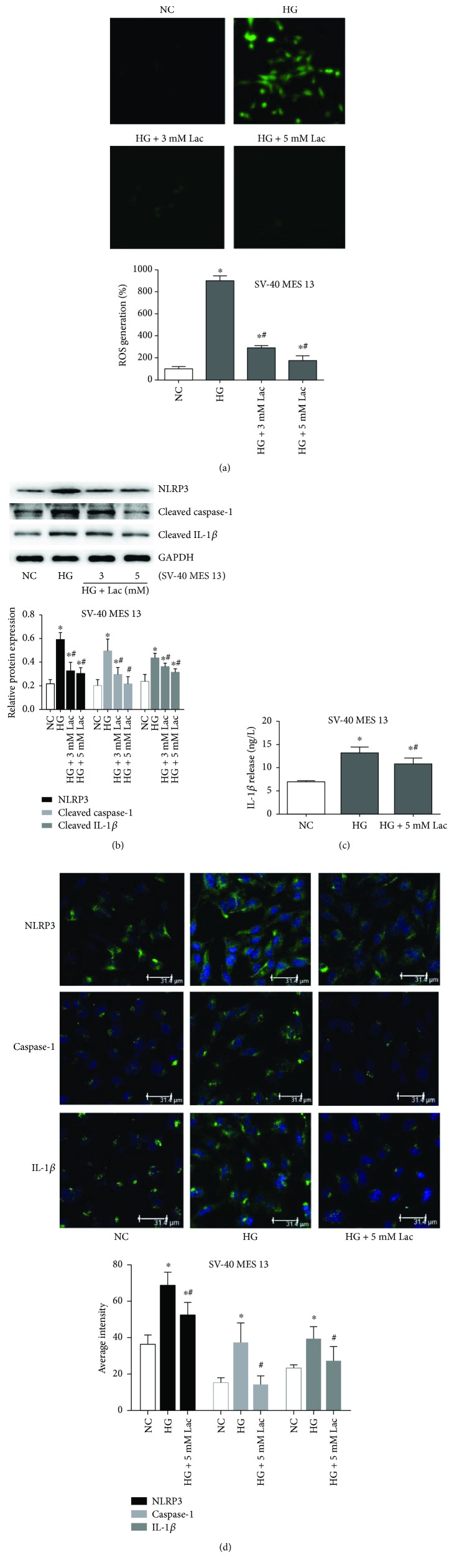
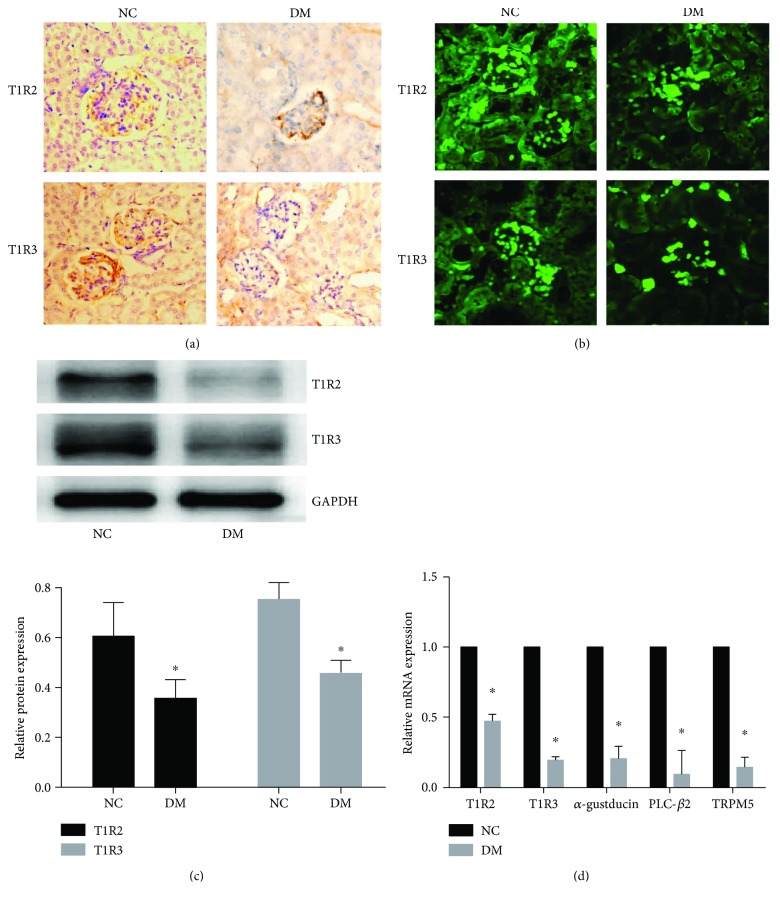
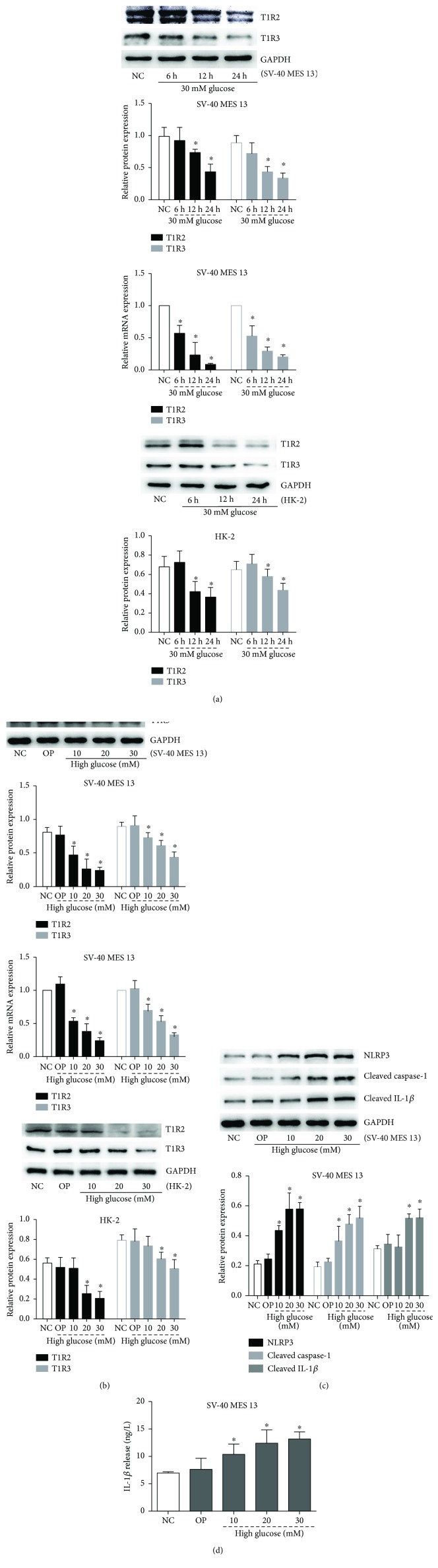
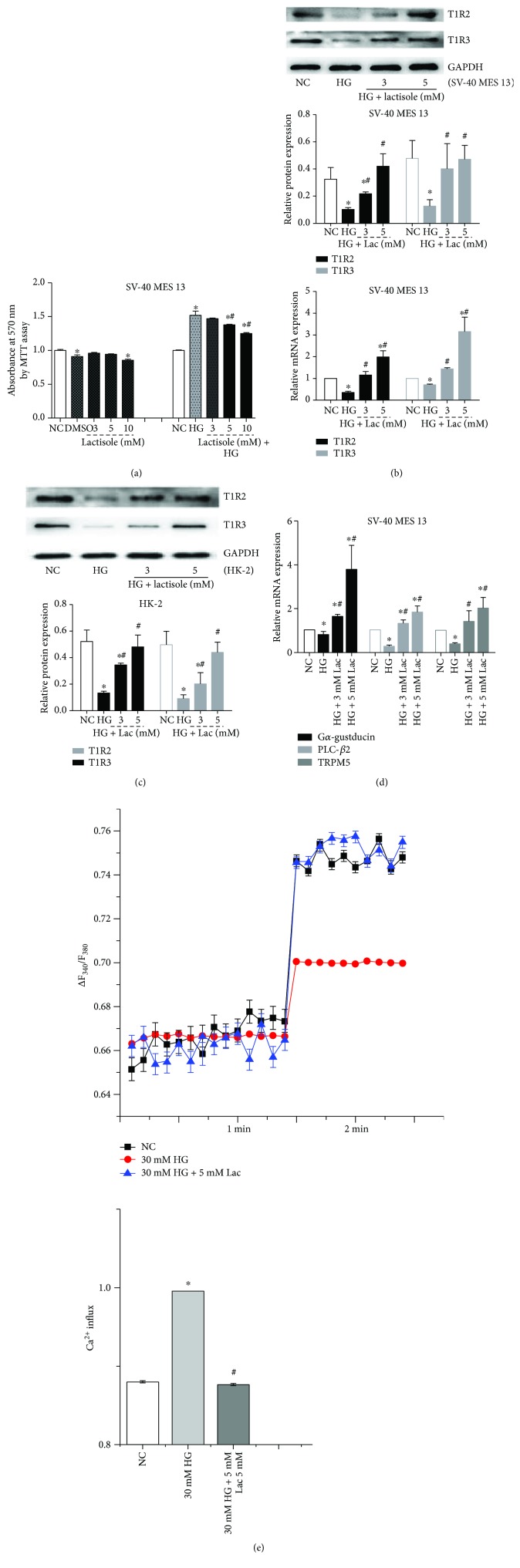
Previous studies demonstrated that ROS-NLRP3 inflammasome signaling activation was involved in the pathogenesis of diabetic nephropathy (DN). Recent research has shown that sweet taste receptors (STRs) are important sentinels of innate immunity. Whether high glucose primes ROS-NLRP3 inflammasome signaling via STRs is unclear. In this study, diabetic mouse model was induced by streptozotocin (STZ) in vivo; mouse glomerular mesangial cells (GMCs) and human proximal tubular cells were stimulated by high glucose (10, 20, and 30 mmol/L) in vitro; STR inhibitor lactisole was used as an intervention reagent to evaluate the role and mechanism of the STRs in the pathogenesis of DN. Our results showed that the expression of STRs and associated signaling components (G-gustducin, PLC2, and TRPM5) was obviously downregulated under the condition of diabetes in vivo and in vitro. Furthermore, lactisole significantly mitigated the production of intracellular ROS and reversed the high glucose-induced decrease of Ca and the activation of NLRP3 inflammasome signaling in vitro ( < 0.05). These combined results support the hypothesis that STRs could be involved in the activation of ROS-NLRP3 inflammasome signaling in the pathogenesis of DN, suggesting that STRs may act as new therapeutic targets of DN.
先前的研究表明,ROS-NLRP3 炎性小体信号的激活参与了糖尿病肾病 (DN) 的发病机制。最近的研究表明,甜味受体 (STR) 是先天免疫的重要哨兵。高葡萄糖是否通过 STR 引发 ROS-NLRP3 炎性小体信号尚不清楚。在这项研究中,通过体内链脲佐菌素 (STZ) 诱导糖尿病小鼠模型;体外以高葡萄糖 (10、20 和 30mmol/L) 刺激小鼠肾小球系膜细胞 (GMCs) 和人近端肾小管细胞;使用 STR 抑制剂乳果糖作为干预试剂来评估 STR 在 DN 发病机制中的作用和机制。我们的结果表明,在体内和体外糖尿病条件下,STRs 及其相关信号成分 (G-味觉素、PLC2 和 TRPM5) 的表达明显下调。此外,乳果糖可显著减轻细胞内 ROS 的产生,并逆转高葡萄糖诱导的 Ca 减少和 NLRP3 炎性小体信号的激活(<0.05)。这些综合结果支持 STR 可能参与 DN 发病机制中 ROS-NLRP3 炎性小体信号的激活的假设,表明 STR 可能作为 DN 的新治疗靶点。