Maus Marcela V, Plotkin Jason, Jakka Gopinadh, Stewart-Jones Guillaume, Rivière Isabelle, Merghoub Taha, Wolchok Jedd, Renner Christoph, Sadelain Michel
Center for Cell Engineering, Memorial Sloan Kettering Cancer Center, New York, New York, USA.
Department of Oncology, University Hospital Zurich, Zurich, Switzerland.
Mol Ther Oncolytics. 2017 Jan 11;3:1-9. doi: 10.1038/mto.2016.23. eCollection 2016.
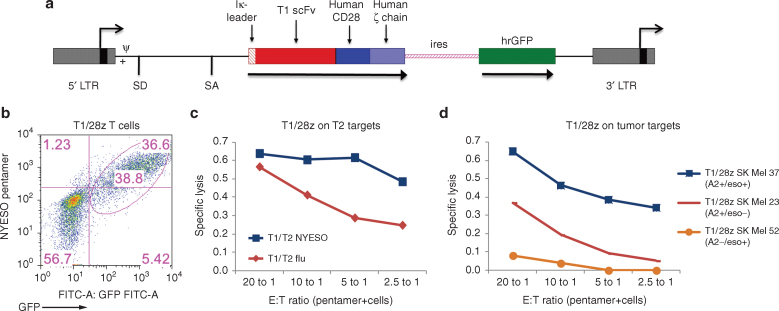
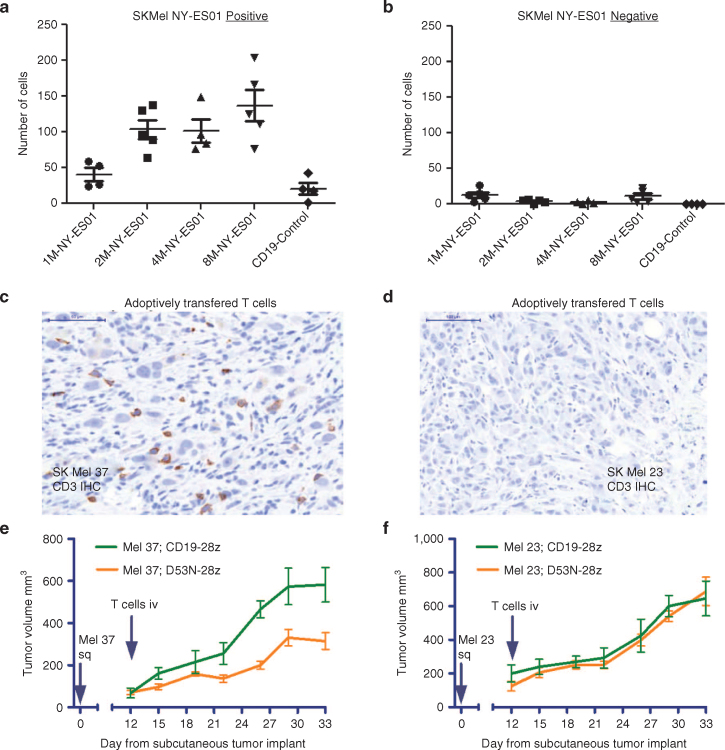
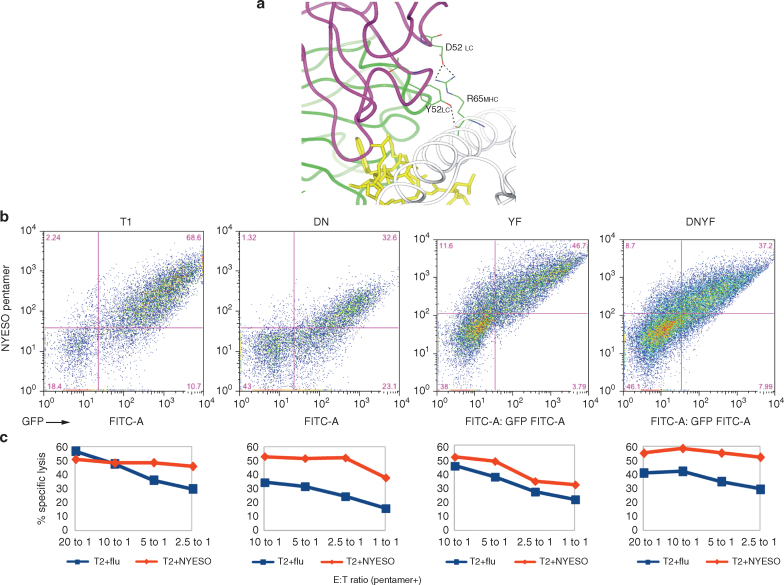
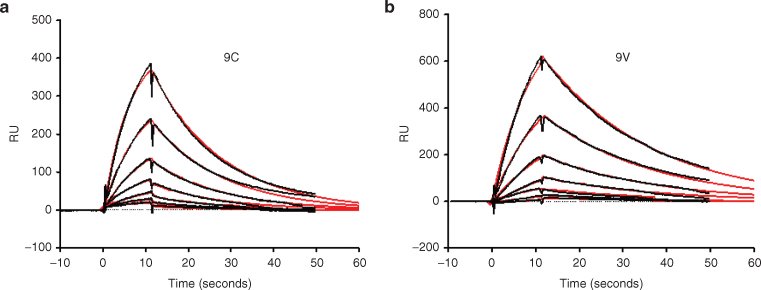
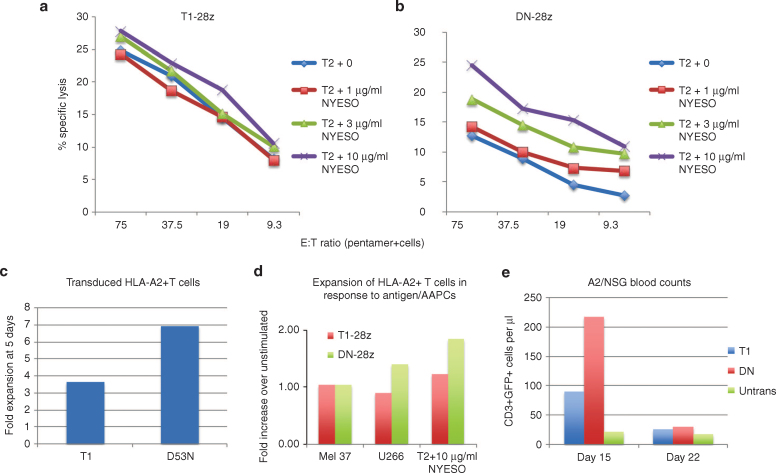
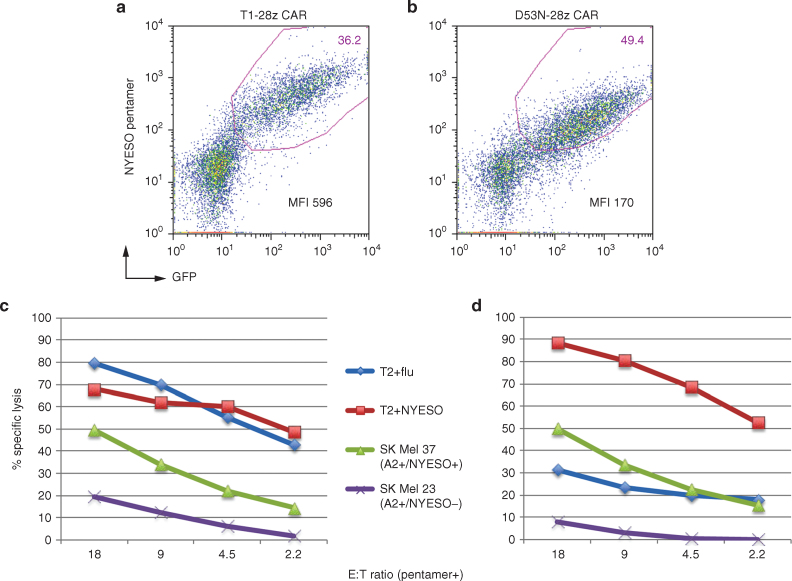
Chimeric antigen receptors (CARs) are synthetic receptors that usually redirect T cells to surface antigens independent of human leukocyte antigen (HLA). Here, we investigated a T cell receptor-like CAR based on an antibody that recognizes HLA-A*0201 presenting a peptide epitope derived from the cancer-testis antigen NY-ESO-1. We hypothesized that this CAR would efficiently redirect transduced T cells in an HLA-restricted, antigen-specific manner. However, we found that despite the specificity of the soluble Fab, the same antibody in the form of a CAR caused moderate lysis of HLA-A2 expressing targets independent of antigen owing to T cell avidity. We hypothesized that lowering the affinity of the CAR for HLA-A2 would improve its specificity. We undertook a rational approach of mutating residues that, in the crystal structure, were predicted to stabilize binding to HLA-A2. We found that one mutation (DN) lowered the affinity of the Fab to T cell receptor-range and restored the epitope specificity of the CAR. DN CAR T cells lysed native tumor targets , and, in a xenogeneic mouse model implanted with two human melanoma lines (A2+/NYESO+ and A2+/NYESO-), DN CAR T cells specifically migrated to, and delayed progression of, only the HLA-A2+/NY-ESO-1+ melanoma. Thus, although maintaining MHC-restricted antigen specificity required T cell receptor-like affinity that decreased potency, there is exciting potential for CARs to expand their repertoire to include a broad range of intracellular antigens.
嵌合抗原受体(CARs)是一种合成受体,通常可使T细胞重定向至表面抗原,而不依赖于人类白细胞抗原(HLA)。在此,我们基于一种抗体研究了一种类似T细胞受体的CAR,该抗体可识别呈递源自癌胚抗原NY-ESO-1的肽表位的HLA-A*0201。我们假设这种CAR将以HLA限制的、抗原特异性的方式有效地重定向转导的T细胞。然而,我们发现,尽管可溶性Fab具有特异性,但CAR形式的相同抗体由于T细胞亲和力导致HLA-A2表达靶标的适度裂解,而与抗原无关。我们假设降低CAR对HLA-A2的亲和力将提高其特异性。我们采用了一种合理的方法,对晶体结构中预测可稳定与HLA-A2结合的残基进行突变。我们发现一个突变(DN)将Fab的亲和力降低至T细胞受体范围,并恢复了CAR的表位特异性。DN CAR T细胞裂解天然肿瘤靶标,并且在植入两个人类黑色素瘤系(A2+/NYESO+和A2+/NYESO-)的异种小鼠模型中,DN CAR T细胞仅特异性迁移至HLA-A2+/NY-ESO-1+黑色素瘤并延缓其进展。因此,尽管维持MHC限制的抗原特异性需要类似T细胞受体的亲和力,但这会降低效力,不过CARs有令人兴奋的潜力来扩展其库以包括广泛的细胞内抗原。