Zhao Q, Ahmed M, Tassev D V, Hasan A, Kuo T-Y, Guo H-F, O'Reilly R J, Cheung N-K V
Department of Pediatrics, Memorial Sloan Kettering Cancer Center, New York, NY, USA.
Pediatric Stem Cell Transplant Service, Memorial Sloan Kettering Cancer Center, New York, NY, USA.
Leukemia. 2015 Nov;29(11):2238-47. doi: 10.1038/leu.2015.125. Epub 2015 May 19.
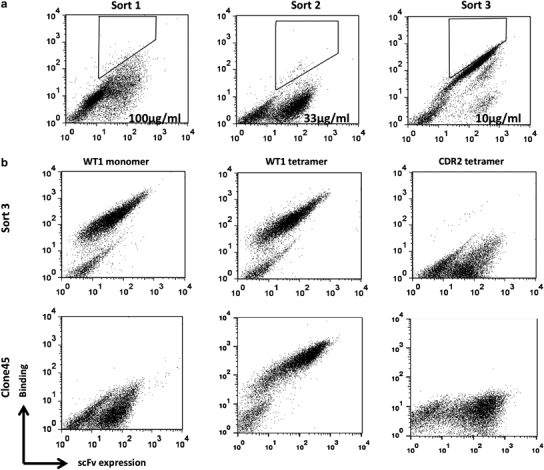
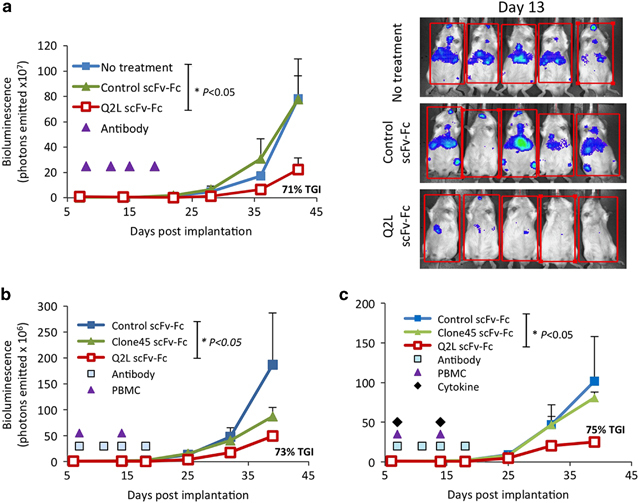
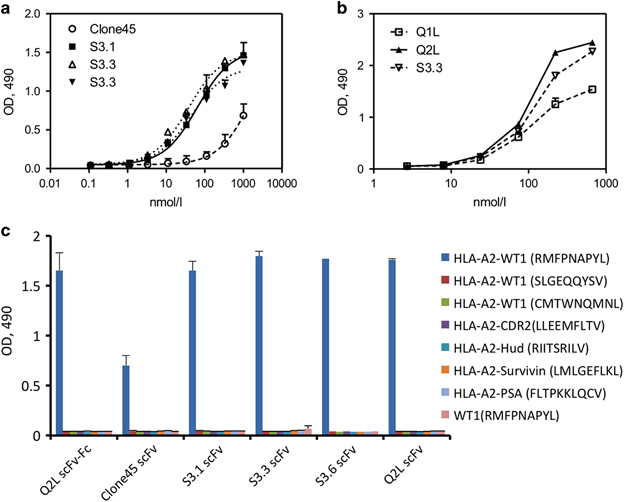
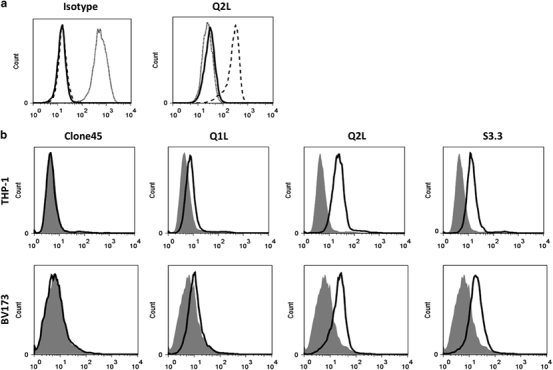
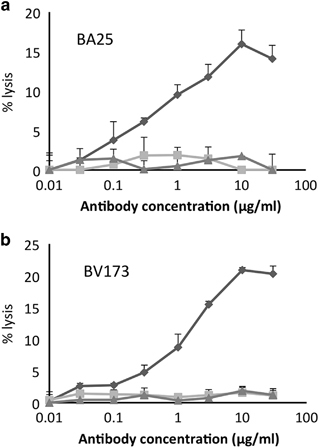
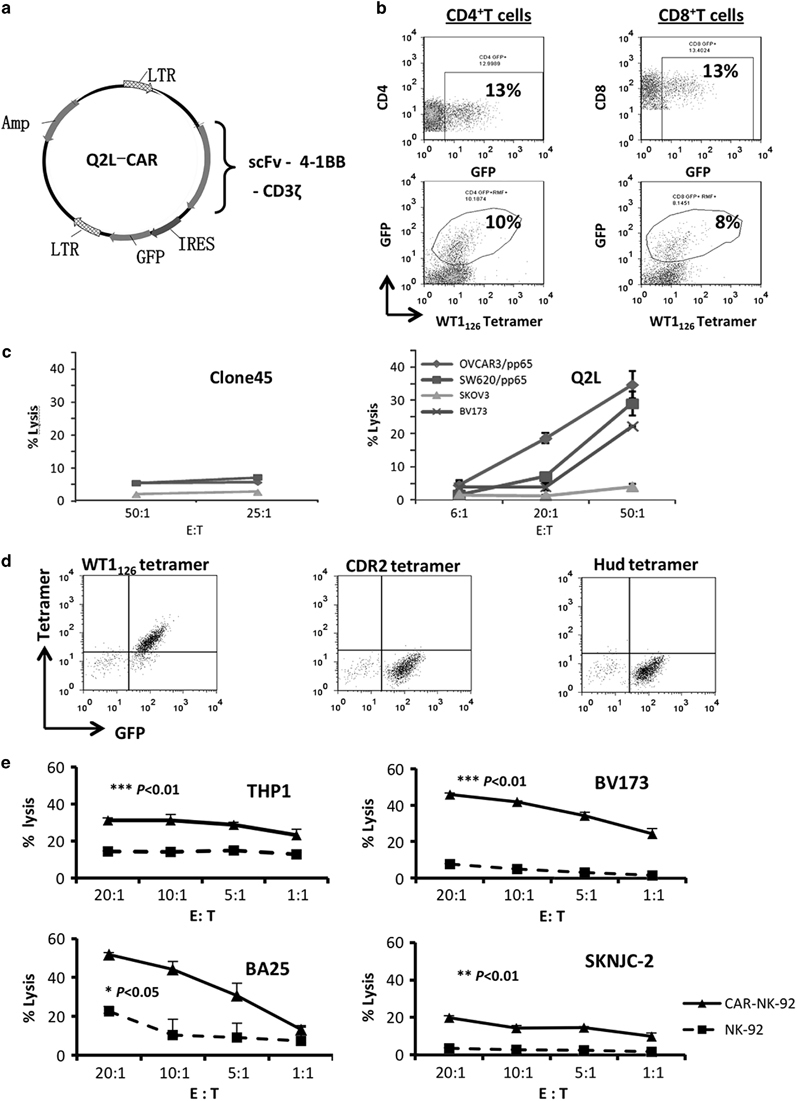
WT1126 (RMFPNAPYL) is a human leukocyte antigen-A2 (HLA-A2)-restricted peptide derived from Wilms tumor protein 1 (WT1), which is widely expressed in a broad spectrum of leukemias, lymphomas and solid tumors. A novel T-cell-receptor (TCR)-like single-chain variable fragment (scFv) antibody specific for the T-cell epitope consisting of the WT1/HLA-A2 complex was isolated from a human scFv phage library. This scFv was affinity-matured by mutagenesis combined with yeast display and structurally analyzed using a homology model. This monovalent scFv showed a 100-fold affinity improvement (dissociation constant (KD)=3 nm) and exquisite specificity towards its targeted epitope or HLA-A2(+)/WT1(+) tumor cells. Bivalent scFv-huIgG1-Fc fusion protein demonstrated an even higher avidity (KD=2 pm) binding to the T-cell epitope and to tumor targets and was capable of mediating antibody-dependent cell-mediated cytotoxicity or tumor lysis by chimeric antigen receptor-expressing human T- or NK-92-MI-transfected cells. This antibody demonstrated specific and potent cytotoxicity in vivo towards WT1-positive leukemia xenograft that was HLA-A2 restricted. In summary, T-cell epitopes can provide novel targets for antibody-based therapeutics. By combining phage and yeast displays and scFv-Fc fusion platforms, a strategy for developing high-affinity TCR-like antibodies could be rapidly explored for potential clinical development.
WT1126(RMFPNAPYL)是一种源自威尔姆斯瘤蛋白1(WT1)的人白细胞抗原A2(HLA - A2)限制性肽,其在广泛的白血病、淋巴瘤和实体瘤中广泛表达。从人scFv噬菌体文库中分离出一种对由WT1/HLA - A2复合物组成的T细胞表位具有特异性的新型T细胞受体(TCR)样单链可变片段(scFv)抗体。该scFv通过诱变结合酵母展示进行亲和力成熟,并使用同源模型进行结构分析。这种单价scFv对其靶向表位或HLA - A2(+)/WT1(+)肿瘤细胞的亲和力提高了100倍(解离常数(KD)=3 nm),且具有极高的特异性。二价scFv - huIgG1 - Fc融合蛋白对T细胞表位和肿瘤靶点表现出更高的亲和力(KD = 2 pm),并且能够通过表达嵌合抗原受体的人T细胞或NK - 92 - MI转染细胞介导抗体依赖性细胞介导的细胞毒性或肿瘤裂解。该抗体在体内对HLA - A2限制性的WT1阳性白血病异种移植瘤表现出特异性和强效的细胞毒性。总之,T细胞表位可为基于抗体的治疗提供新的靶点。通过结合噬菌体和酵母展示以及scFv - Fc融合平台,可以快速探索一种开发高亲和力TCR样抗体的策略,用于潜在的临床开发。