Guo Shasha, Xi Xiaozhi
Shandong Women's University, Jinan, 250300, People's Republic of China.
Department of Otolaryngology-Head and Neck Surgery, Shandong Provincial ENT Hospital, Shandong University, Jinan, 250022, People's Republic of China.
Biomark Res. 2025 Mar 11;13(1):41. doi: 10.1186/s40364-025-00755-5.
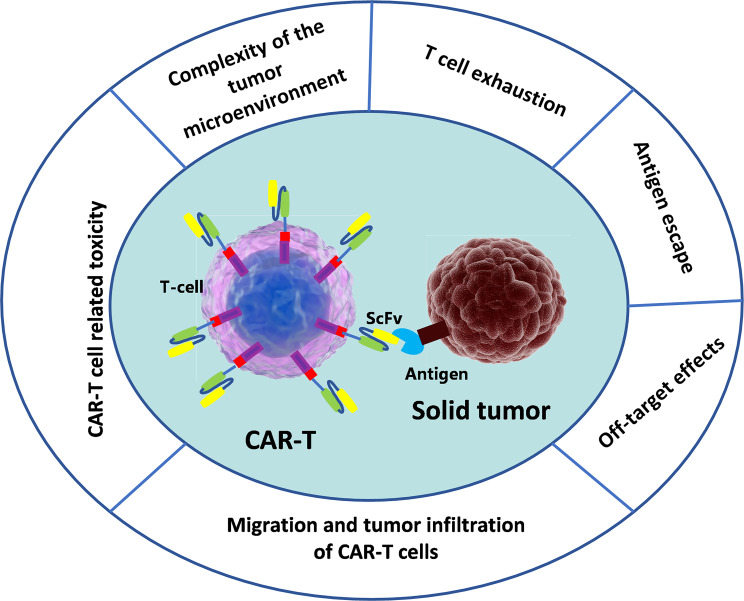
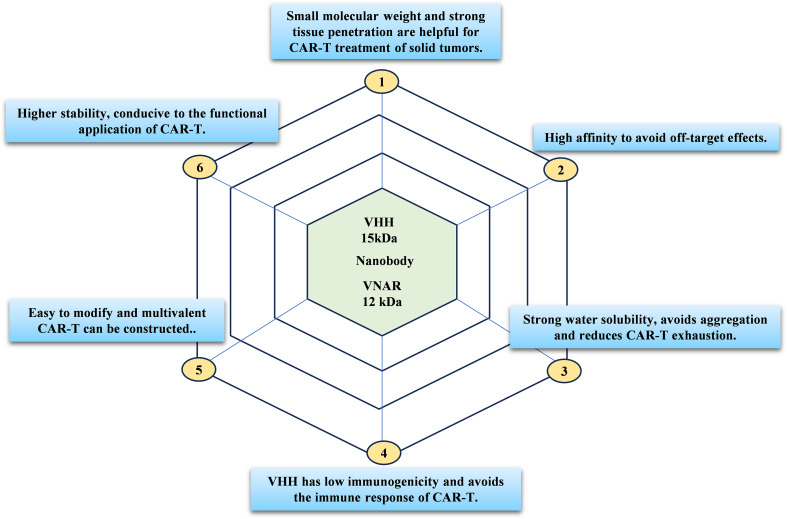
CAR-T cells are genetically modified T lymphocytes that express chimeric antigen receptors (CAR) on their surfaces. These receptors enable T lymphocytes to recognize specific antigens on target cells, triggering a response that leads to targeted cytotoxicity. While CAR-T therapy has effectively treated various blood cancers, it faces significant challenges in addressing solid tumors. These challenges include identifying precise tumor antigens, overcoming antigen evasion, and enhancing the function of CAR-T cells within the tumor microenvironment. Single domain antibody, versatile tools with low immunogenicity, high stability, and strong affinity, show promise for improving the efficacy of CAR-T cells against solid tumors. By addressing these challenges, single domain antibody has the potential to overcome the limitations associated with ScFv antibody-based CAR-T therapies. This review highlights the benefits of utilizing single domain antibody in CAR-T therapy, particularly in targeting tumor antigens, and explores development strategies that could advance the field.
嵌合抗原受体T细胞(CAR-T细胞)是经过基因改造的T淋巴细胞,其表面表达嵌合抗原受体(CAR)。这些受体使T淋巴细胞能够识别靶细胞上的特定抗原,引发导致靶向细胞毒性的反应。虽然CAR-T疗法已有效治疗多种血液癌症,但在治疗实体瘤方面面临重大挑战。这些挑战包括识别精确的肿瘤抗原、克服抗原逃逸以及增强肿瘤微环境中CAR-T细胞的功能。单域抗体具有低免疫原性、高稳定性和强亲和力等多种特性,有望提高CAR-T细胞对实体瘤的疗效。通过应对这些挑战,单域抗体有可能克服基于单链抗体片段(ScFv)抗体的CAR-T疗法相关的局限性。本综述强调了在CAR-T疗法中使用单域抗体的益处,特别是在靶向肿瘤抗原方面,并探讨了可能推动该领域发展的策略。