Department of Oncology, Nanfang Hospital, Southern Medical University, Guangzhou, China.
Department of Oncology, Cancer Center, Integrated Hospital of Traditional Chinese Medicine, Southern Medical University, Guangzhou, China.
Cancer Sci. 2018 Jun;109(6):1753-1763. doi: 10.1111/cas.13618. Epub 2018 May 22.
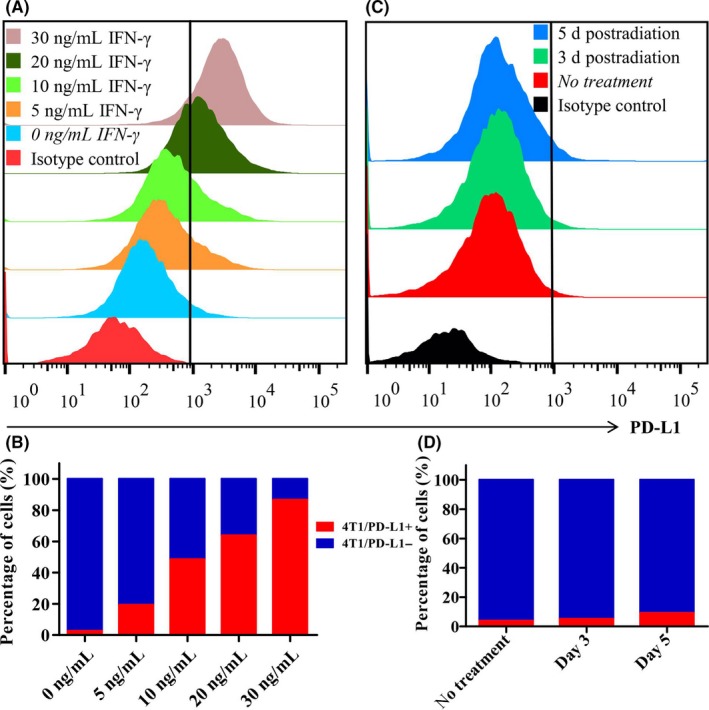
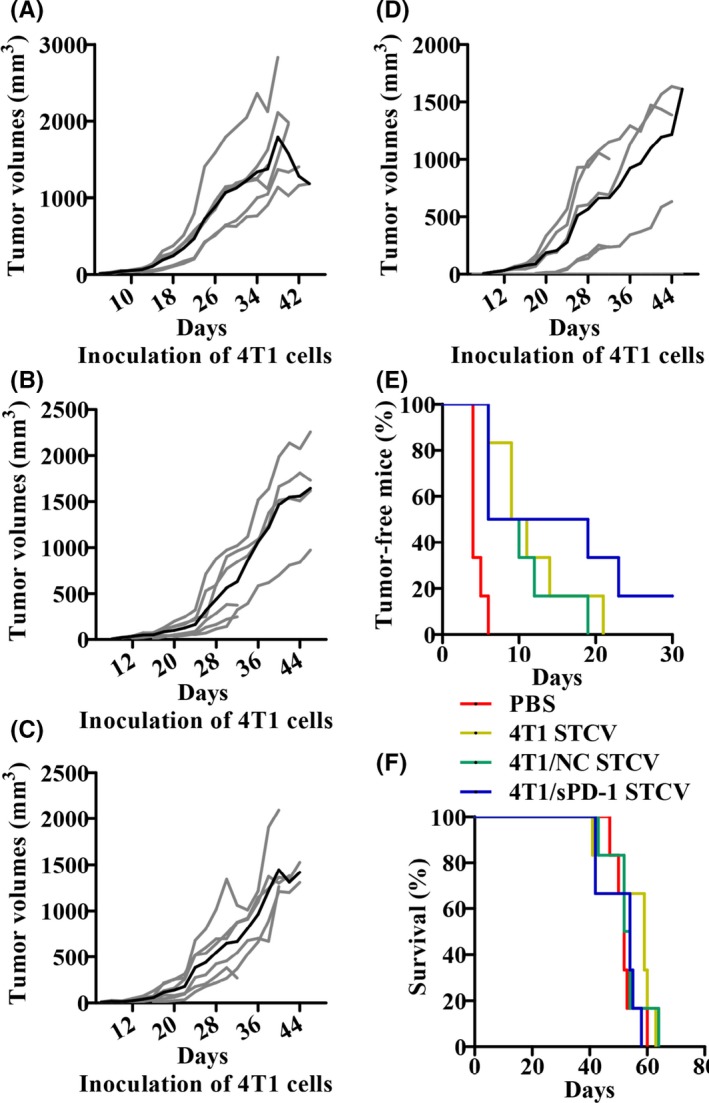
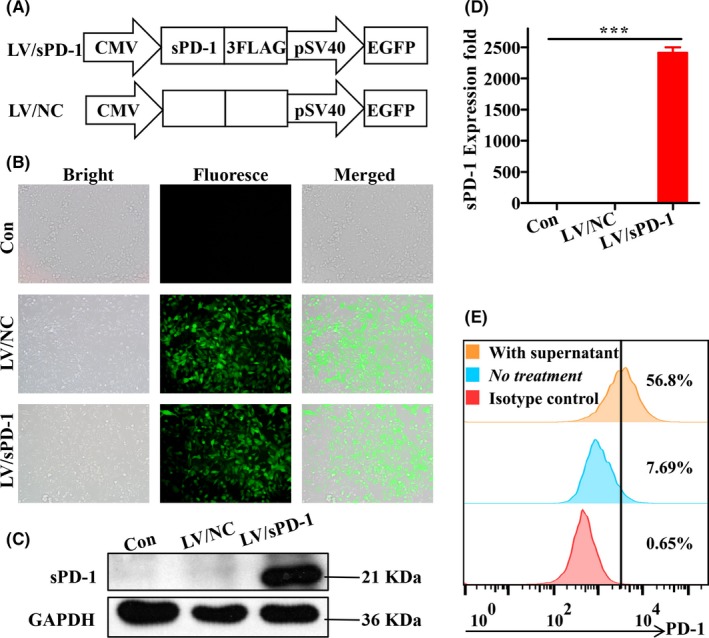
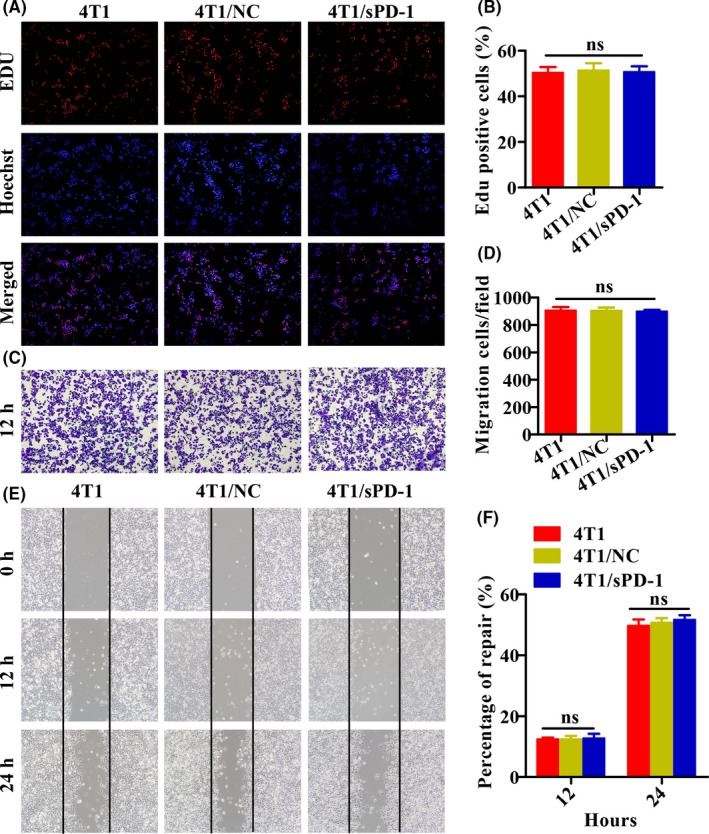
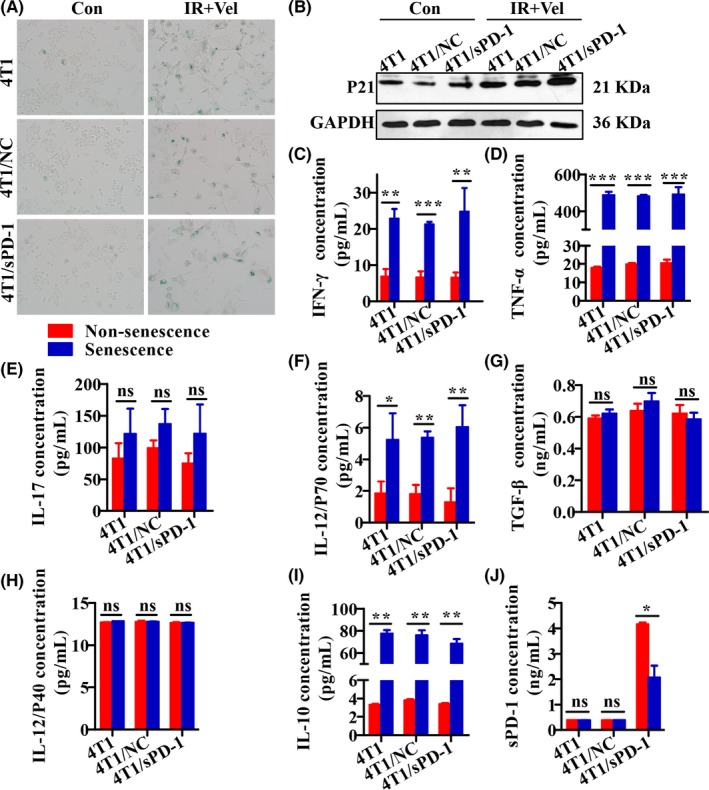
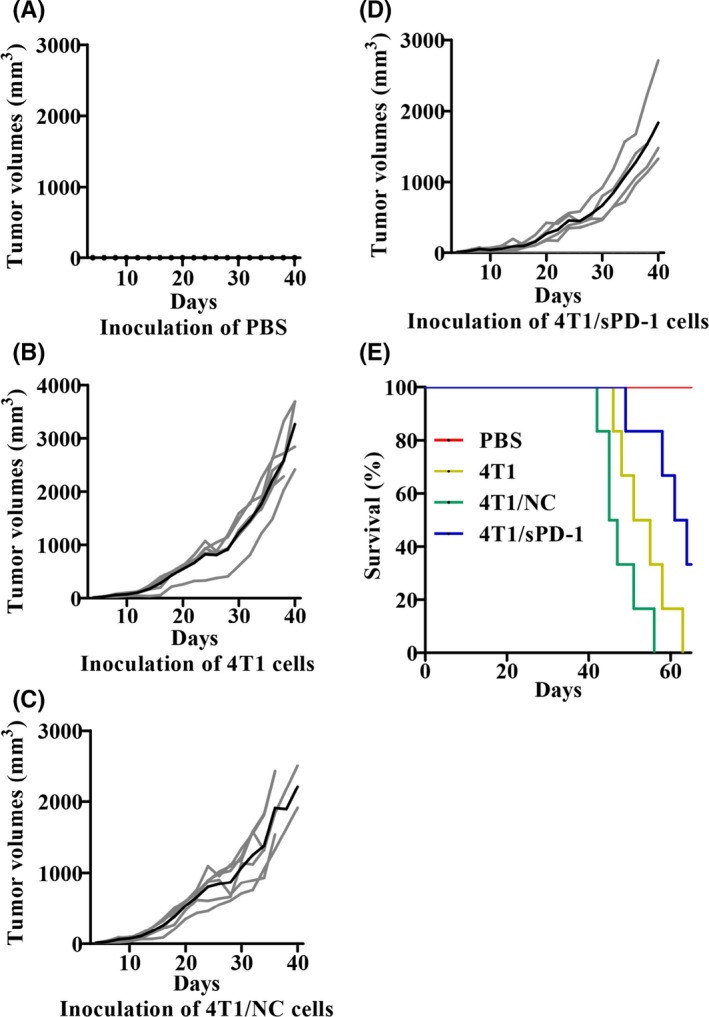
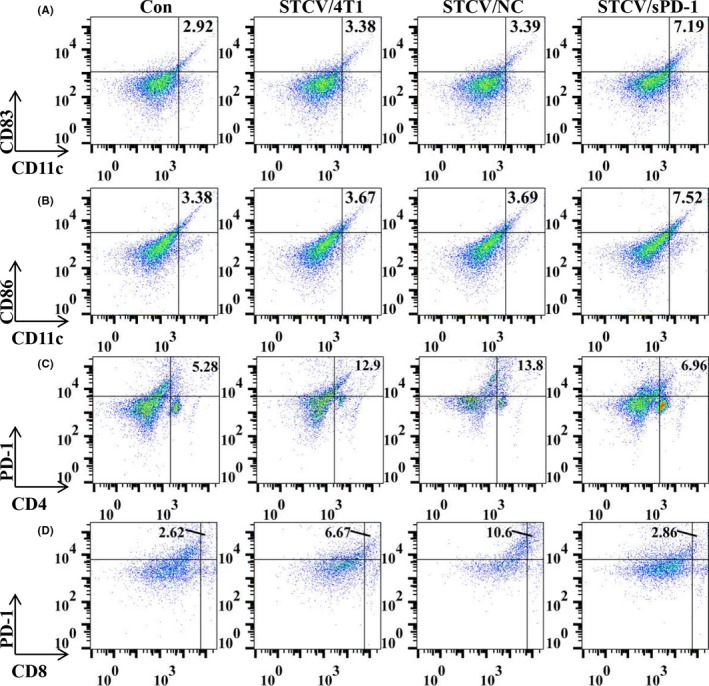
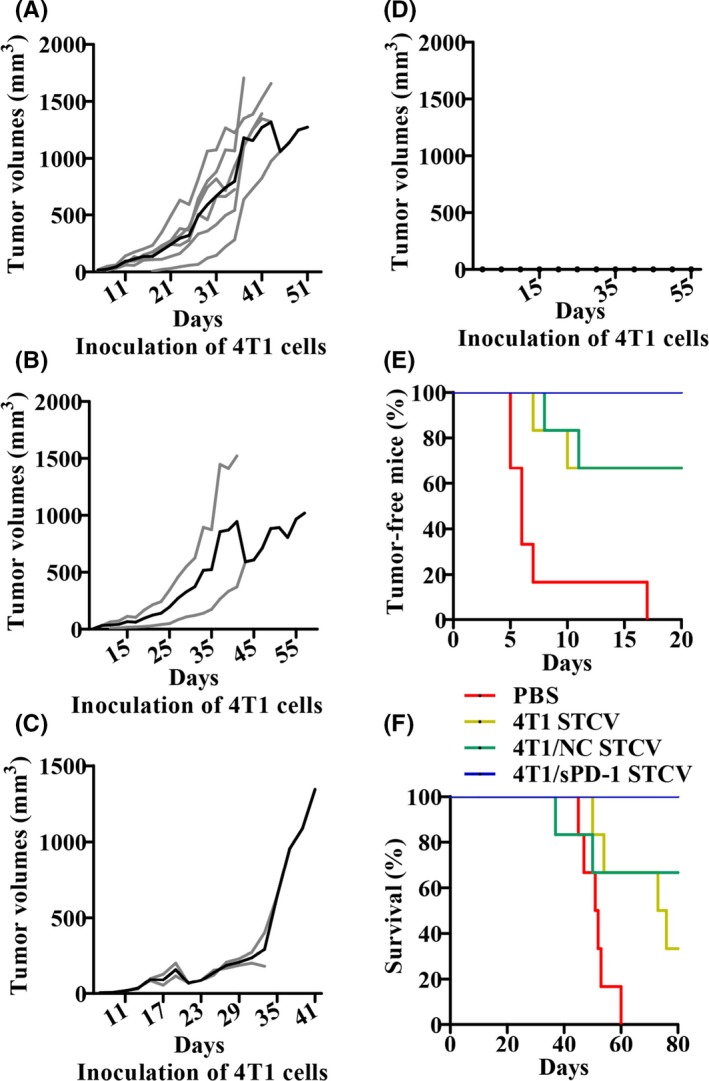
Various types of vaccines have been proposed as approaches for prevention or delay of the onset of cancer by boosting the endogenous immune system. We previously developed a senescent-cell-based vaccine, induced by radiation and veliparib, as a preventive and therapeutic tool against triple-negative breast cancer. However, the programmed death receptor-1/programmed death ligand-1 (PD-1/PD-L1) pathway was found to play an important role in vaccine failure. Hence, we further developed soluble programmed death receptor-1 (sPD1)-expressing senescent cells to overcome PD-L1/PD-1-mediated immune suppression while vaccinating to promote dendritic cell (DC) maturity, thereby amplifying T-cell activation. In the present study, sPD1-expressing senescent cells showed a particularly active status characterized by growth arrest and modified immunostimulatory cytokine secretion in vitro. As expected, sPD1-expressing senescent tumor cell vaccine (STCV/sPD-1) treatment attracted more mature DC and fewer exhausted-PD1 T cells in vivo. During the course of the vaccine studies, we observed greater safety and efficacy for STCV/sPD-1 than for control treatments. STCV/sPD-1 pre-injections provided complete protection from 4T1 tumor challenge in mice. Additionally, the in vivo therapeutic study of mice with s.c. 4T1 tumor showed that STCV/sPD-1 vaccination delayed tumorigenesis and suppressed tumor progression at early stages. These results showed that STCV/sPD-1 effectively induced a strong antitumor immune response against cancer and suggested that it might be a potential strategy for TNBC prevention.
各种类型的疫苗已被提出作为通过增强内源性免疫系统来预防或延缓癌症发生的方法。我们之前开发了一种基于衰老细胞的疫苗,由辐射和 veliparib 诱导,作为预防和治疗三阴性乳腺癌的工具。然而,程序性死亡受体 1/程序性死亡配体 1(PD-1/PD-L1)途径被发现在疫苗失败中起着重要作用。因此,我们进一步开发了表达可溶性程序性死亡受体 1(sPD1)的衰老细胞,以克服 PD-L1/PD-1 介导的免疫抑制,同时接种疫苗以促进树突状细胞(DC)成熟,从而扩增 T 细胞激活。在本研究中,sPD1 表达的衰老细胞表现出特别活跃的状态,其特征是体外生长停滞和修饰的免疫刺激性细胞因子分泌。正如预期的那样,sPD1 表达的衰老肿瘤细胞疫苗(STCV/sPD-1)治疗在体内吸引了更多成熟的 DC 和更少的耗尽 PD1 T 细胞。在疫苗研究过程中,我们观察到 STCV/sPD-1 的安全性和疗效优于对照治疗。STCV/sPD-1 预注射可完全防止 4T1 肿瘤在小鼠中的挑战。此外,皮下 4T1 肿瘤的体内治疗研究表明,STCV/sPD-1 疫苗接种可延迟肿瘤发生并在早期阶段抑制肿瘤进展。这些结果表明 STCV/sPD-1 可有效诱导针对癌症的强烈抗肿瘤免疫反应,并表明其可能是预防三阴性乳腺癌的潜在策略。