Department of Oral Biology, College of Dentistry, University of Illinois at Chicago, Chicago, IL, USA.
Department of Microbiology and Immunology, College of Medicine, University of Illinois at Chicago, Chicago, IL, USA.
Microbiologyopen. 2019 Jan;8(1):e00628. doi: 10.1002/mbo3.628. Epub 2018 Apr 19.
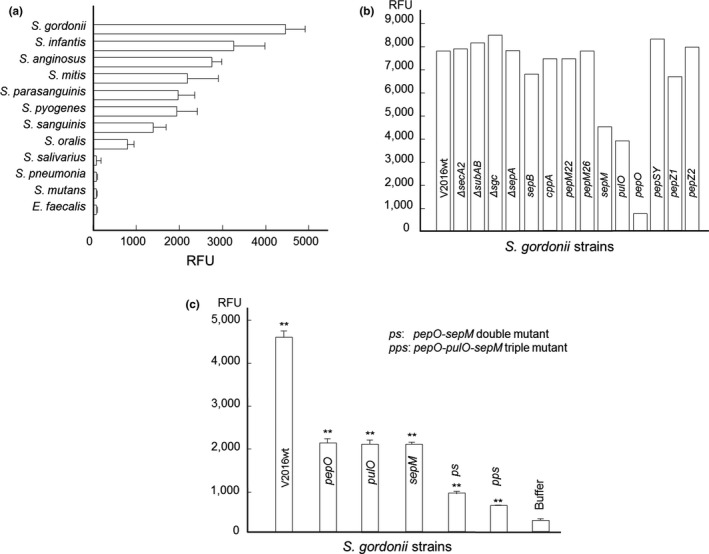
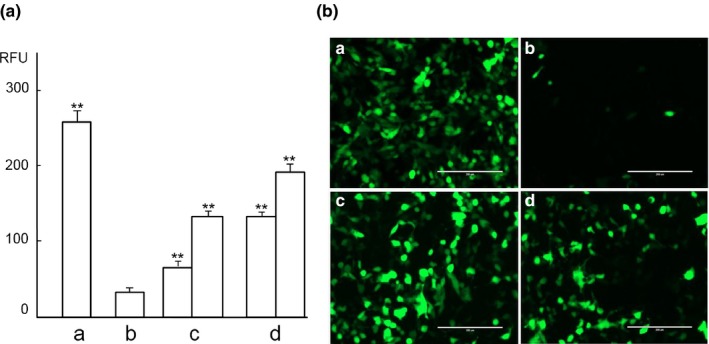
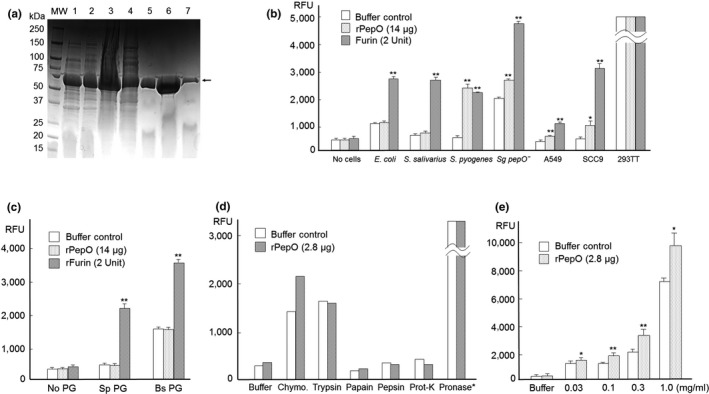
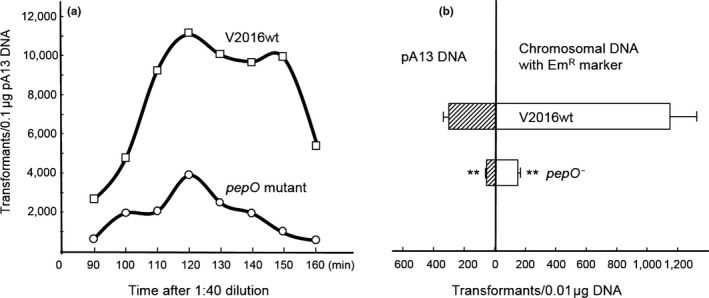
Both cervical and throat cancers are associated with human papillomavirus (HPV). HPV infection requires cleavage of the minor capsid protein L2 by furin. While furin is present in the vaginal epithelium, it is absent in oral epithelial basal cells where HPV infection occurs. The objective of this study was to investigate whether common oral bacteria express furin-like peptidases. By screening strains representing 12 oral Streptococcus and Enterococcus species, we identified that eight Streptococcus strains displayed high levels of furin-like peptidase activity, with S. gordonii V2016 the highest. We constructed null mutations for 14 genes encoding putative endopeptidases in S. gordonii V2016. Results showed that three endopeptidases, PepO, PulO, and SepM, had furin-like activities. All three mutants showed decreased natural transformation by chromosomal DNA, while the pepO mutant also showed reduced transformation by plasmid DNA, indicating involvement of these endopeptidases in competence development. The purified S. gordonii PepO protein promoted infection of epithelial 293TT cells in vitro by HPV16 pseudovirus. In conclusion, oral bacteria might promote HPV infection and contribute to HPV tissue tropism and subsequent carcinogenesis in the oral cavity and throat by providing furin-like endopeptidases.
宫颈和咽喉癌均与人类乳头瘤病毒(HPV)有关。HPV 感染需要弗林蛋白酶切割次要衣壳蛋白 L2。虽然弗林蛋白酶存在于阴道上皮中,但不存在于 HPV 感染发生的口腔上皮基底细胞中。本研究旨在探讨常见口腔细菌是否表达弗林样肽酶。通过筛选代表 12 种口腔链球菌和肠球菌的菌株,我们发现 8 种链球菌菌株显示出高水平的弗林样肽酶活性,其中 S. gordonii V2016 最高。我们构建了 S. gordonii V2016 中 14 种编码潜在内肽酶的基因的缺失突变。结果表明,三种内肽酶 PepO、PulO 和 SepM 具有弗林样活性。所有三种突变体的自然转化能力均下降,而 pepO 突变体的质粒 DNA 转化能力也下降,表明这些内肽酶参与了感受态的形成。纯化的 S. gordonii PepO 蛋白促进了 HPV16 假病毒对上皮 293TT 细胞的体外感染。总之,口腔细菌可能通过提供弗林样内肽酶促进 HPV 感染,并有助于 HPV 在口腔和咽喉组织中的嗜性以及随后的致癌作用。