The Eighth Affiliated Hospital of Sun Yat-sen University, Shenzhen, Guangdong, China.
Chinese and Wsetern Integrative Medicine, Shcool of Medicine, Jinan University, Guangzhou, Guangdong, China.
Curr Neuropharmacol. 2019;17(6):563-579. doi: 10.2174/1570159X16666180419141613.
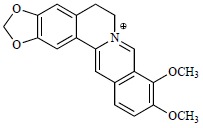
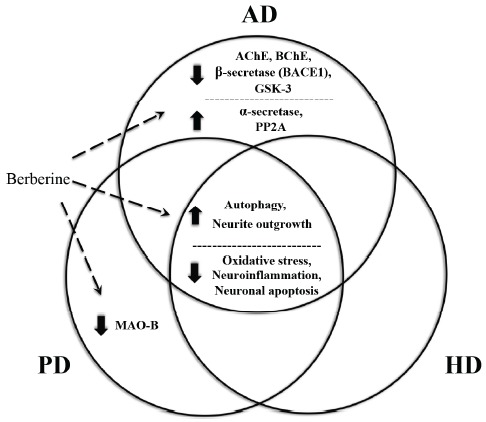
Neurodegenerative diseases are among the most serious health problems affecting millions of people worldwide. Such diseases are characterized by a progressive degeneration and / or death of neurons in the central nervous system. Currently, there are no therapeutic approaches to cure or even halt the progression of neurodegenerative diseases. During the last two decades, much attention has been paid to the neuroprotective and anti-neurodegenerative activities of compounds isolated from natural products with high efficacy and low toxicity. Accumulating evidence indicates that berberine, an isoquinoline alkaloid isolated from traditional Chinese medicinal herbs, may act as a promising anti-neurodegenerative agent by inhibiting the activity of the most important pathogenic enzymes, ameliorating intracellular oxidative stress, attenuating neuroinflammation, triggering autophagy and protecting neurons against apoptotic cell death. This review attempts to summarize the current state of knowledge regarding the therapeutic potential of berberine against neurodegenerative diseases, with a focus on the molecular mechanisms that underlie its effects on Alzheimer's, Parkinson's and Huntington's diseases.
神经退行性疾病是全球数百万人面临的最严重健康问题之一。这类疾病的特征是中枢神经系统中的神经元进行性退化和/或死亡。目前,还没有治疗方法可以治愈甚至阻止神经退行性疾病的进展。在过去的二十年中,人们高度关注从具有高效低毒的天然产物中分离得到的化合物的神经保护和抗神经退行性作用。越来越多的证据表明,小檗碱,一种从传统中药中分离得到的异喹啉生物碱,可能通过抑制最重要的致病酶的活性、改善细胞内氧化应激、减轻神经炎症、触发自噬以及保护神经元免受细胞凋亡性死亡等方式,作为一种有前途的抗神经退行性药物发挥作用。本文综述了小檗碱在治疗神经退行性疾病方面的潜在作用,重点介绍了其对阿尔茨海默病、帕金森病和亨廷顿病影响的分子机制。