Institute of Genetic Medicine, Newcastle University, International Centre for Life, Central Parkway, Newcastle upon Tyne, NE1 3BZ, UK.
Present Address: The European Bioinformatics Institute (EMBL-EBI), Wellcome Genome Campus, Cambridge, CB10 1SD, UK.
BMC Genomics. 2018 Apr 20;19(1):276. doi: 10.1186/s12864-018-4660-7.
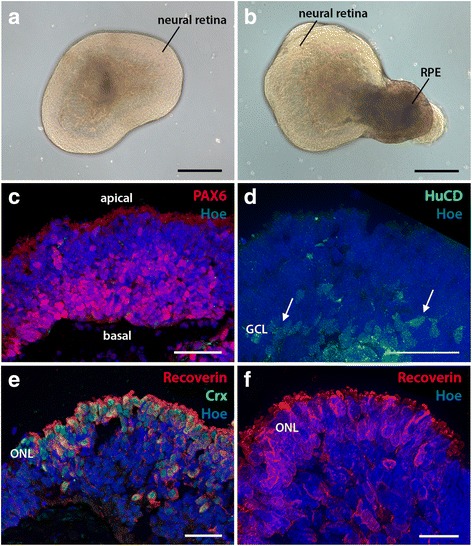
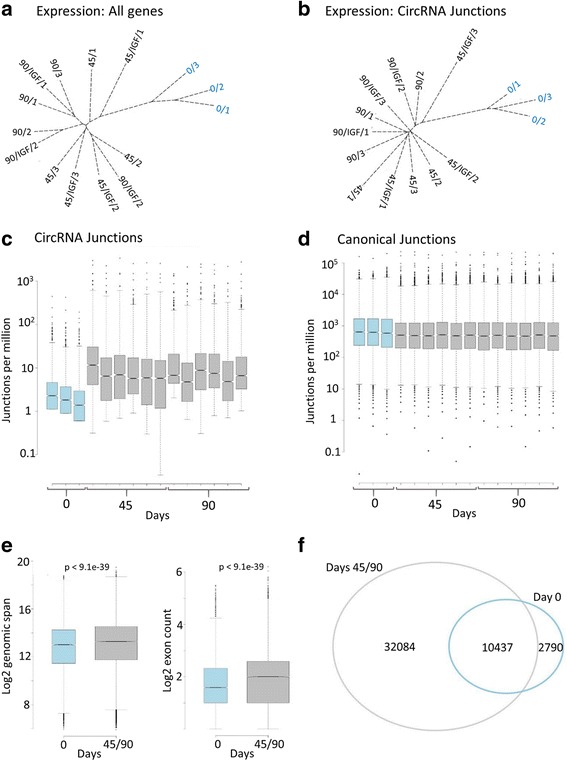
Circular RNAs (circRNAs) are predominantly derived from protein coding genes, and some can act as microRNA sponges or transcriptional regulators. Changes in circRNA levels have been identified during human development which may be functionally important, but lineage-specific analyses are currently lacking. To address this, we performed RNAseq analysis of human embryonic stem (ES) cells differentiated for 90 days towards 3D laminated retina.
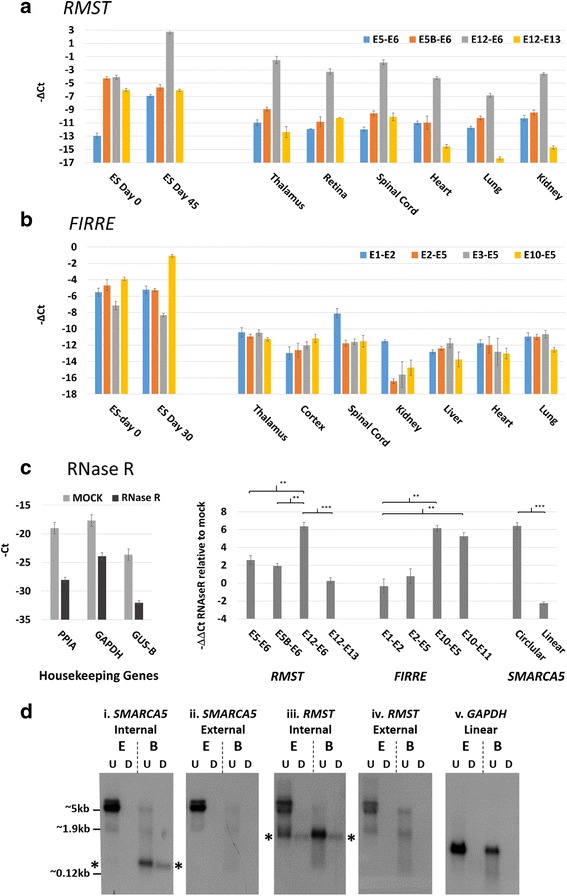
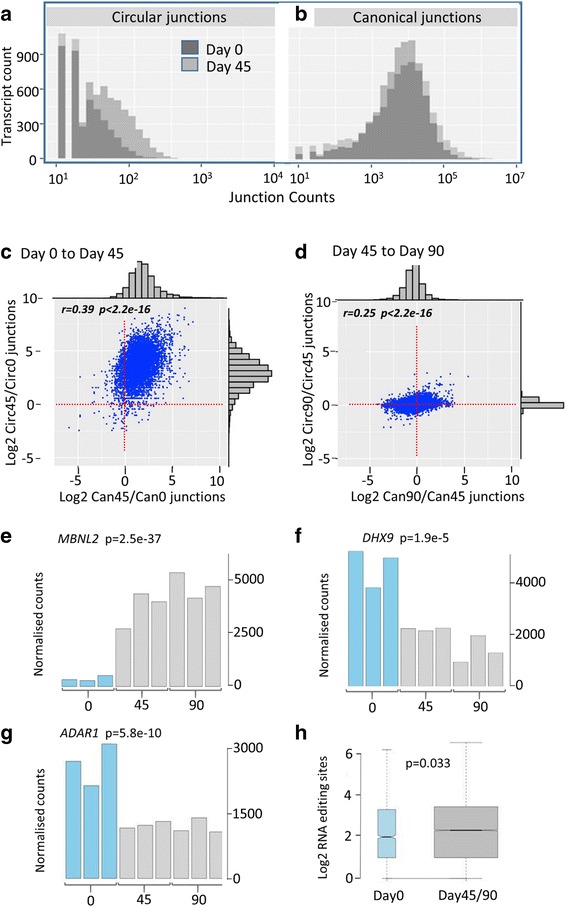
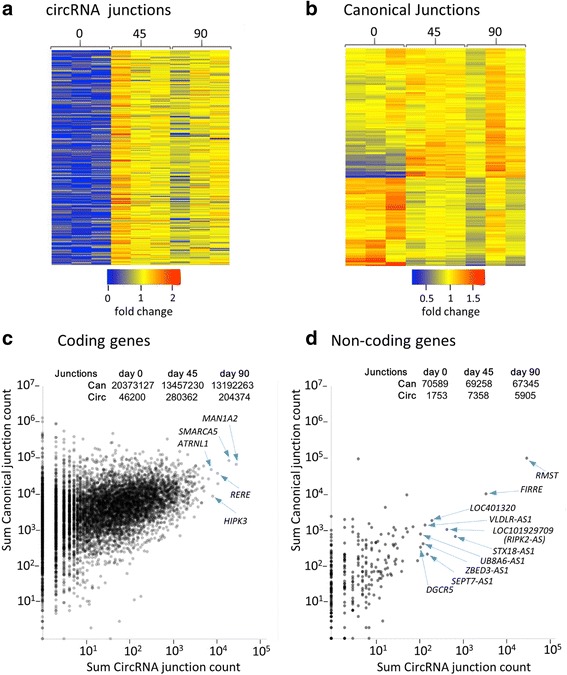
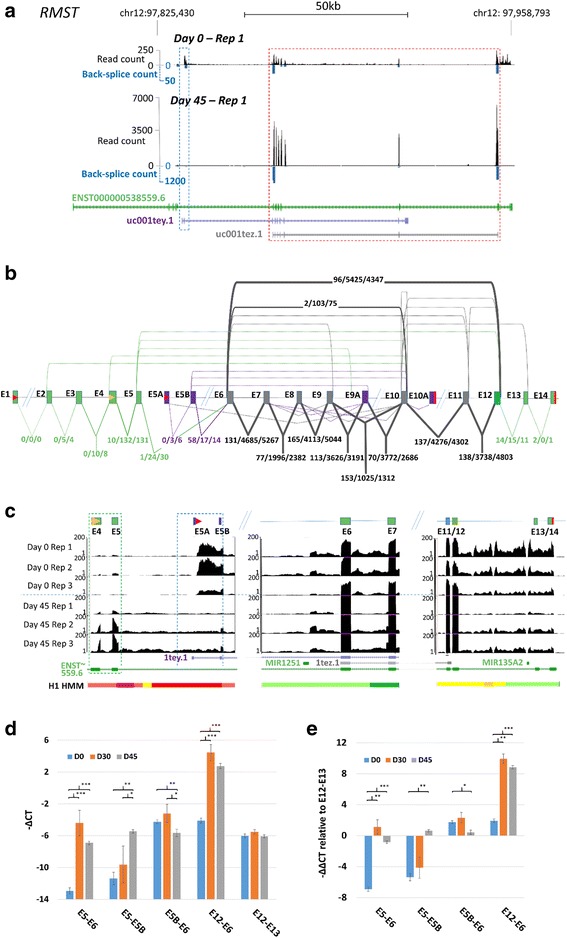
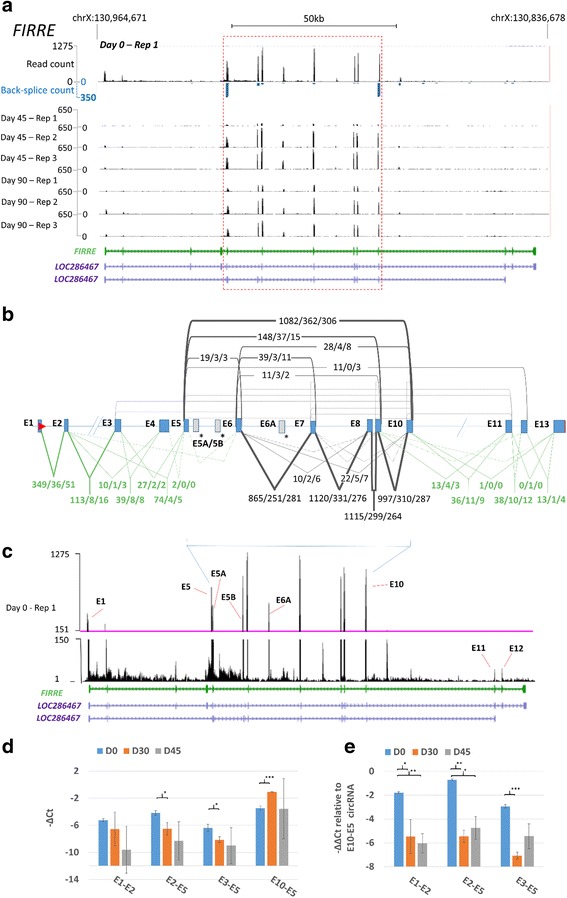
A transcriptome-wide increase in circRNA expression, size, and exon count was observed, with circRNA levels reaching a plateau by day 45. Parallel statistical analyses, controlling for sample and locus specific effects, identified 239 circRNAs with expression changes distinct from the transcriptome-wide pattern, but these all also increased in abundance over time. Surprisingly, circRNAs derived from long non-coding RNAs (lncRNAs) were found to account for a significantly larger proportion of transcripts from their loci of origin than circRNAs from coding genes. The most abundant, circRMST:E12-E6, showed a > 100X increase during differentiation accompanied by an isoform switch, and accounts for > 99% of RMST transcripts in many adult tissues. The second most abundant, circFIRRE:E10-E5, accounts for > 98% of FIRRE transcripts in differentiating human ES cells, and is one of 39 FIRRE circRNAs, many of which include multiple unannotated exons.
Our results suggest that during human ES cell differentiation, changes in circRNA levels are primarily globally controlled. They also suggest that RMST and FIRRE, genes with established roles in neurogenesis and topological organisation of chromosomal domains respectively, are processed as circular lncRNAs with only minor linear species.
环状 RNA(circRNAs)主要来源于蛋白质编码基因,有些可以作为 microRNA 海绵或转录调控因子。在人类发育过程中已经发现 circRNA 水平的变化,这可能具有重要的功能意义,但目前缺乏谱系特异性分析。为了解决这个问题,我们对人类胚胎干细胞(ES 细胞)进行了 RNAseq 分析,这些细胞在 90 天内分化为 3D 层状视网膜。
观察到 circRNA 表达、大小和外显子计数的全转录组增加,circRNA 水平在第 45 天达到平台期。平行的统计分析,控制样本和基因座特异性效应,鉴定出 239 个表达变化与全转录组模式不同的 circRNA,但这些circRNA 的丰度也随着时间的推移而增加。令人惊讶的是,来自长非编码 RNA(lncRNA)的 circRNA 比来自编码基因的 circRNA 更大量地来自其起源基因座。最丰富的 circRMST:E12-E6 在分化过程中表达增加了超过 100 倍,并伴随着异构体转换,在许多成年组织中占 RMST 转录本的>99%。第二丰富的 circFIRRE:E10-E5 在分化的人类 ES 细胞中占 FIRRE 转录本的>98%,是 39 个 FIRRE circRNA 之一,其中许多包含多个未注释的外显子。
我们的研究结果表明,在人类 ES 细胞分化过程中,circRNA 水平的变化主要是全局控制的。它们还表明,RMST 和 FIRRE,分别在神经发生和染色体结构域拓扑组织中具有既定作用的基因,是以环状 lncRNA 的形式进行加工的,只有少量的线性形式。