The Pirbright Institute, Ash Road, Pirbright, Surrey, GU24 0NF, UK; INIA-CISA, 28130, Valdeolmos, Madrid, Spain.
The Pirbright Institute, Ash Road, Pirbright, Surrey, GU24 0NF, UK.
Antiviral Res. 2018 Jun;154:132-139. doi: 10.1016/j.antiviral.2018.04.015. Epub 2018 Apr 18.
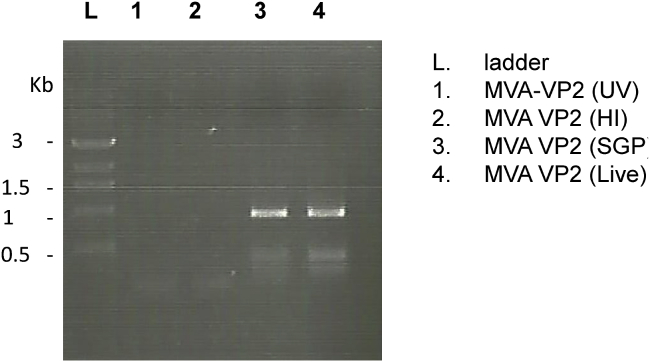
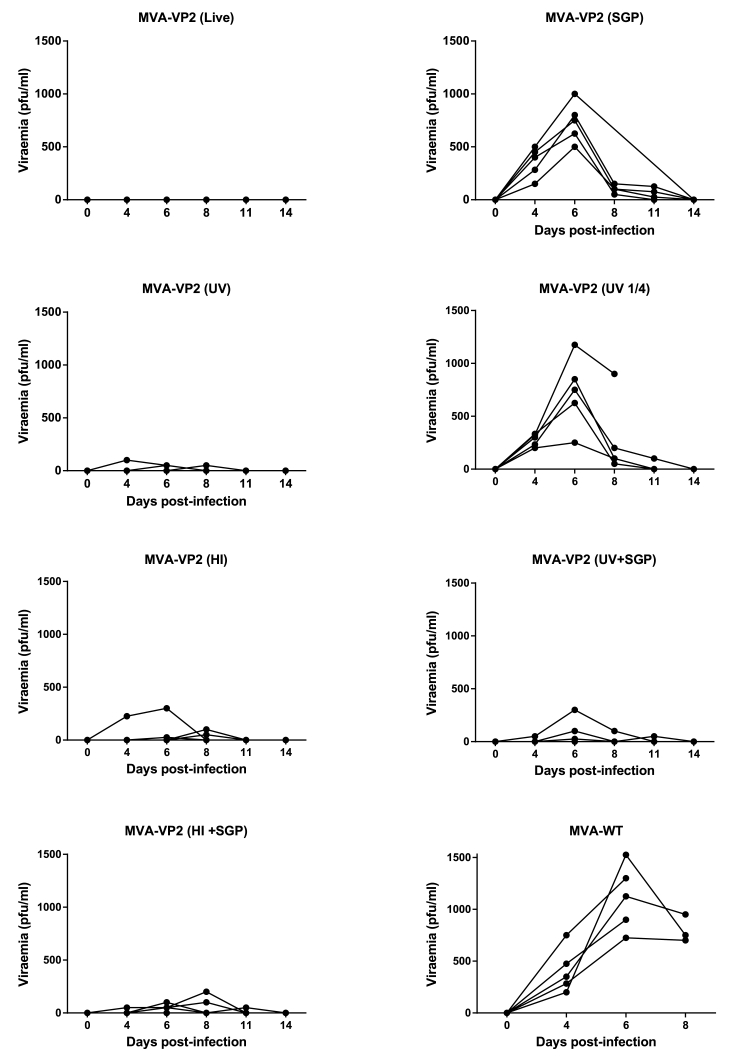
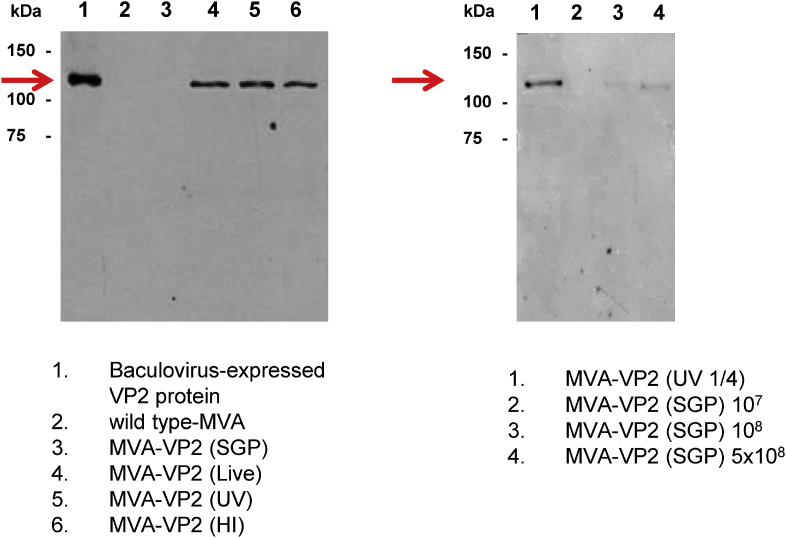
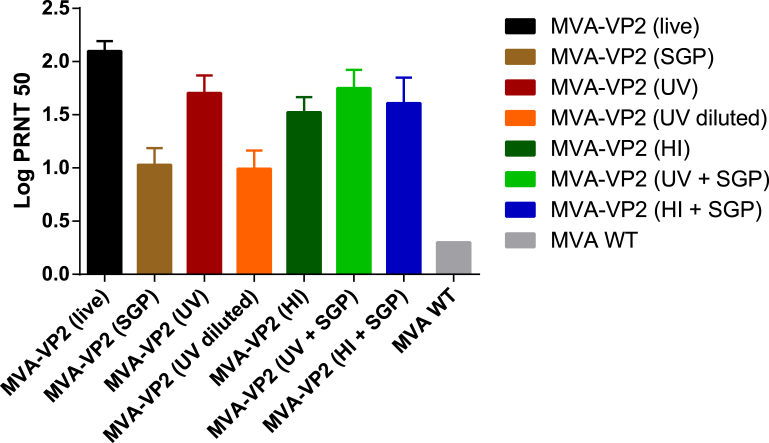
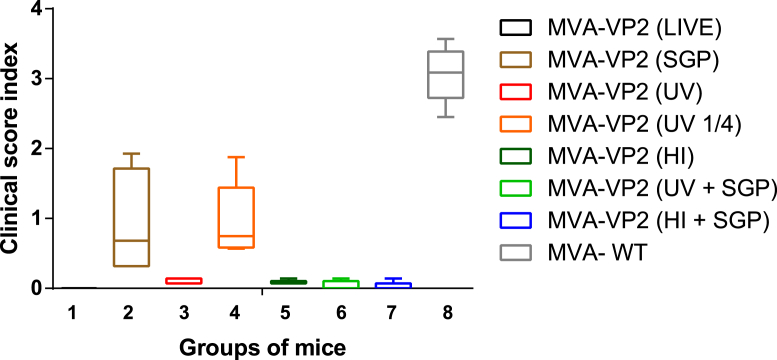
African horse sickness (AHS) is a lethal equine disease transmitted by Culicoides biting midges and caused by African horse sickness virus (AHSV). AHS is endemic to sub-Saharan Africa, but devastating outbreaks have been recorded periodically outside this region. The perceived risk of an AHS outbreak occurring in Europe has increased following the frequent epidemics caused in ruminants by bluetongue virus, closely related to AHSV. Attenuated vaccines for AHS are considered unsuitable for use in non-endemic countries due bio-safety concerns. Further, attenuated and inactivated vaccines are not compatible with DIVA (differentiate infected from vaccinated animals) strategies. All these factors stimulated the development of novel AHS vaccines that are safer, more efficacious and DIVA compatible. We showed previously that recombinant modified Vaccinia Ankara virus (MVA) vaccines encoding the outer capsid protein of AHSV (AHSV-VP2) induced virus neutralising antibodies (VNAb) and protection against AHSV in a mouse model and also in the horse. Passive immunisation studies demonstrated that immunity induced by MVA-VP2 was associated with pre-challenge VNAb titres in the vaccinates. Analyses of the inoculum of these MVA-VP2 experimental vaccines showed that they contained pre-formed AHSV-VP2. We continued studying the influence of pre-formed AHSV-VP2, present in the inoculum of MVA-VP2 vaccines, in the immunogenicity of MVA-VP2 vaccines. Thus, we compared correlates of immunity in challenged mice that were previously vaccinated with: a) MVA-VP2 (live); b) MVA-VP2 (live and sucrose gradient purified); c) MVA-VP2 (UV light inactivated); d) MVA-VP2 (UV light inactivated and diluted); e) MVA-VP2 (heat inactivated); f) MVA-VP2 (UV inactivated) + MVA-VP2 (purified); g) MVA-VP2 (heat inactivated) + MVA-VP2 (purified); and h) wild type-MVA (no insert). The results of these experiments showed that protection was maximal using MVA-VP2 (live) vaccine and that the protection conferred by all other vaccines correlated strongly with the levels of pre-formed AHSV-VP2 in the vaccine inoculum.
非洲马瘟(AHS)是一种由库蠓属吸血双翅目昆虫传播的致命马属动物疾病,由非洲马瘟病毒(AHSV)引起。AHS 流行于撒哈拉以南非洲地区,但在该地区以外的周期性爆发也有记录。由于蓝舌病病毒(与 AHSV 密切相关)频繁在反刍动物中引发流行病,人们认为在欧洲发生 AHS 爆发的风险增加了。由于生物安全问题,减毒疫苗被认为不适合在非流行地区使用。此外,减毒和灭活疫苗与 DIVA(区分感染动物和接种动物)策略不兼容。所有这些因素都刺激了新型 AHS 疫苗的开发,这些疫苗更安全、更有效且与 DIVA 兼容。我们之前曾表明,编码 AHSV 外壳蛋白(AHSV-VP2)的重组改良痘苗安卡拉病毒(MVA)疫苗在小鼠模型和马中诱导了病毒中和抗体(VNAb)和对 AHSV 的保护。被动免疫研究表明,MVA-VP2 诱导的免疫与接种者的预先挑战 VNAb 滴度有关。对这些 MVA-VP2 实验疫苗的接种物进行分析表明,它们含有预先形成的 AHSV-VP2。我们继续研究 MVA-VP2 疫苗接种物中存在的预先形成的 AHSV-VP2 对 MVA-VP2 疫苗免疫原性的影响。因此,我们比较了以前用以下方法接种的受挑战小鼠的免疫相关性:a)MVA-VP2(活);b)MVA-VP2(活和蔗糖梯度纯化);c)MVA-VP2(紫外线灭活);d)MVA-VP2(紫外线灭活和稀释);e)MVA-VP2(热灭活);f)MVA-VP2(紫外线灭活)+MVA-VP2(纯化);g)MVA-VP2(热灭活)+MVA-VP2(纯化);和 h)野生型-MVA(无插入)。这些实验的结果表明,使用 MVA-VP2(活)疫苗可获得最大的保护,而所有其他疫苗的保护与疫苗接种物中预先形成的 AHSV-VP2 水平密切相关。