Genetics Unit Hospital Valdecilla and Instituto de Investigacion Valdecilla (IDIVAL), Av. Valdecilla s/n, 39008, Santander, Spain.
Immunology Service, Hospital Valdecilla and Instituto de Investigacion Valdecilla (IDIVAL), Av. Valdecilla s/n, 39008, Santander, Spain.
Sci Rep. 2018 Apr 20;8(1):6341. doi: 10.1038/s41598-018-24444-6.
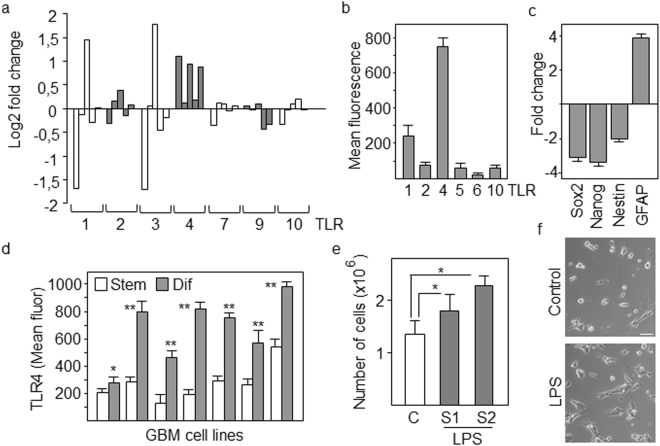
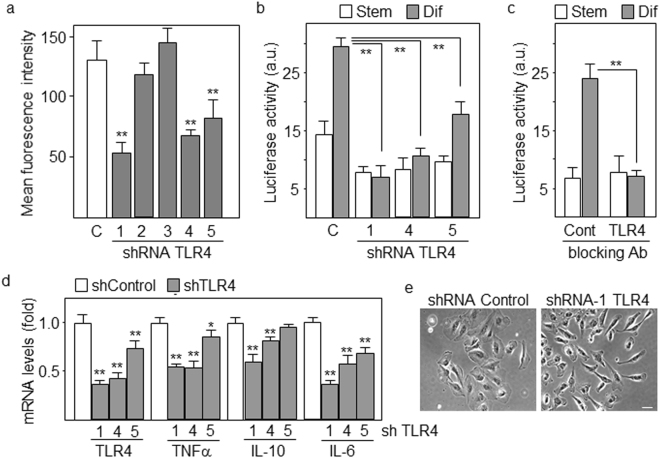
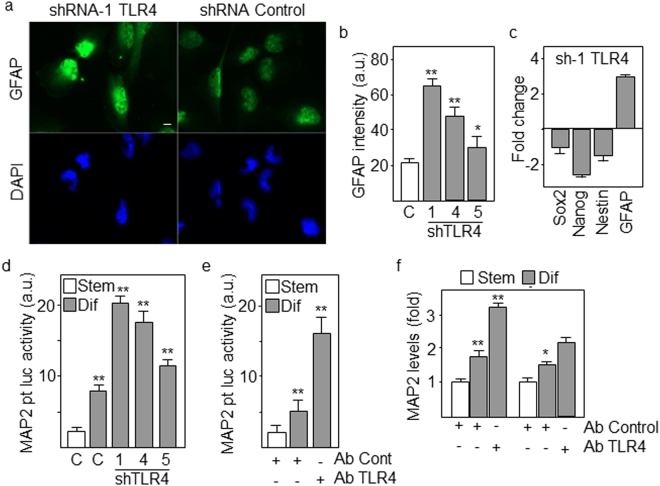
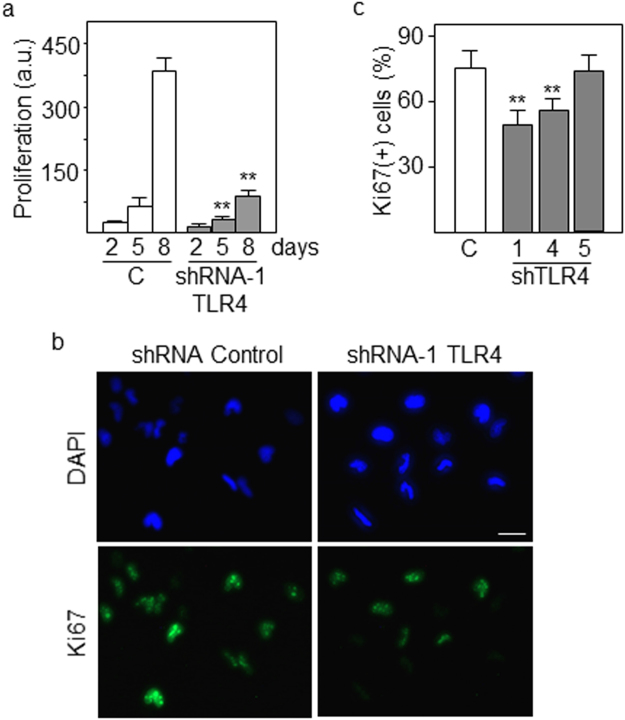
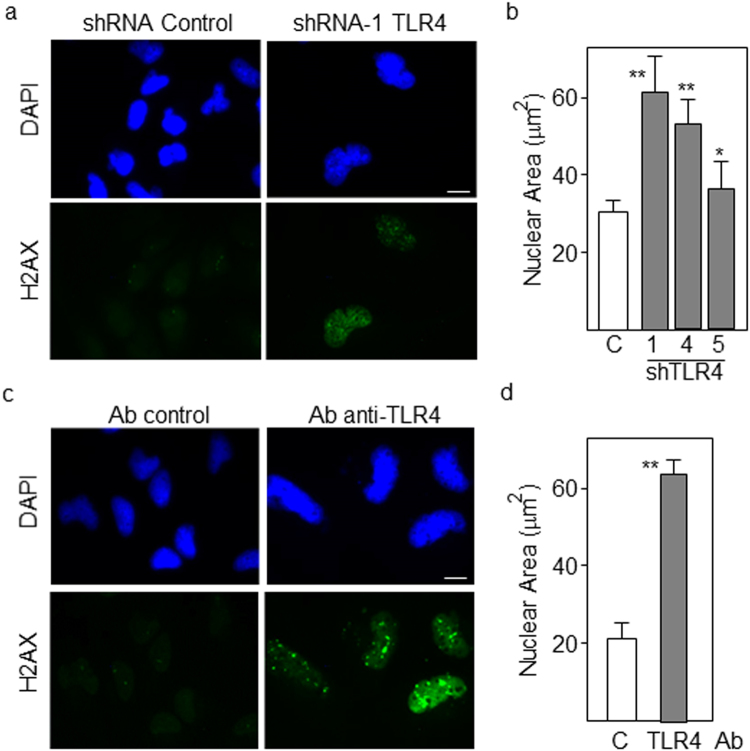
We have previously described that the NFκB pathway is upregulated during differentiation of glioblastoma stem-like cells (GSCs) which keeps differentiating GSCs in a proliferative astrocytic precursor state. However, extracellular signals and cellular mediators of this pathway are not clear yet. Here, we show that TLR4 is a key factor to promote NFκB activation in differentiating GSCs. TLR4 is upregulated during differentiation of GSCs and promotes transcriptional activation of NFκB as determined by luciferase-reporter assays and expression of NFκB target genes. Downregulation of TLR4 by shRNAs or blockade with anti-TLR4 specific antibodies drastically inhibited NFκB activity which promoted further differentiation and reduced proliferation of GSCs. We found that hyaluronic acid (HA), a main component of brain extracellular matrix, triggers the TLR4-NFκB pathway in differentiating GSCs. Moreover, HA is synthesized and released by GSCs undergoing differentiation and leads to transcriptional activation of NFκB, which is inhibited following downregulation of TLR4 or blockade of HA synthesis. Thus, we have demonstrated that during the process of differentiation, GSCs upregulate TLR4 and release the TLR4 ligand HA, which activates the TLR4-NFκB signaling pathway. This strategy may efficiently be used by differentiating GSCs to maintain their proliferative potential and consequently their tumorigenic capacity.
我们之前曾描述过,NFκB 通路在神经胶质瘤干细胞样细胞(GSCs)分化过程中被上调,这使不断分化的 GSCs 保持在增殖性星形细胞前体细胞状态。然而,该通路的细胞外信号和细胞介质尚不清楚。在这里,我们表明 TLR4 是促进分化中的 GSCs 中 NFκB 激活的关键因素。TLR4 在 GSCs 分化过程中上调,并通过荧光素酶报告基因检测和 NFκB 靶基因的表达来促进 NFκB 的转录激活。用 shRNAs 下调 TLR4 或用抗 TLR4 特异性抗体阻断,可显著抑制 NFκB 活性,从而促进 GSCs 的进一步分化并减少增殖。我们发现,透明质酸(HA),脑细胞外基质的主要成分,在分化中的 GSCs 中触发 TLR4-NFκB 通路。此外,HA 由正在分化的 GSCs 合成并释放,并导致 NFκB 的转录激活,而 TLR4 的下调或 HA 合成的阻断可抑制 NFκB 的激活。因此,我们已经证明,在分化过程中,GSCs 上调 TLR4 并释放 TLR4 配体 HA,从而激活 TLR4-NFκB 信号通路。这种策略可能被分化中的 GSCs 有效地利用,以维持其增殖潜能,从而维持其致瘤能力。