Receptor Biology Laboratory, Department of Physiology and Biomedical Engineering, Mayo Clinic College of Medicine, Rochester, MN.
Receptor Biology Laboratory, Department of Physiology and Biomedical Engineering, Mayo Clinic College of Medicine, Rochester, MN
J Gen Physiol. 2018 May 7;150(5):713-729. doi: 10.1085/jgp.201711881. Epub 2018 Apr 21.
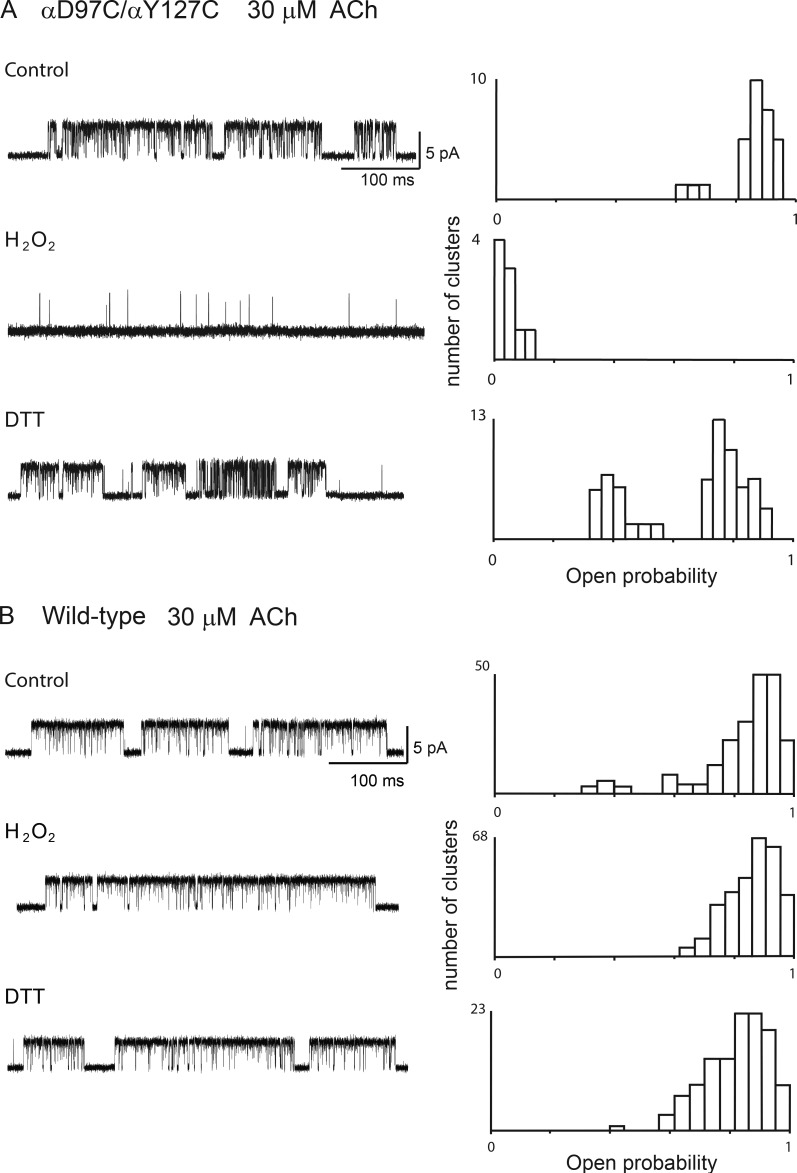
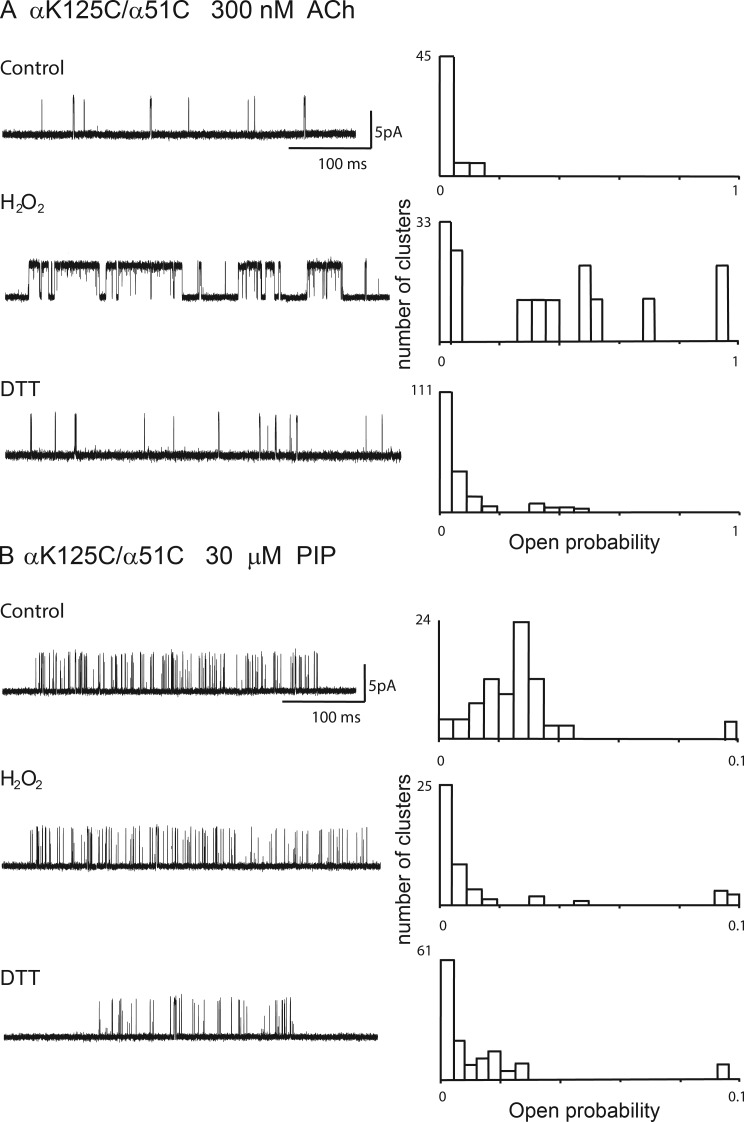
The muscle acetylcholine (ACh) receptor transduces a chemical into an electrical signal, but the efficiency of transduction, or efficacy, depends on the particular agonist. It is often presumed that full and partial agonists elicit the same structural changes after occupancy of their binding sites but with differing speed and efficiency. In this study, we tested the alternative hypothesis that full and partial agonists elicit distinct structural changes. To probe structural changes, we substituted cysteines for pairs of residues that are juxtaposed in the three-dimensional structure and recorded agonist-elicited single-channel currents before and after the addition of an oxidizing reagent. The results revealed multiple cysteine pairs for which agonist-elicited channel opening changes after oxidative cross-linking. Moreover, we found that the identity of the agonist determined whether cross-linking affects channel opening. For the αD97C/αY127C pair at the principal face of the subunit, cross-linking markedly suppressed channel opening by full but not partial agonists. Conversely, for the αD97C/αK125C pair, cross-linking impaired channel opening by the weak agonist choline but not other full or partial agonists. For the αT51C/αK125C pair, cross-linking enhanced channel opening by the full agonist ACh but not other full or partial agonists. At the complementary face of the subunit, cross-linking between pairs within the same β hairpin suppressed channel opening by ACh, whereas cross-linking between pairs from adjacent β hairpins was without effect for all agonists. In each case, the effects of cross-linking were reversed after addition of a reducing reagent, and receptors with single cysteine substitutions remained unaltered after addition of either oxidizing or reducing reagents. These findings show that, in the course of opening the receptor channel, different agonists elicit distinct structural changes.
肌肉乙酰胆碱 (ACh) 受体将化学物质转化为电信号,但转导的效率或效价取决于特定的激动剂。通常假定,完全激动剂和部分激动剂在占据其结合位点后会引起相同的结构变化,但速度和效率不同。在这项研究中,我们检验了一个替代假设,即完全激动剂和部分激动剂会引起不同的结构变化。为了探测结构变化,我们用半胱氨酸取代了在三维结构中相邻的一对残基,并在加入氧化试剂前后记录激动剂诱发的单通道电流。结果显示,有多个半胱氨酸对在氧化交联后会引起通道开放的变化。此外,我们发现激动剂的身份决定了交联是否会影响通道开放。对于主表面的 αD97C/αY127C 对,完全激动剂但不是部分激动剂交联显著抑制了通道开放。相反,对于 αD97C/αK125C 对,弱激动剂胆碱交联会损害通道开放,但其他完全或部分激动剂则不会。对于 αT51C/αK125C 对,完全激动剂 ACh 交联增强了通道开放,但其他完全或部分激动剂则不会。在亚基的互补表面,同一 β发夹内的对之间的交联抑制了 ACh 对通道的开放,而相邻 β发夹之间的对之间的交联对所有激动剂都没有影响。在每种情况下,交联的影响在加入还原剂后都会逆转,并且在加入氧化剂或还原剂后,具有单个半胱氨酸取代的受体仍然保持不变。这些发现表明,在打开受体通道的过程中,不同的激动剂会引起不同的结构变化。