Instituto de Investigaciones Biomédicas "Alberto Sols" UAM-CSIC, Instituto de Investigación Sanitaria La Paz (IdiPaz) and Department of Biochemistry, Faculty of Medicine, Autonomous University of Madrid, Madrid, Spain.
Centro de Investigación Biomédica en Red sobre Enfermedades Neurodegenerativas (CIBERNED), ISCIII, Madrid, Spain.
Oxid Med Cell Longev. 2018 Feb 26;2018:2450748. doi: 10.1155/2018/2450748. eCollection 2018.
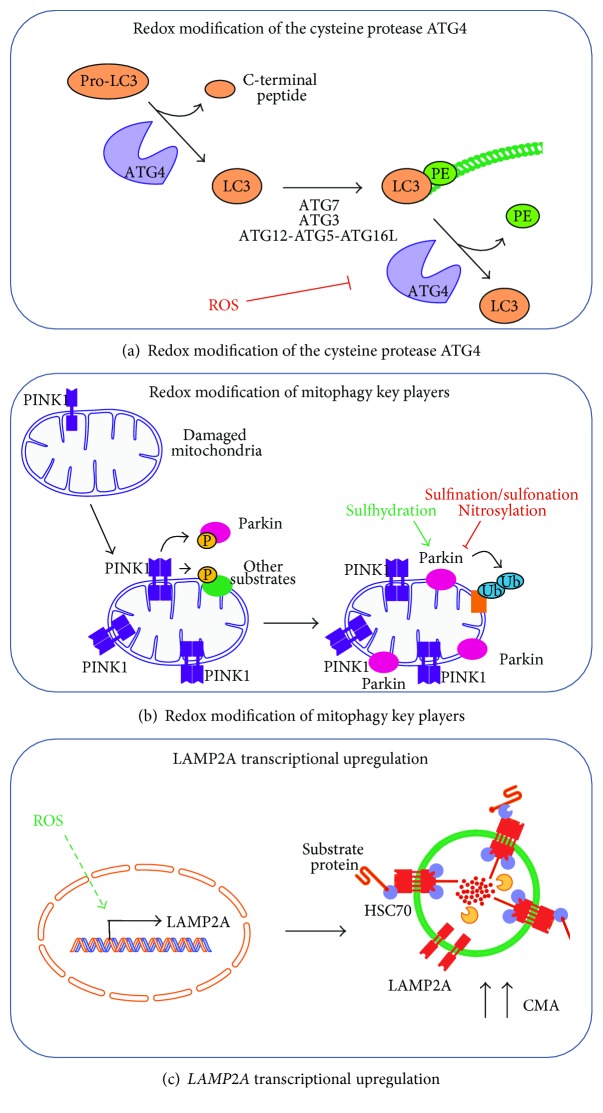
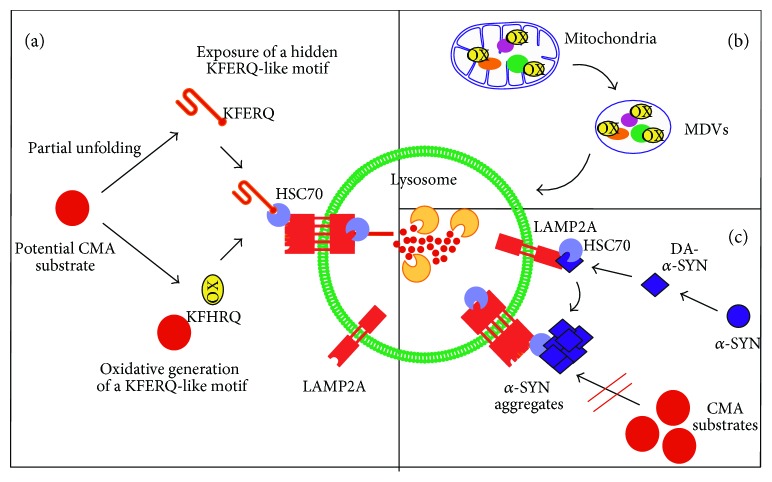
Reactive oxygen and nitrogen species (ROS and RNS, resp.) have been traditionally perceived solely as detrimental, leading to oxidative damage of biological macromolecules and organelles, cellular demise, and ageing. However, recent data suggest that ROS/RNS also plays an integral role in intracellular signalling and redox homeostasis (redoxtasis), which are necessary for the maintenance of cellular functions. There is a complex relationship between cellular ROS/RNS content and autophagy, which represents one of the major quality control systems in the cell. In this review, we focus on redox signalling and autophagy regulation with a special interest on ageing-associated changes. In the last section, we describe the role of autophagy and redox signalling in the context of Alzheimer's disease as an example of a prevalent age-related disorder.
活性氧和氮物种(ROS 和 RNS,分别)一直被传统地认为是有害的,导致生物大分子和细胞器的氧化损伤、细胞死亡和衰老。然而,最近的数据表明 ROS/RNS 也在细胞内信号转导和氧化还原平衡(redoxtasis)中发挥着重要作用,这对于维持细胞功能是必要的。细胞内 ROS/RNS 的含量与自噬之间存在着复杂的关系,自噬是细胞内主要的质量控制系统之一。在这篇综述中,我们重点讨论了氧化还原信号转导和自噬调控,特别关注与衰老相关的变化。在最后一节中,我们描述了自噬和氧化还原信号在阿尔茨海默病背景下的作用,作为一种普遍的与年龄相关的疾病的例子。