Program in Molecular Medicine, The Hospital for Sick Children, Toronto, ON, Canada.
Department of Biochemistry, University of Toronto, Toronto, ON, Canada.
PLoS Pathog. 2018 Apr 23;14(4):e1006998. doi: 10.1371/journal.ppat.1006998. eCollection 2018 Apr.
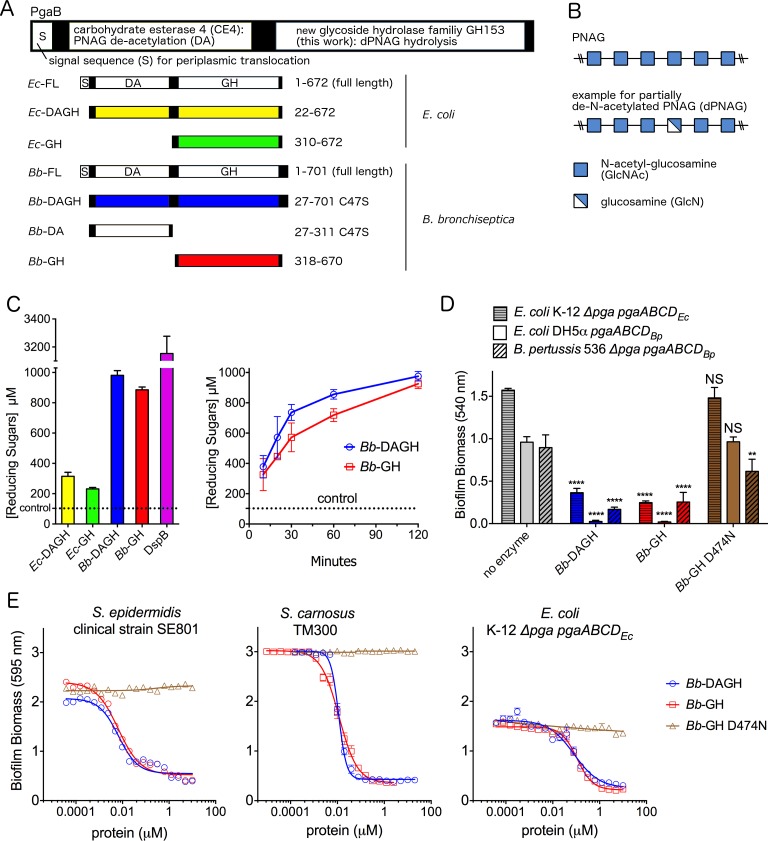
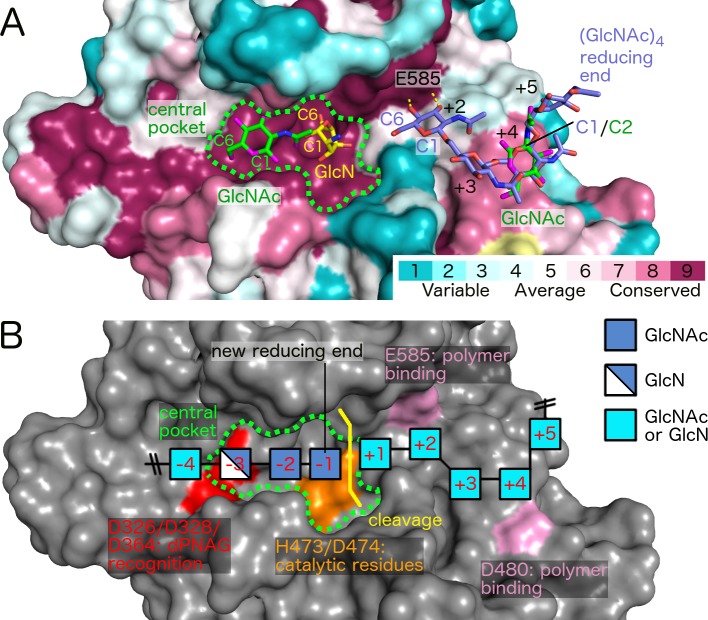
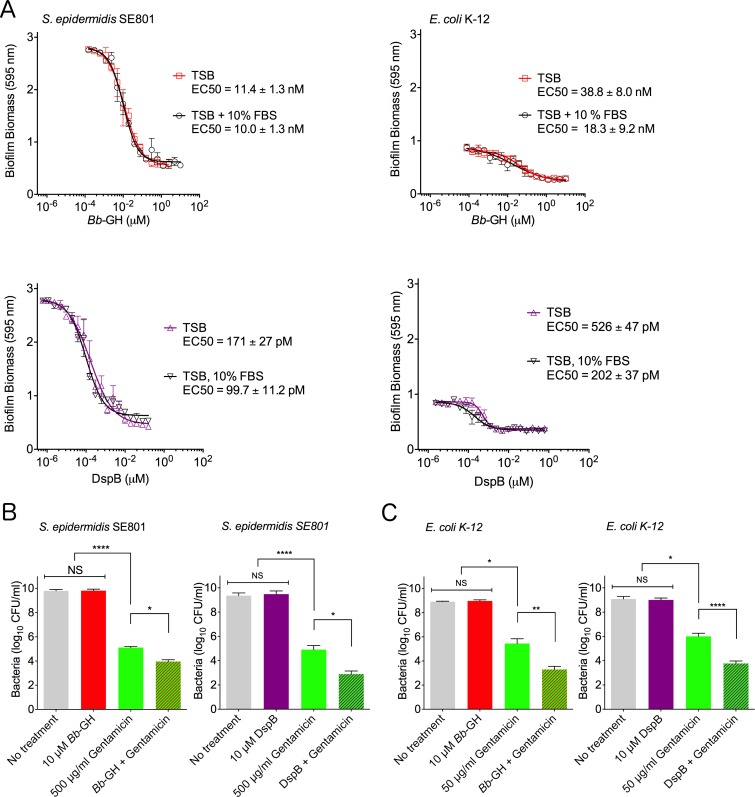
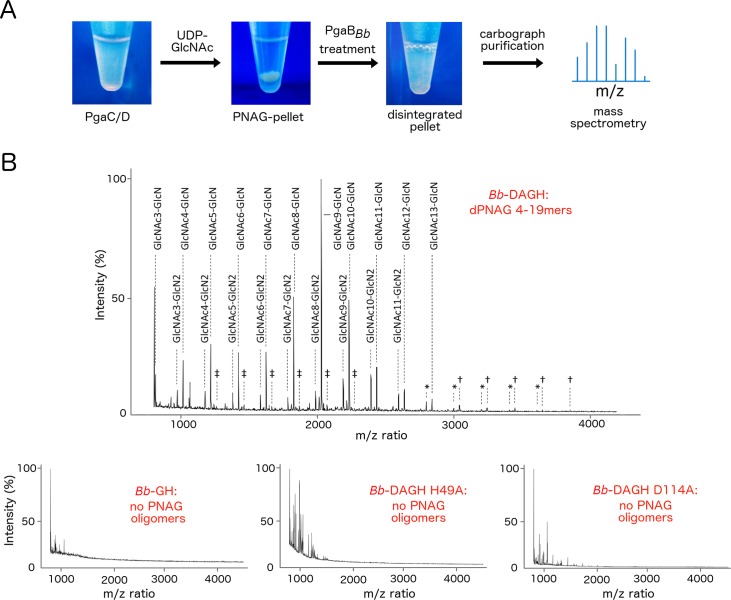
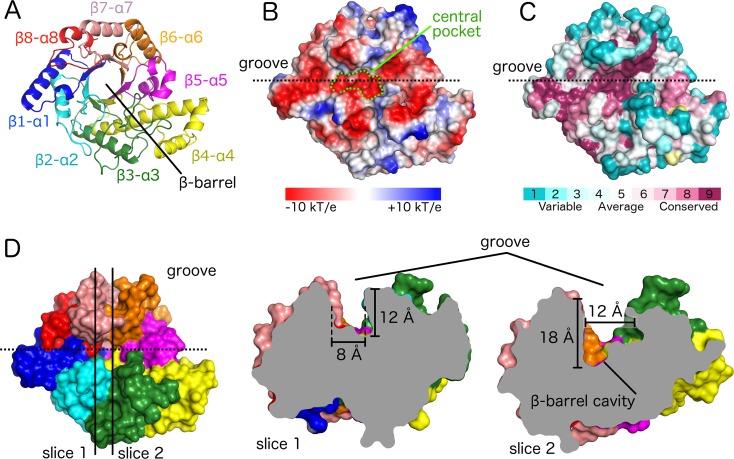
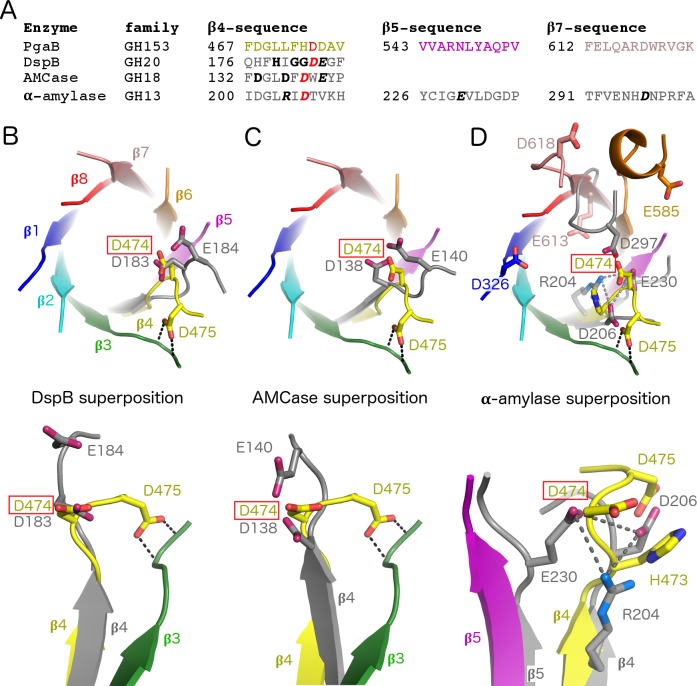
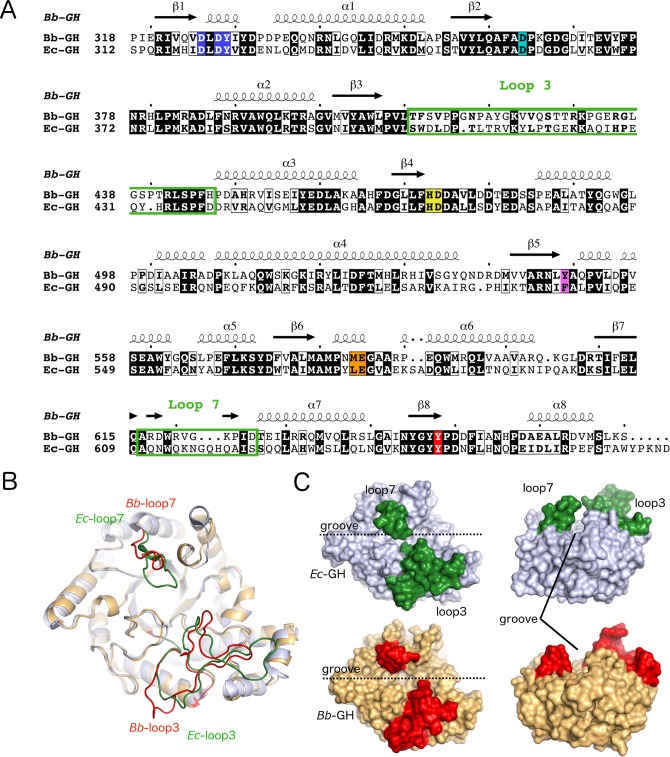
Poly-β(1,6)-N-acetyl-D-glucosamine (PNAG) is a major biofilm component of many pathogenic bacteria. The production, modification, and export of PNAG in Escherichia coli and Bordetella species require the protein products encoded by the pgaABCD operon. PgaB is a two-domain periplasmic protein that contains an N-terminal deacetylase domain and a C-terminal PNAG binding domain that is critical for export. However, the exact function of the PgaB C-terminal domain remains unclear. Herein, we show that the C-terminal domains of Bordetella bronchiseptica PgaB (PgaBBb) and E. coli PgaB (PgaBEc) function as glycoside hydrolases. These enzymes hydrolyze purified deacetylated PNAG (dPNAG) from Staphylococcus aureus, disrupt PNAG-dependent biofilms formed by Bordetella pertussis, Staphylococcus carnosus, Staphylococcus epidermidis, and E. coli, and potentiate bacterial killing by gentamicin. Furthermore, we found that PgaBBb was only able to hydrolyze PNAG produced in situ by the E. coli PgaCD synthase complex when an active deacetylase domain was present. Mass spectrometry analysis of the PgaB-hydrolyzed dPNAG substrate showed a GlcN-GlcNAc-GlcNAc motif at the new reducing end of detected fragments. Our 1.76 Å structure of the C-terminal domain of PgaBBb reveals a central cavity within an elongated surface groove that appears ideally suited to recognize the GlcN-GlcNAc-GlcNAc motif. The structure, in conjunction with molecular modeling and site directed mutagenesis led to the identification of the dPNAG binding subsites and D474 as the probable catalytic acid. This work expands the role of PgaB within the PNAG biosynthesis machinery, defines a new glycoside hydrolase family GH153, and identifies PgaB as a possible therapeutic agent for treating PNAG-dependent biofilm infections.
聚-β(1,6)-N-乙酰-D-葡糖胺 (PNAG) 是许多病原菌生物膜的主要成分。大肠杆菌和百日咳博德特氏菌属物种中 PNAG 的产生、修饰和外排需要 pgaABCD 操纵子编码的蛋白产物。PgaB 是一种具有两个结构域的周质内蛋白,包含一个 N 端去乙酰化酶结构域和一个对输出至关重要的 C 端 PNAG 结合结构域。然而,PgaB C 端结构域的确切功能仍不清楚。本文中,我们表明博德特氏菌属支气管败血波氏杆菌 PgaB(PgaBBb)和大肠杆菌 PgaB(PgaBEc)的 C 端结构域作为糖苷水解酶发挥作用。这些酶水解金黄色葡萄球菌来源的去乙酰化 PNAG(dPNAG),破坏百日咳博德特氏菌、肉色葡萄球菌、表皮葡萄球菌和大肠杆菌形成的依赖于 PNAG 的生物膜,并增强庆大霉素对细菌的杀伤作用。此外,我们发现只有当存在活性去乙酰化酶结构域时,PgaBBb 才能水解大肠杆菌 PgaCD 合成酶复合物原位产生的 PNAG。对 PgaB 水解的 dPNAG 底物的质谱分析显示,在检测到的片段的新还原端存在 GlcN-GlcNAc-GlcNAc 基序。我们得到的 PgaBBb C 端结构域的 1.76 Å 结构揭示了一个位于细长表面凹槽内的中央腔,该结构似乎非常适合识别 GlcN-GlcNAc-GlcNAc 基序。该结构与分子建模和定点突变相结合,确定了 dPNAG 结合亚基位和 D474 可能是催化酸。这项工作扩展了 PgaB 在 PNAG 生物合成机制中的作用,定义了一个新的糖苷水解酶家族 GH153,并将 PgaB 鉴定为治疗依赖 PNAG 的生物膜感染的潜在治疗剂。