Division of Endocrinology, Department of Medicine, The University of Arizona, Tucson, AZ, 85724, USA.
Department of Medicine, The University of Arizona, Tucson, AZ, USA.
Respir Res. 2018 Apr 23;19(1):69. doi: 10.1186/s12931-018-0776-1.
Pulmonary arterial hypertension (PAH) is a fatal disease; however, the mechanisms directly involved in triggering and the progression of PAH are not clear. Based on previous studies that demonstrated a possible role of mitochondrial dysfunction in the pathogenesis of PAH, we investigated the effects of chronic inhibition of mitochondrial function in vivo in healthy rodents.
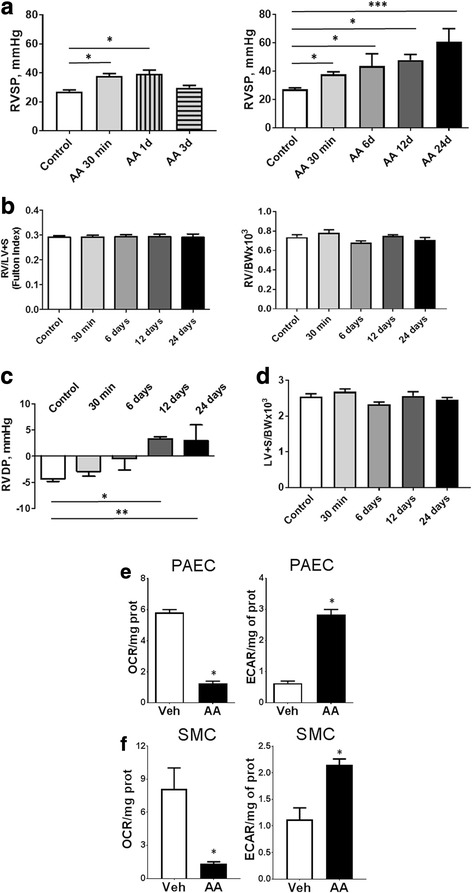
Right ventricle systolic pressure (RVSP) was measured in female rats at baseline and up to 24 days after inhibition of mitochondrial respiratory Complex III, induced by Antimycin A (AA, 0.35 mg/kg, given three times starting at baseline and then days 3 and 6 as a bolus injection into the right atrial chamber).
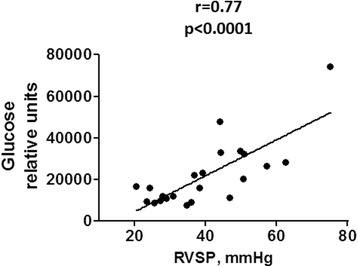
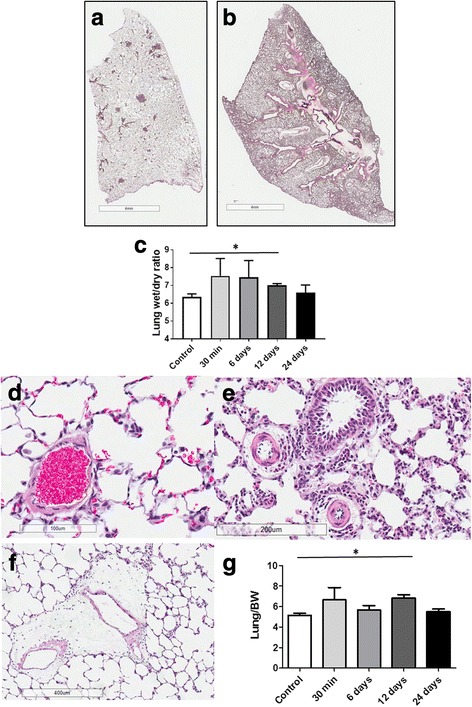
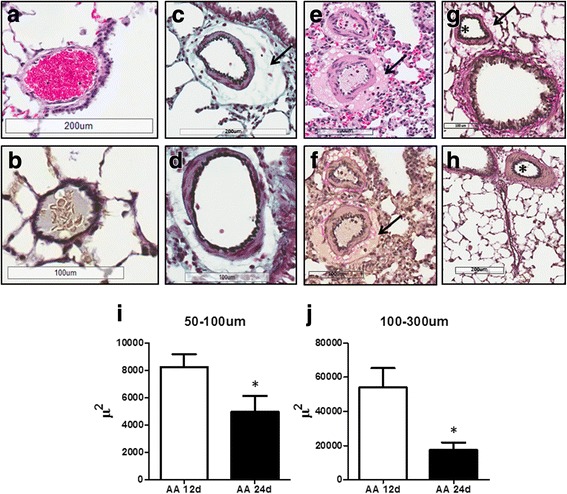
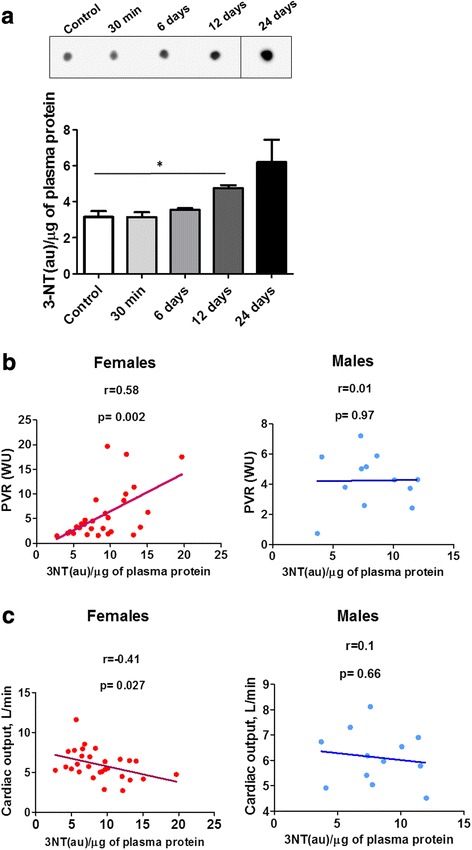
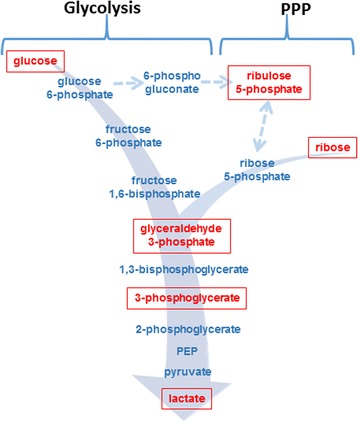
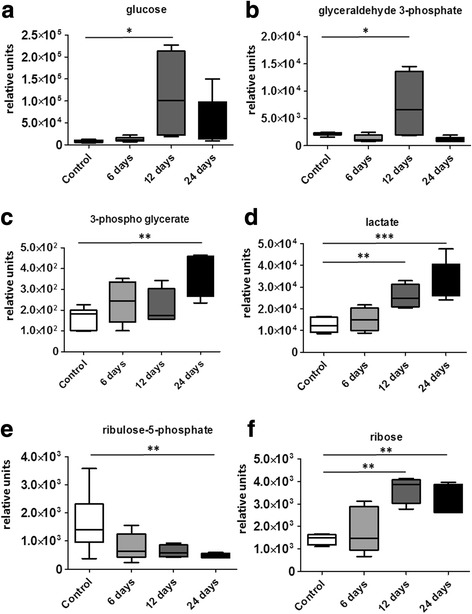
Rodents exposed to AA demonstrated sustained increases in RVSP from days 6 through 24. AA-exposed rodents also possessed a progressive increase in RV end-diastolic pressure but not RV hypertrophy, which may be attributed to either early stages of PAH development or to reduced RV contractility due to inhibition of myocardial respiration. Protein nitration levels in plasma were positively correlated with PAH development in AA-treated rats. This finding was strongly supported by results obtained from PAH humans where plasma protein nitration levels were correlated with markers of PAH severity in female but not male PAH patients. Based on previously reported associations between increased nitric oxide production levels with female gender, we speculate that in females with PAH mitochondrial dysfunction may represent a more deleterious form, in part, due to an increased nitrosative stress development. Indeed, the histological analysis of AA treated rats revealed a strong perivascular edema, a marker of pulmonary endothelial damage. Finally, AA treatment was accompanied by a severe metabolic shift toward glycolysis, a hallmark of PAH pathology.
Chronic mitochondrial dysfunction induces the combination of vascular damage and metabolic reprogramming that may be responsible for PAH development. This mechanism may be especially important in females, perhaps due to an increased NO production and nitrosative stress development.
肺动脉高压(PAH)是一种致命的疾病;然而,直接参与触发和 PAH 进展的机制尚不清楚。基于先前的研究表明线粒体功能障碍在 PAH 的发病机制中可能起作用,我们研究了在健康啮齿动物体内慢性抑制线粒体功能的影响。
在基线和抑制线粒体呼吸复合物 III 后 24 天,通过 Antimycin A(AA,0.35mg/kg,基线时开始三次给予,然后在第 3 天和第 6 天作为右心房室的推注),测量雌性大鼠的右心室收缩压(RVSP)。
暴露于 AA 的啮齿动物从第 6 天到第 24 天 RVSP 持续升高。AA 暴露的啮齿动物还表现出 RV 舒张末期压的逐渐增加,但没有 RV 肥大,这可能归因于 PAH 发展的早期阶段或由于心肌呼吸抑制导致的 RV 收缩力降低。血浆中蛋白硝化水平与 AA 处理大鼠的 PAH 发展呈正相关。这一发现得到了 PAH 患者的研究结果的强烈支持,其中 PAH 患者的血浆蛋白硝化水平与 PAH 严重程度的标志物相关,但在男性 PAH 患者中则没有相关性。基于先前报道的一氧化氮生成水平与女性之间的关联,我们推测在患有 PAH 的女性中,线粒体功能障碍可能代表一种更具危害性的形式,部分原因是由于产生了更多的硝化应激。事实上,AA 处理大鼠的组织学分析显示强烈的血管周围水肿,这是肺内皮损伤的标志物。最后,AA 治疗伴随着糖酵解的严重代谢转变,这是 PAH 病理学的一个标志。
慢性线粒体功能障碍诱导血管损伤和代谢重编程的组合,这可能是 PAH 发展的原因。这种机制在女性中可能更为重要,这可能是由于一氧化氮生成和硝化应激的增加。