Zakaria Zainul Amiruddin, Abdul Rahim Mohammad Hafiz, Roosli Rushduddin Al Jufri, Mohd Sani Mohd Hijaz, Omar Maizatul Hasyima, Mohd Tohid Siti Farah, Othman Fezah, Ching Siew Mooi, Abdul Kadir Arifah
Department of Biomedical Science, Faculty of Medicine and Health Sciences, Universiti Putra Malaysia, 43400 UPM Serdang, Selangor, Malaysia.
Integrative Pharmacogenomics Institute (iPROMISE), Faculty of Pharmacy, Universiti Teknologi MARA, Puncak Alam Campus, 42300 Bandar Puncak Alam, Selangor, Malaysia.
Pain Res Manag. 2018 Mar 4;2018:9536406. doi: 10.1155/2018/9536406. eCollection 2018.
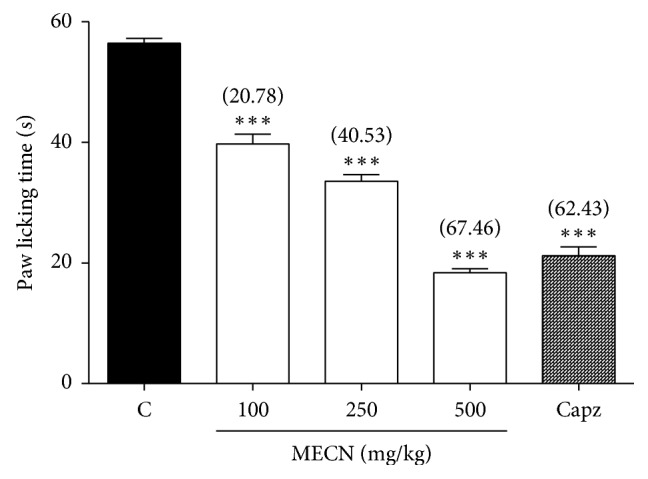
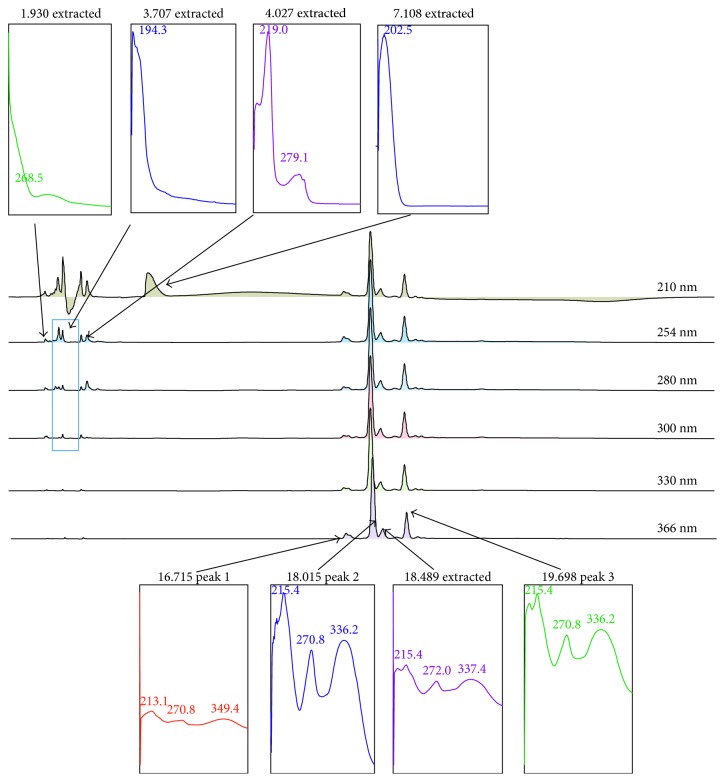
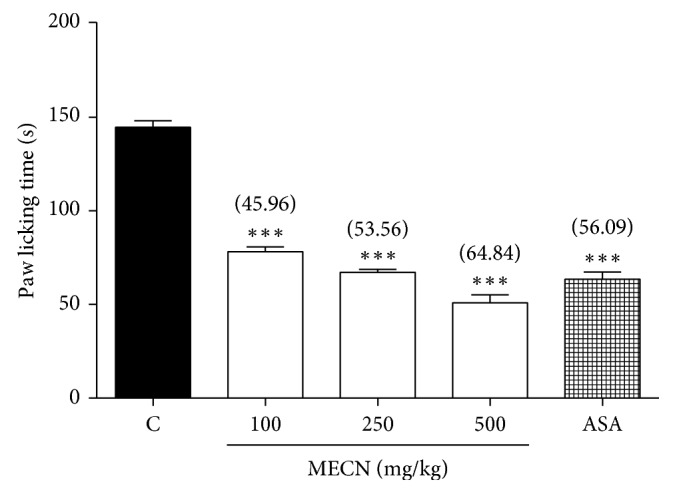
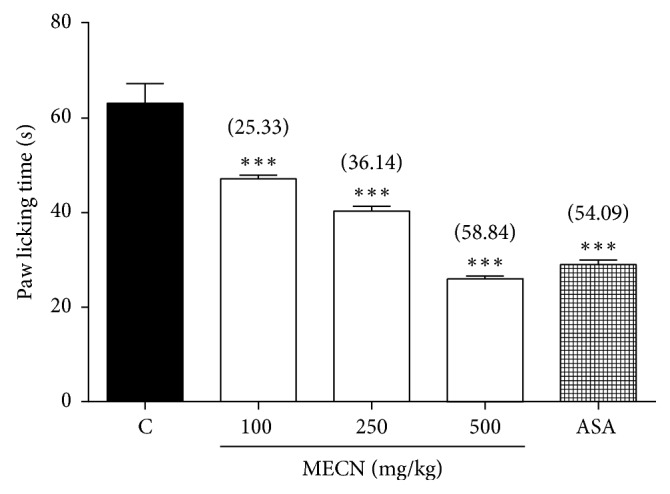
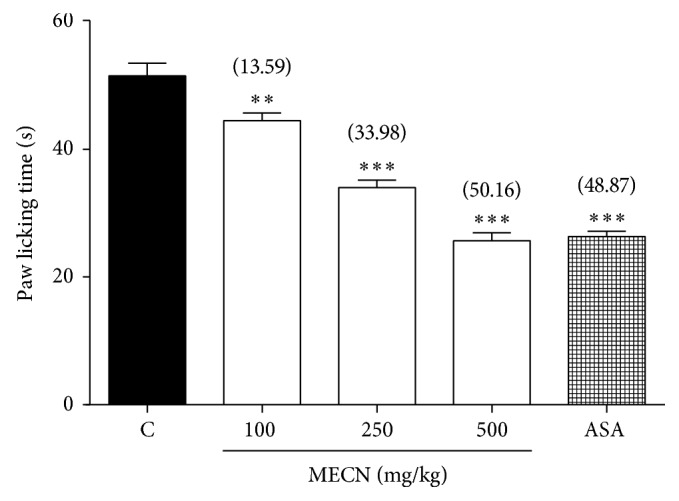
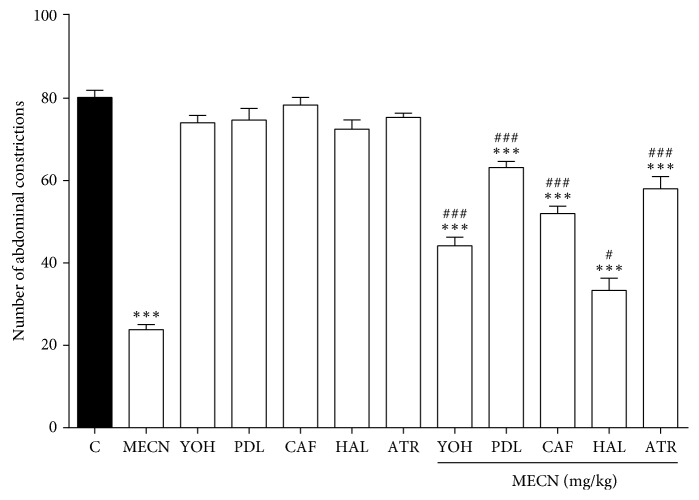
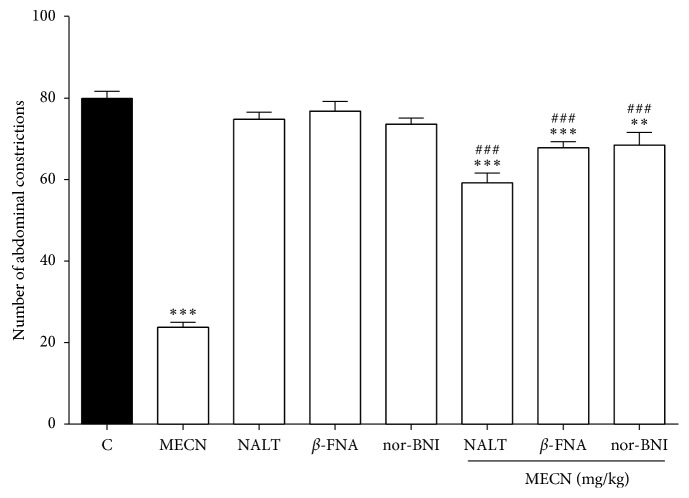
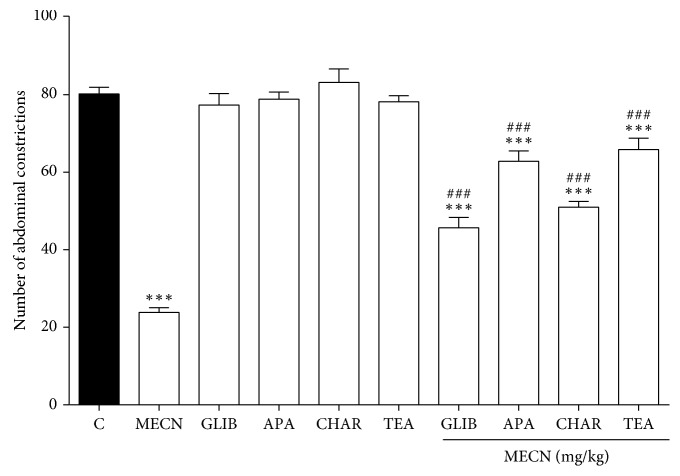
Methanolic extract of Lindau leaves (MECN) has been proven to possess antinociceptive activity that works via the opioid and NO-dependent/cGMP-independent pathways. In the present study, we aimed to further determine the possible mechanisms of antinociception of MECN using various nociceptive assays. The antinociceptive activity of MECN was (i) tested against capsaicin-, glutamate-, phorbol 12-myristate 13-acetate-, bradykinin-induced nociception model; (ii) prechallenged against selective antagonist of opioid receptor subtypes (-funaltrexamine, naltrindole, and nor-binaltorphimine); (iii) prechallenged against antagonist of nonopioid systems, namely, -noradrenergic (yohimbine), -adrenergic (pindolol), adenosinergic (caffeine), dopaminergic (haloperidol), and cholinergic (atropine) receptors; (iv) prechallenged with inhibitors of various potassium channels (glibenclamide, apamin, charybdotoxin, and tetraethylammonium chloride). The results demonstrated that the orally administered MECN (100, 250, and 500 mg/kg) significantly ( < 0.05) reversed the nociceptive effect of all models in a dose-dependent manner. Moreover, the antinociceptive activity of 500 mg/kg MECN was significantly ( < 0.05) inhibited by (i) antagonists of μ-, -, and -opioid receptors; (ii) antagonists of -noradrenergic, β-adrenergic, adenosinergic, dopaminergic, and cholinergic receptors; and (iii) blockers of different K channels (voltage-activated-, Ca-activated, and ATP-sensitive-K channels, resp.). In conclusion, MECN-induced antinociception involves modulation of protein kinase C-, bradykinin-, TRVP1 receptors-, and glutamatergic-signaling pathways; opioidergic, -noradrenergic, adrenergic, adenosinergic, dopaminergic, and cholinergic receptors; and nonopioidergic receptors as well as the opening of various K channels. The antinociceptive activity could be associated with the presence of several flavonoid-based bioactive compounds and their synergistic action with nonvolatile bioactive compounds.
林道树叶的甲醇提取物(MECN)已被证明具有通过阿片类和NO依赖/cGMP非依赖途径发挥作用的抗伤害感受活性。在本研究中,我们旨在通过各种伤害感受试验进一步确定MECN抗伤害感受的可能机制。MECN的抗伤害感受活性进行了如下测试:(i)针对辣椒素、谷氨酸、佛波酯12-肉豆蔻酸13-乙酸酯、缓激肽诱导的伤害感受模型;(ii)预先用阿片受体亚型的选择性拮抗剂(β-芬太尼、纳曲吲哚和去甲双丙吗啡)进行预处理;(iii)预先用非阿片系统的拮抗剂,即α-去甲肾上腺素能(育亨宾)、β-肾上腺素能(吲哚洛尔)、腺苷能(咖啡因)、多巴胺能(氟哌啶醇)和胆碱能(阿托品)受体进行预处理;(iv)预先用各种钾通道抑制剂(格列本脲、蜂毒明肽、大蝎毒素和四乙铵氯化物)进行预处理。结果表明,口服MECN(100、250和500mg/kg)以剂量依赖方式显著(P<0.05)逆转了所有模型的伤害感受作用。此外,500mg/kg MECN的抗伤害感受活性被以下物质显著(P<0.05)抑制:(i)μ-、δ-和κ-阿片受体拮抗剂;(ii)α-去甲肾上腺素能、β-肾上腺素能、腺苷能、多巴胺能和胆碱能受体拮抗剂;(iii)不同钾通道阻滞剂(分别为电压激活、钙激活和ATP敏感钾通道)。总之,MECN诱导的抗伤害感受涉及蛋白激酶C、缓激肽、TRVP1受体和谷氨酸能信号通路的调节;阿片能、α-去甲肾上腺素能、肾上腺素能、腺苷能、多巴胺能和胆碱能受体;以及非阿片能受体以及各种钾通道的开放。抗伤害感受活性可能与几种基于黄酮类的生物活性化合物的存在及其与非挥发性生物活性化合物的协同作用有关。