Dixit Sunil K, Sambasivan Murali
College of Business, Victoria University, Melbourne, VIC, Australia.
Taylor's University Lakeside Campus, Subang Jaya, Selangor, Malaysia.
SAGE Open Med. 2018 Apr 12;6:2050312118769211. doi: 10.1177/2050312118769211. eCollection 2018.
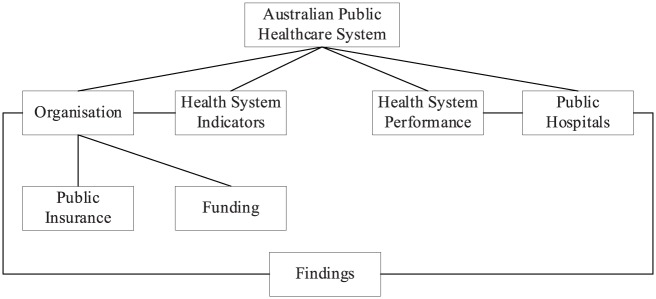
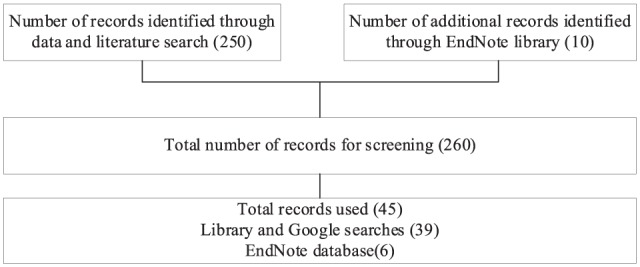
This article seeks to review the Australian healthcare system and compare it to similar systems in other countries to highlight the main issues and problems. A literature search for articles relating to the Australian and other developed countries' healthcare systems was conducted by using Google and the library of Victoria University, Melbourne. Data from the websites of the Commonwealth of Australia, the Australian Institute of Health and Welfare, the Australian Productivity Commission, the Organisation for Economic Co-operation and Development and the World Bank have also been used. Although care within the Australian healthcare system is among the best in the world, there is a need to change the paradigm currently being used to measure the outcomes and allocate resources. The Australian healthcare system is potentially dealing with two main problems: (a) resource allocation, and (b) performance and patient outcomes improvements. An interdisciplinary research approach in the areas of performance measurement, quality and patient outcomes improvement could be adopted to discover new insights, by using the policy implementation error/efficiency and bureaucratic capacity. Hospital managers, executives and healthcare management practitioners could use an interdisciplinary approach to design new performance measurement models, in which financial performance, quality, healthcare and patient outcomes are blended in, for resource allocation and performance improvement. This article recommends that public policy implementation error and the bureaucratic capacity models be applied to healthcare to optimise the outcomes for the healthcare system in Australia. In addition, it highlights the need for evaluation of the current reimbursement method, freedom of choice to patients and a regular scrutiny of the appropriateness of care.
本文旨在回顾澳大利亚医疗体系,并将其与其他国家的类似体系进行比较,以突出主要问题。通过使用谷歌和墨尔本维多利亚大学图书馆,对与澳大利亚及其他发达国家医疗体系相关的文章进行了文献检索。还使用了澳大利亚联邦、澳大利亚卫生与福利研究所、澳大利亚生产力委员会、经济合作与发展组织以及世界银行网站的数据。尽管澳大利亚医疗体系内的护理水平位居世界前列,但仍需改变目前用于衡量结果和分配资源的模式。澳大利亚医疗体系可能面临两个主要问题:(a)资源分配,以及(b)绩效和患者结果的改善。在绩效衡量、质量和患者结果改善领域,可以采用跨学科研究方法,利用政策实施误差/效率和官僚能力来发现新的见解。医院管理人员、行政人员和医疗管理从业者可以采用跨学科方法来设计新的绩效衡量模型,将财务绩效、质量、医疗护理和患者结果融合进去,以进行资源分配和绩效改善。本文建议将公共政策实施误差和官僚能力模型应用于医疗保健领域,以优化澳大利亚医疗体系的结果。此外,它强调了评估当前报销方法、患者选择自由以及定期审查护理适宜性的必要性。