Department of Anesthesiology, Nara Medical University, Kashihara, Nara, Japan.
Department of Anatomy and Neuroscience, Nara Medical University, Kashihara, Nara, Japan.
PLoS One. 2018 Apr 24;13(4):e0196191. doi: 10.1371/journal.pone.0196191. eCollection 2018.
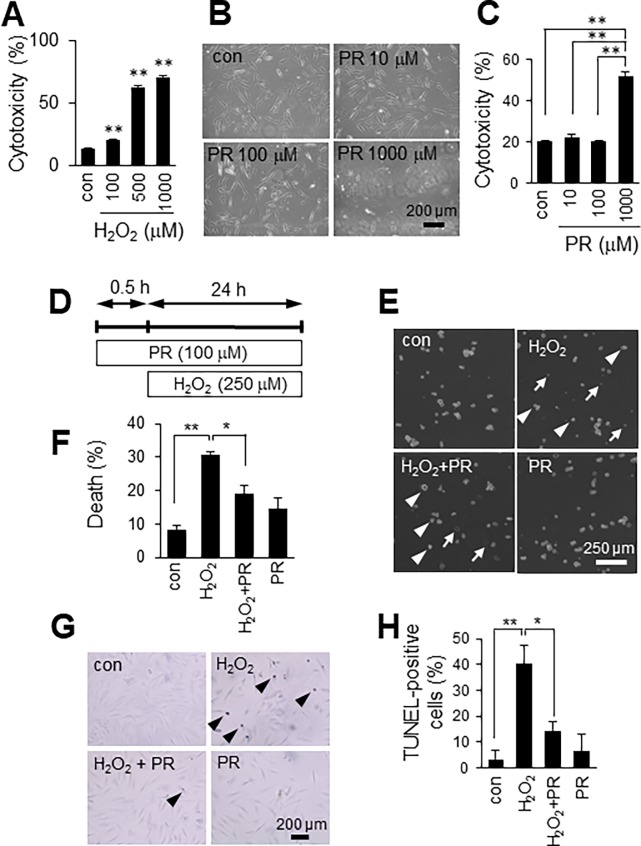
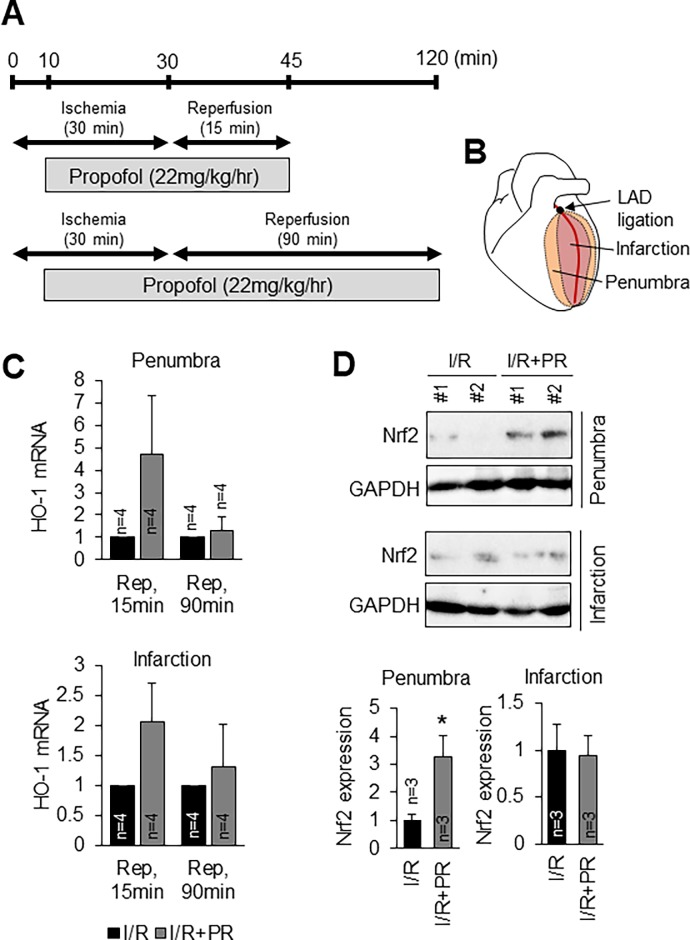
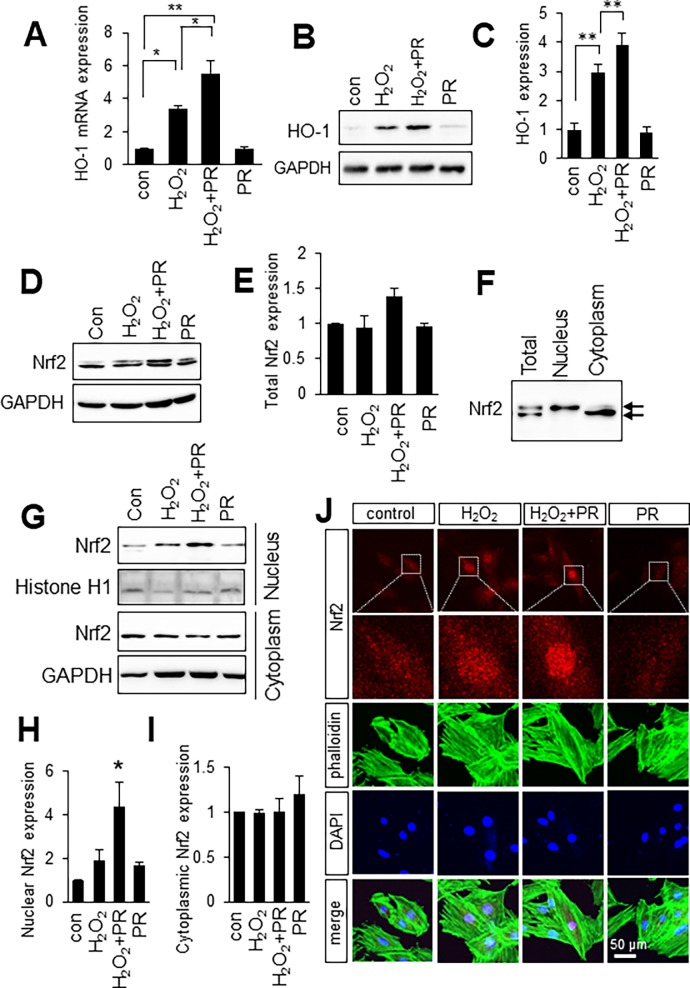
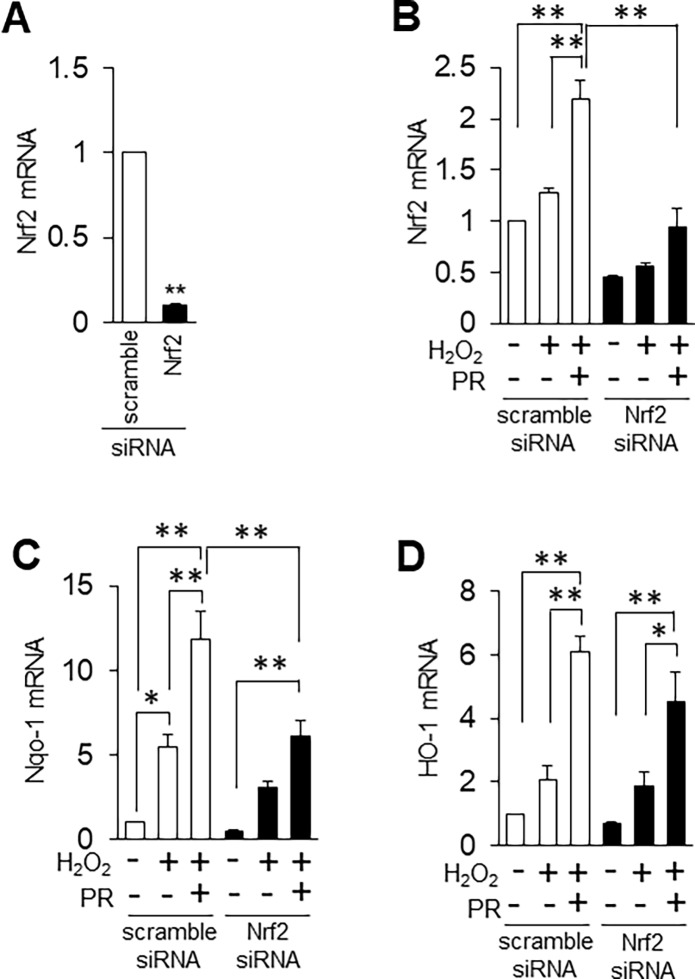
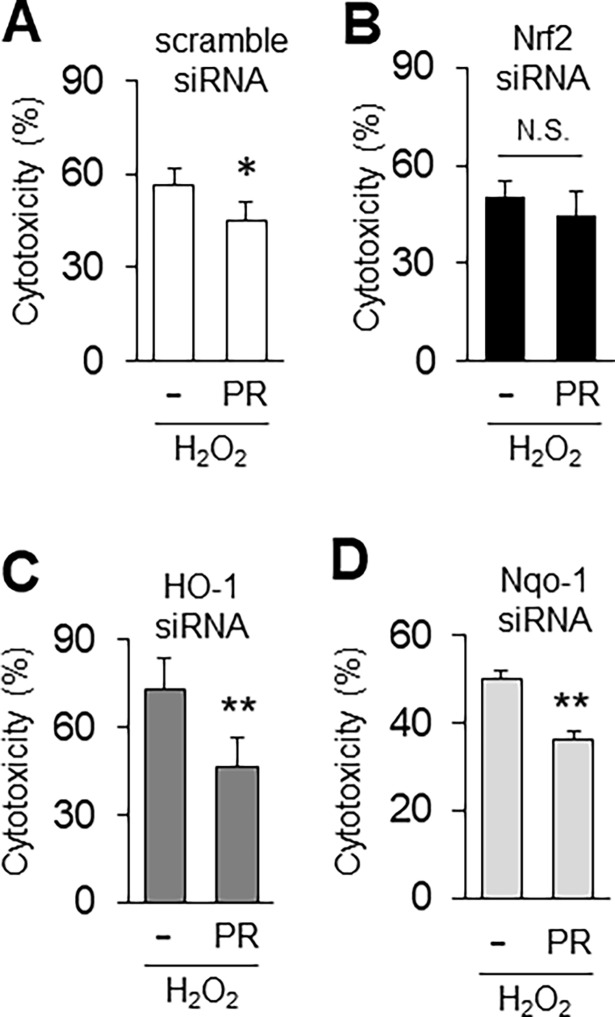
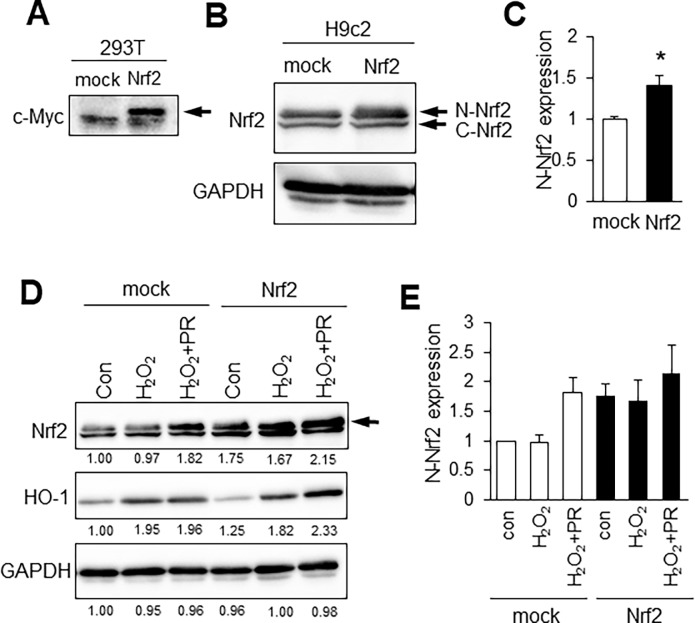
Oxidative stress contributes to myocardial ischemia-reperfusion injury, which causes cardiomyocyte death and precipitate life-threatening heart failure. Propofol has been proposed to protect cells or tissues against oxidative stress. However, the mechanisms underlying its beneficial effects are not fully elucidated. In the present study, we employed an in vitro oxidative injury model, in which rat cardiac H9c2 cells were treated with H2O2, and investigated roles of propofol against oxidative stress. Propofol treatment reduced H2O2-induced apoptotic cell death. While H2O2 induced expression of the antioxidant enzyme HO-1, propofol further increased HO-1 mRNA and protein levels. Propofol also promoted nuclear localization of Nrf2 in the presence of H2O2. Knockdown of Nrf2 using siRNA suppressed propofol-inducible Nrf2 and expression of Nrf2-downstream antioxidant enzyme. Knockdown of Nrf2 suppressed the propofol-induced cytoprotection. In addition, Nrf2 overexpression induced nuclear localization of Nrf2 and HO-1 expression. These results suggest that propofol exerts antioxidative effects by inducing nuclear localization of Nrf2 and expression of its downstream enzyme in cardiac cells. Finally, we examined the effect of propofol on cardiomyocytes using myocardial ischemia-reperfusion injury models. The expression level of Nrf2 protein was increased at 15 min after reperfusion in the ischemia-reperfusion and propofol group compared with ischemia-reperfusion group in penumbra region. These results suggest that propofol protects cells or tissues from oxidative stress via Nrf2/HO-1 cascade.
氧化应激导致心肌缺血再灌注损伤,引起心肌细胞死亡,并导致危及生命的心力衰竭。丙泊酚被认为可以保护细胞或组织免受氧化应激。然而,其有益作用的机制尚未完全阐明。在本研究中,我们采用了体外氧化损伤模型,即用 H2O2 处理大鼠心脏 H9c2 细胞,研究丙泊酚对氧化应激的作用。丙泊酚处理可减少 H2O2 诱导的细胞凋亡。虽然 H2O2 诱导抗氧化酶 HO-1 的表达,但丙泊酚进一步增加了 HO-1 mRNA 和蛋白水平。丙泊酚还促进了 Nrf2 在 H2O2 存在下的核定位。用 siRNA 敲低 Nrf2 抑制了丙泊酚诱导的 Nrf2 和 Nrf2 下游抗氧化酶的表达。Nrf2 敲低抑制了丙泊酚诱导的细胞保护作用。此外,Nrf2 过表达诱导了 Nrf2 和 HO-1 的核定位表达。这些结果表明,丙泊酚通过诱导核定位和表达其下游酶在心脏细胞中发挥抗氧化作用。最后,我们用心肌缺血再灌注损伤模型研究了丙泊酚对心肌细胞的影响。与缺血再灌注组相比,缺血再灌注和丙泊酚组再灌注 15 分钟时,Nrf2 蛋白的表达水平在缺血半暗带区域增加。这些结果表明,丙泊酚通过 Nrf2/HO-1 级联反应保护细胞或组织免受氧化应激。