• 文献检索
  • 文档翻译
  • 深度研究
  • 学术资讯
  • Suppr Zotero 插件Zotero 插件
  • 邀请有礼
  • 套餐&价格
  • 历史记录
应用&插件
Suppr Zotero 插件Zotero 插件浏览器插件Mac 客户端Windows 客户端微信小程序
定价
高级版会员购买积分包购买API积分包
服务
文献检索文档翻译深度研究API 文档MCP 服务
关于我们
关于 Suppr公司介绍联系我们用户协议隐私条款
关注我们

Suppr 超能文献

核心技术专利:CN118964589B侵权必究
粤ICP备2023148730 号-1Suppr @ 2026

文献检索

告别复杂PubMed语法,用中文像聊天一样搜索,搜遍4000万医学文献。AI智能推荐,让科研检索更轻松。

立即免费搜索

文件翻译

保留排版,准确专业,支持PDF/Word/PPT等文件格式,支持 12+语言互译。

免费翻译文档

深度研究

AI帮你快速写综述,25分钟生成高质量综述,智能提取关键信息,辅助科研写作。

立即免费体验

巨噬细胞移动抑制因子在糖尿病神经病变足皮损中的表达。

Expression of macrophage migration inhibitory factor in footpad skin lesions with diabetic neuropathy.

机构信息

1 Medical Research Institute, Kangbuk Samsung Hospital, Sungkyunkwan University School of Medicine, Republic of Korea.

2 Division of Endocrinology and Metabolism, Department of Internal Medicine, Kangbuk Samsung Hospital, Sungkyunkwan University School of Medicine, Republic of Korea.

出版信息

Mol Pain. 2018 Jan-Dec;14:1744806918775482. doi: 10.1177/1744806918775482. Epub 2018 Apr 24.

DOI:10.1177/1744806918775482
PMID:29690804
原文链接:https://pmc.ncbi.nlm.nih.gov/articles/PMC5968664/
Abstract

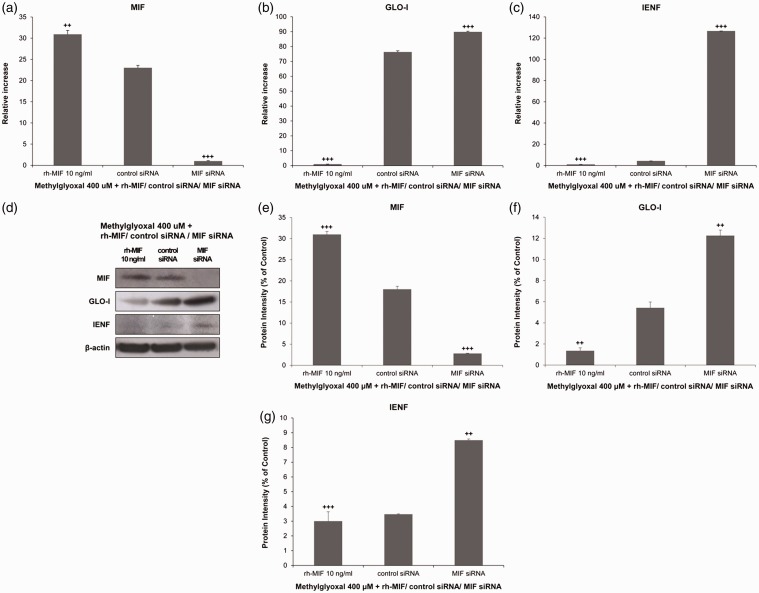
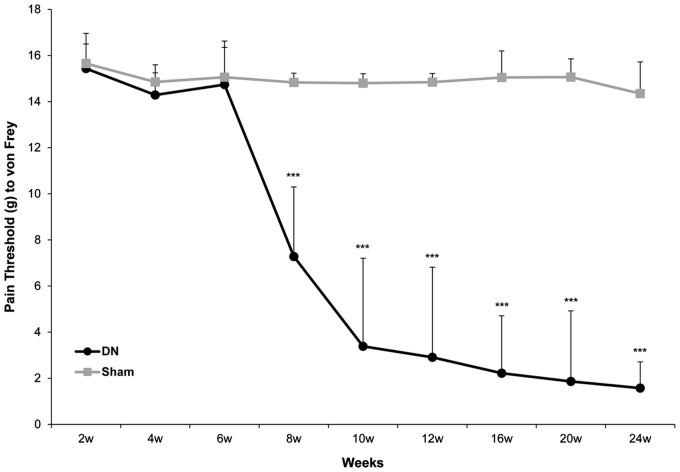
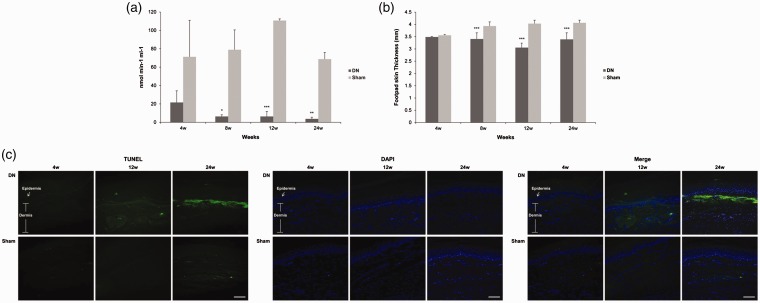
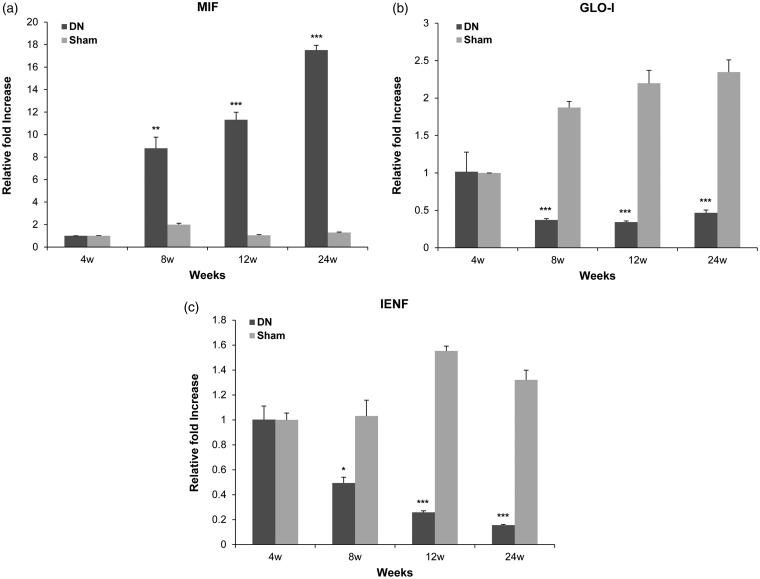
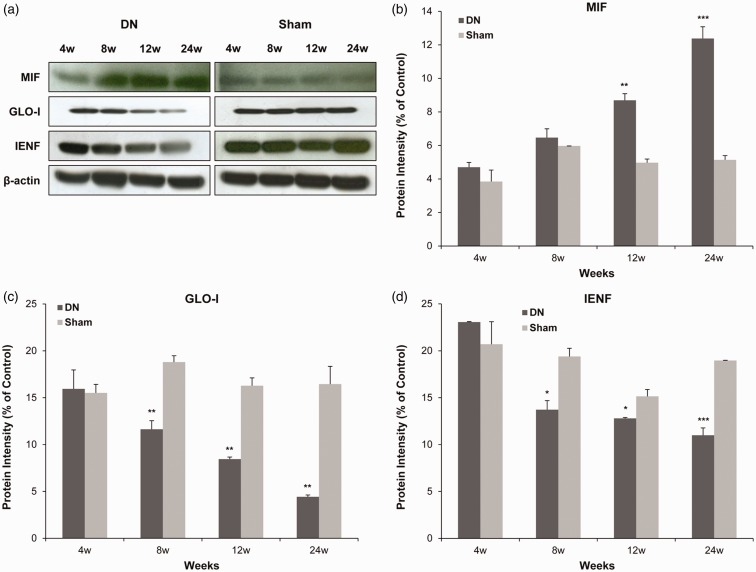
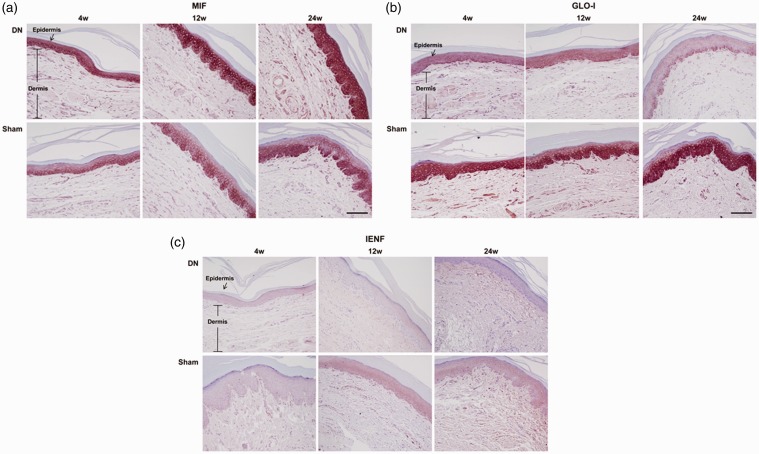
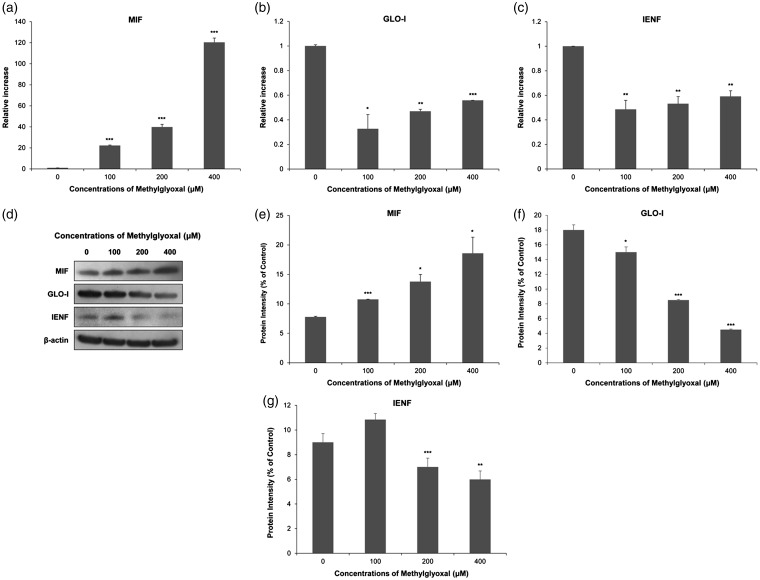
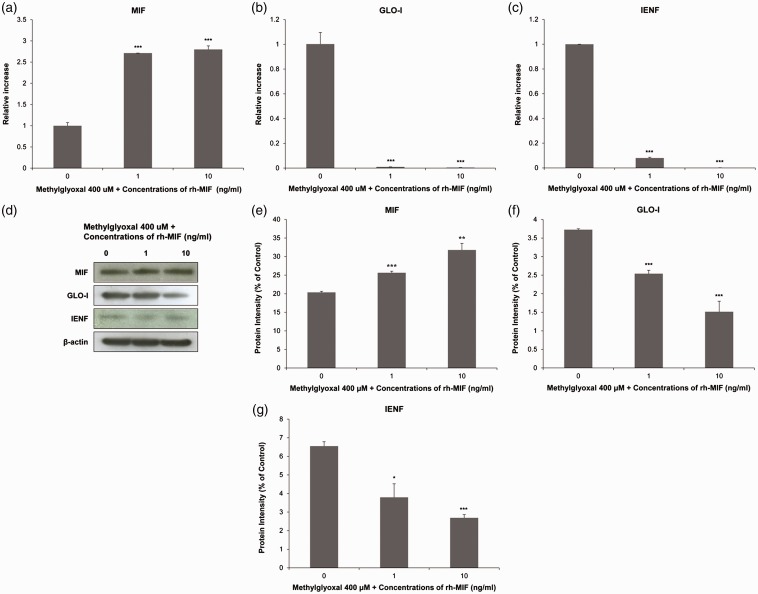
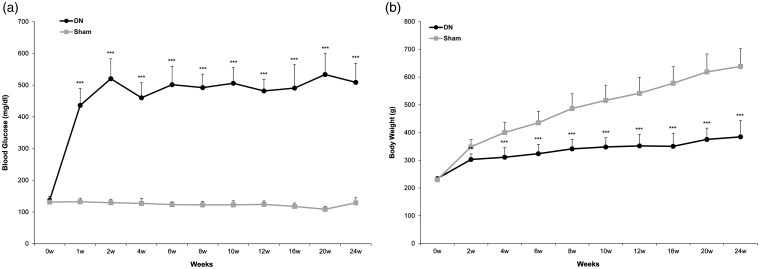
Background Diabetic neuropathy originating in distal lower extremities is associated with pain early in the disease course, overwhelming in the feet. However, the pathogenesis of diabetic neuropathy remains unclear. Macrophage migration inhibitory factor has been implicated in the onset of neuropathic pain and the development of diabetes. Objective of this study was to observe pain syndromes elicited in the footpad of diabetic neuropathy rat model and to assess the contributory role of migration inhibitory factor in the pathogenesis of diabetic neuropathy. Methods Diabetic neuropathy was made in Sprague Dawley rats by streptozotocin. Pain threshold was evaluated using von Frey monofilaments for 24 weeks. On comparable experiment time after streptozotocin injection, all footpads were prepared for following procedures; glutathione assay, terminal deoxynucleotidyl transferase-mediated biotinylated UTP nick end labeling staining, immunohistochemistry staining, real-time reverse transcription polymerase chain reaction, and Western blot. Additionally, human HaCaT skin keratinocytes were treated with methylglyoxal, transfected with migration inhibitory factor/control small interfering RNA, and prepared for real-time reverse transcription polymerase chain reaction and Western blot. Results As compared to sham group, pain threshold was significantly reduced in diabetic neuropathy group, and glutathione was decreased in footpad skin, simultaneously, cell death was increased. Over-expression of migration inhibitory factor, accompanied by low expression of glyoxalase-I and intraepidermal nerve fibers, was shown on the footpad skin lesions of diabetic neuropathy. But, there was no significance in expression of neurotransmitters and inflammatory mediators such as transient receptor potential vanilloid 1, mas-related G protein coupled receptor D, nuclear factor kappa B, tumor necrosis factor-alpha, and interleukin-6 between diabetic neuropathy group and sham group. Intriguingly, small interfering RNA-transfected knockdown of the migration inhibitory factor gene in methylglyoxal-treated skin keratinocytes increased expression of glyoxalase-I and intraepidermal nerve fibers in comparison with control small interfering RNA-transfected cells, which was decreased by induction of methylglyoxal. Conclusions Our findings suggest that migration inhibitory factor can aggravate diabetic neuropathy by suppressing glyoxalase-I and intraepidermal nerve fibers on the footpad skin lesions and provoke pain. Taken together, migration inhibitory factor might offer a pharmacological approach to alleviate pain syndromes in diabetic neuropathy.

摘要

背景

起源于下肢远端的糖尿病周围神经病变与疾病早期的足部疼痛有关,但发病机制尚不清楚。巨噬细胞移动抑制因子已被认为与神经病理性疼痛的发生和糖尿病的发展有关。本研究旨在观察糖尿病周围神经病变大鼠模型足底诱发的疼痛综合征,并评估移动抑制因子在糖尿病周围神经病变发病机制中的作用。

方法

链脲佐菌素诱导 Sprague Dawley 大鼠糖尿病周围神经病变。使用 von Frey 单丝评估 24 周的疼痛阈值。在链脲佐菌素注射后相当的实验时间,所有足底均进行谷胱甘肽测定、末端脱氧核苷酸转移酶介导的生物素化 UTP 缺口末端标记染色、免疫组织化学染色、实时逆转录聚合酶链反应和 Western blot。此外,人 HaCaT 皮肤角质形成细胞用甲基乙二醛处理,用移动抑制因子/对照小干扰 RNA 转染,并进行实时逆转录聚合酶链反应和 Western blot。

结果

与假手术组相比,糖尿病周围神经病变组的疼痛阈值显著降低,足底皮肤谷胱甘肽减少,同时细胞死亡增加。糖尿病周围神经病变足底皮肤病变中,移动抑制因子过度表达,同时糖氧酶-I 和表皮神经纤维表达降低。但糖尿病周围神经病变组与假手术组之间,神经递质和炎症介质如瞬时受体电位香草醛 1、mas 相关 G 蛋白偶联受体 D、核因子 kappa B、肿瘤坏死因子-α和白细胞介素-6 的表达均无差异。有趣的是,与对照小干扰 RNA 转染细胞相比,甲基乙二醛处理的皮肤角质形成细胞中移动抑制因子基因小干扰 RNA 转染的敲低可增加糖氧酶-I 和表皮神经纤维的表达,而甲基乙二醛诱导则降低了这种表达。

结论

我们的研究结果表明,移动抑制因子可通过抑制足底皮肤病变中的糖氧酶-I 和表皮神经纤维来加重糖尿病周围神经病变,并引起疼痛。综上所述,移动抑制因子可能为缓解糖尿病周围神经病变的疼痛综合征提供一种药理学方法。
https://cdn.ncbi.nlm.nih.gov/pmc/blobs/276e/5968664/d59e61ade748/10.1177_1744806918775482-fig9.jpg
https://cdn.ncbi.nlm.nih.gov/pmc/blobs/276e/5968664/924d7220078d/10.1177_1744806918775482-fig1.jpg
https://cdn.ncbi.nlm.nih.gov/pmc/blobs/276e/5968664/f5f6b2be9cde/10.1177_1744806918775482-fig2.jpg
https://cdn.ncbi.nlm.nih.gov/pmc/blobs/276e/5968664/ce81fdda3414/10.1177_1744806918775482-fig3.jpg
https://cdn.ncbi.nlm.nih.gov/pmc/blobs/276e/5968664/6017d19d14f6/10.1177_1744806918775482-fig4.jpg
https://cdn.ncbi.nlm.nih.gov/pmc/blobs/276e/5968664/f2742c6a6e98/10.1177_1744806918775482-fig5.jpg
https://cdn.ncbi.nlm.nih.gov/pmc/blobs/276e/5968664/32c660404f57/10.1177_1744806918775482-fig6.jpg
https://cdn.ncbi.nlm.nih.gov/pmc/blobs/276e/5968664/332e2e90ee0d/10.1177_1744806918775482-fig7.jpg
https://cdn.ncbi.nlm.nih.gov/pmc/blobs/276e/5968664/082bc4eef9f1/10.1177_1744806918775482-fig8.jpg
https://cdn.ncbi.nlm.nih.gov/pmc/blobs/276e/5968664/d59e61ade748/10.1177_1744806918775482-fig9.jpg
https://cdn.ncbi.nlm.nih.gov/pmc/blobs/276e/5968664/924d7220078d/10.1177_1744806918775482-fig1.jpg
https://cdn.ncbi.nlm.nih.gov/pmc/blobs/276e/5968664/f5f6b2be9cde/10.1177_1744806918775482-fig2.jpg
https://cdn.ncbi.nlm.nih.gov/pmc/blobs/276e/5968664/ce81fdda3414/10.1177_1744806918775482-fig3.jpg
https://cdn.ncbi.nlm.nih.gov/pmc/blobs/276e/5968664/6017d19d14f6/10.1177_1744806918775482-fig4.jpg
https://cdn.ncbi.nlm.nih.gov/pmc/blobs/276e/5968664/f2742c6a6e98/10.1177_1744806918775482-fig5.jpg
https://cdn.ncbi.nlm.nih.gov/pmc/blobs/276e/5968664/32c660404f57/10.1177_1744806918775482-fig6.jpg
https://cdn.ncbi.nlm.nih.gov/pmc/blobs/276e/5968664/332e2e90ee0d/10.1177_1744806918775482-fig7.jpg
https://cdn.ncbi.nlm.nih.gov/pmc/blobs/276e/5968664/082bc4eef9f1/10.1177_1744806918775482-fig8.jpg
https://cdn.ncbi.nlm.nih.gov/pmc/blobs/276e/5968664/d59e61ade748/10.1177_1744806918775482-fig9.jpg

相似文献

1
Expression of macrophage migration inhibitory factor in footpad skin lesions with diabetic neuropathy.巨噬细胞移动抑制因子在糖尿病神经病变足皮损中的表达。
Mol Pain. 2018 Jan-Dec;14:1744806918775482. doi: 10.1177/1744806918775482. Epub 2018 Apr 24.
2
High glucose up-regulates Semaphorin 3A expression via the mTOR signaling pathway in keratinocytes: A potential mechanism and therapeutic target for diabetic small fiber neuropathy.高葡萄糖通过 mTOR 信号通路在上皮细胞中上调 Semaphorin 3A 的表达:糖尿病小纤维神经病的潜在机制和治疗靶点。
Mol Cell Endocrinol. 2018 Sep 5;472:107-116. doi: 10.1016/j.mce.2017.11.025. Epub 2017 Dec 5.
3
Reduced epidermal thickness, nerve degeneration and increased pain-related behavior in rats with diabetes type 1 and 2.1 型和 2 型糖尿病大鼠表皮变薄、神经变性和疼痛相关行为增加。
J Chem Neuroanat. 2013 Nov;53:33-40. doi: 10.1016/j.jchemneu.2013.10.001. Epub 2013 Oct 12.
4
Impaired glyoxalase activity is associated with reduced expression of neurotrophic factors and pro-inflammatory processes in diabetic skin cells.乙二醛酶活性受损与糖尿病皮肤细胞中神经营养因子表达降低及促炎过程有关。
Exp Dermatol. 2017 Jan;26(1):44-50. doi: 10.1111/exd.13118.
5
Deregulation of NF-кB-miR-146a negative feedback loop may be involved in the pathogenesis of diabetic neuropathy.核因子-κB-微小RNA-146a负反馈环的失调可能参与糖尿病性神经病变的发病机制。
J Physiol Biochem. 2015 Mar;71(1):51-8. doi: 10.1007/s13105-014-0378-4. Epub 2015 Jan 8.
6
Protection from diabetes-induced peripheral sensory neuropathy--a role for elevated glyoxalase I?高糖基化终产物醛缩酶 I 能否预防糖尿病诱导的周围感觉神经病变?
Exp Neurol. 2012 Mar;234(1):62-9. doi: 10.1016/j.expneurol.2011.12.015. Epub 2011 Dec 19.
7
N-acetylcysteine inhibits hyperglycemia-induced oxidative stress and apoptosis markers in diabetic neuropathy.N-乙酰半胱氨酸抑制糖尿病神经病变中高血糖诱导的氧化应激和凋亡标志物。
J Neurochem. 2010 Jan;112(1):77-91. doi: 10.1111/j.1471-4159.2009.06435.x. Epub 2009 Oct 15.
8
p75 neurotrophin receptor induction and macrophage infiltration in peripheral nerve during experimental diabetic neuropathy: possible relevance on regeneration.实验性糖尿病神经病变期间周围神经中p75神经营养因子受体的诱导及巨噬细胞浸润:对神经再生的潜在意义
Exp Neurol. 1997 Jul;146(1):206-11. doi: 10.1006/exnr.1997.6521.
9
The Therapeutic Effect of Dexmedetomidine on Rat Diabetic Neuropathy Pain and the Mechanism.右美托咪定对大鼠糖尿病性神经病变疼痛的治疗作用及机制
Biol Pharm Bull. 2017 Sep 1;40(9):1432-1438. doi: 10.1248/bpb.b17-00224. Epub 2017 Jun 14.
10
Attenuation of atherosclerotic lesions in diabetic apolipoprotein E-deficient mice using gene silencing of macrophage migration inhibitory factor.利用巨噬细胞移动抑制因子基因沉默减轻糖尿病载脂蛋白E缺乏小鼠的动脉粥样硬化病变
J Cell Mol Med. 2015 Apr;19(4):836-49. doi: 10.1111/jcmm.12521. Epub 2015 Feb 8.

引用本文的文献

1
Oral Nanocurcumin Alone or in Combination with Insulin Alleviates STZ-Induced Diabetic Neuropathy in Rats.口服姜黄素纳米粒单独或联合胰岛素缓解链脲佐菌素诱导的糖尿病大鼠神经病变。
Mol Pharm. 2022 Dec 5;19(12):4612-4624. doi: 10.1021/acs.molpharmaceut.2c00465. Epub 2022 Sep 15.
2
Evaluation of Immunomodulatory Responses and Changed Wound Healing in Type 2 Diabetes-A Study Exploiting Dermal Fibroblasts from Diabetic and Non-Diabetic Human Donors.评价 2 型糖尿病的免疫调节反应和改变的伤口愈合——一项利用来自糖尿病和非糖尿病供体的皮肤成纤维细胞的研究。
Cells. 2021 Oct 28;10(11):2931. doi: 10.3390/cells10112931.
3
Altered Differentiation of Tendon-Derived Stem Cells in Diabetic Conditions Mediated by Macrophage Migration Inhibitory Factor.

本文引用的文献

1
Skin protection against dicarbonyl stress by the glyoxalase system.通过乙二醛酶系统对皮肤进行二羰基应激防护。
Free Radic Biol Med. 2014 Oct;75 Suppl 1:S19-20. doi: 10.1016/j.freeradbiomed.2014.10.635. Epub 2014 Dec 10.
2
Behavioural and neurobiological consequences of macrophage migration inhibitory factor gene deletion in mice.小鼠巨噬细胞移动抑制因子基因缺失的行为和神经生物学后果
J Neuroinflammation. 2015 Sep 4;12:163. doi: 10.1186/s12974-015-0387-4.
3
Macrophage migration inhibitory factor deficiency ameliorates high-fat diet induced insulin resistance in mice with reduced adipose inflammation and hepatic steatosis.
糖尿病条件下巨噬细胞移动抑制因子对肌腱衍生干细胞分化的改变。
Int J Mol Sci. 2021 Aug 20;22(16):8983. doi: 10.3390/ijms22168983.
4
Excessive walking exercise precipitates diabetic neuropathic foot pain: hind paw suspension treadmill exercise experiment in a rat model.过度步行运动可引发糖尿病神经病变性足痛:一种大鼠模型的后肢悬吊跑步机运动实验。
Sci Rep. 2020 Jun 26;10(1):10498. doi: 10.1038/s41598-020-67601-6.
巨噬细胞移动抑制因子缺乏可改善高脂饮食诱导的小鼠胰岛素抵抗,同时减少脂肪炎症和肝脂肪变性。
PLoS One. 2014 Nov 20;9(11):e113369. doi: 10.1371/journal.pone.0113369. eCollection 2014.
4
Intensive glucose control versus conventional glucose control for type 1 diabetes mellitus.1型糖尿病强化血糖控制与传统血糖控制的比较
Cochrane Database Syst Rev. 2014 Feb 14;2014(2):CD009122. doi: 10.1002/14651858.CD009122.pub2.
5
Reduced epidermal thickness, nerve degeneration and increased pain-related behavior in rats with diabetes type 1 and 2.1 型和 2 型糖尿病大鼠表皮变薄、神经变性和疼痛相关行为增加。
J Chem Neuroanat. 2013 Nov;53:33-40. doi: 10.1016/j.jchemneu.2013.10.001. Epub 2013 Oct 12.
6
Macrophage migration inhibitory factor potentiates autoimmune-mediated neuroinflammation.巨噬细胞移动抑制因子增强自身免疫介导的神经炎症。
J Immunol. 2013 Aug 1;191(3):1043-54. doi: 10.4049/jimmunol.1200485. Epub 2013 Jun 24.
7
Generalized depletion of free nerve endings and decrease of cutaneous nervous innervation in streptozotocin-induced painful and painless diabetic rats.链脲佐菌素诱导的痛性和无痛性糖尿病大鼠中游离神经末梢广泛耗竭和皮肤神经支配减少。
J Chin Med Assoc. 2012 Jul;75(7):314-21. doi: 10.1016/j.jcma.2012.05.005. Epub 2012 Jul 6.
8
Macrophage migration inhibitory factor (MIF) is essential for inflammatory and neuropathic pain and enhances pain in response to stress.巨噬细胞移动抑制因子(MIF)对于炎症性和神经性疼痛是必不可少的,并增强了对压力的疼痛反应。
Exp Neurol. 2012 Aug;236(2):351-62. doi: 10.1016/j.expneurol.2012.04.018. Epub 2012 May 1.
9
Role of advanced glycation endproducts and glyoxalase I in diabetic peripheral sensory neuropathy.晚期糖基化终产物和糖氧还蛋白 I 在糖尿病周围感觉神经病变中的作用。
Transl Res. 2012 May;159(5):355-65. doi: 10.1016/j.trsl.2011.12.004. Epub 2012 Jan 10.
10
Protection from diabetes-induced peripheral sensory neuropathy--a role for elevated glyoxalase I?高糖基化终产物醛缩酶 I 能否预防糖尿病诱导的周围感觉神经病变?
Exp Neurol. 2012 Mar;234(1):62-9. doi: 10.1016/j.expneurol.2011.12.015. Epub 2011 Dec 19.