World Health Organization, Lusaka, Zambia.
School of Medicine, Department of Public Health, University of Zambia, Lusaka, Zambia.
Malar J. 2018 Apr 24;17(1):173. doi: 10.1186/s12936-018-2314-5.
Zambia was an early adopter of insecticide-treated nets strategy in 2001, and policy for mass distribution with long-lasting insecticidal nets (LLINs) in 2005. Since then, the country has implemented mass distribution supplemented with routine delivery through antenatal care and under five clinics in health facilities. The national targets of universal (100%) coverage and 80% utilization of LLINs have not been attained. Free mass LLIN distribution campaign in Zambia offers important lessons to inform future campaigns in the African region.
This study reviewed LLIN free mass distribution campaign information derived from Zambia's national and World Health Organization Global Malaria Programme annual reports and strategic plans published between 2001 and 2016.
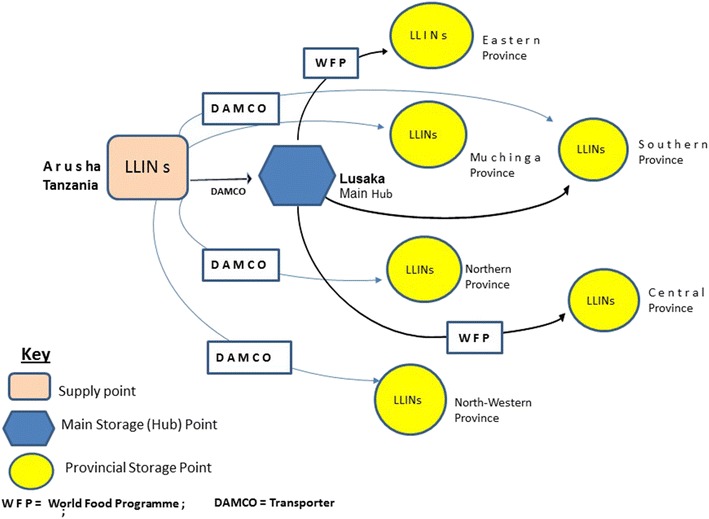
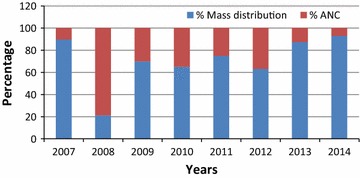
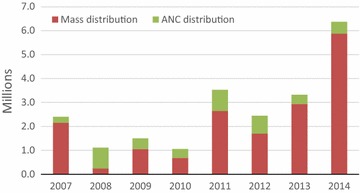
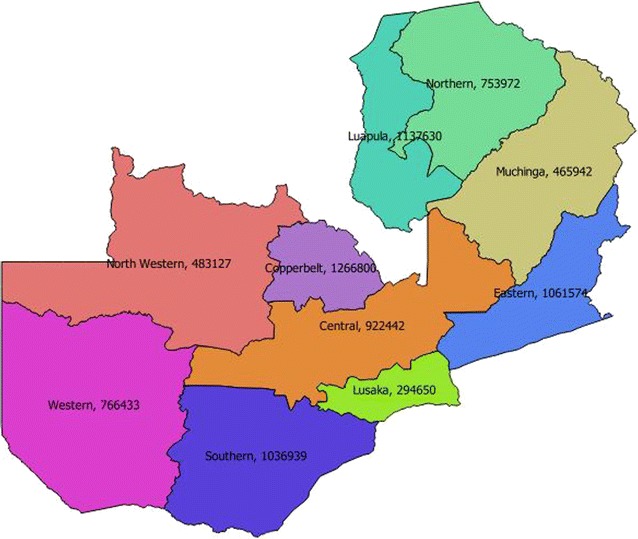
In 2014, a nationwide mass distribution campaign in Zambia delivered all the 6.0 million LLINs in 6 out of 10 provinces in 4 months between June and September before the onset of the rainy season. Compared with 235,800 LLINs and 2.9 million LLINs distributed on a rolling basis in 2008 and 2013, respectively, the 2014 mass campaign, which distributed 6 million LLINs represented the largest one-time-nationwide LLIN distribution in Zambia. The province (Luapula) with highest malaria transmission, mostly with rural settings recorded 98-100% sleeping spaces in homes covered with LLINs. The percentage of households owning at least 1 LLIN increased from 50.9% in 2006 to 77.7% in 2015. The 2014 mass campaign involved a coordinated response with substantial investments into macro (central) and micro (district) level planning, capacity building, tracking and logistics management supported by a new non-health sector partnership landscape. Coordination of LLIN distribution and logistics benefited from the mobile phone technology to transmit "real time" data on commodity tracking that facilitated timely delivery to districts.
Free mass distribution of LLINs policy was adopted in 2005 in Zambia. Consistently implemented, has not only contributed to increased coverage of LLINs, but has also produced the added value and lessons of strengthening joint planning, strategic coordination, partnerships with non-health sector institutions and community engagement with traditional leaders at community. Furthermore, the mass distribution, through improving coverage has indirect added (spin-off) value or impact on other arthropod-borne diseases, in addition to malaria.
赞比亚于 2001 年率先采用了经杀虫剂处理的蚊帐策略,并于 2005 年出台了大规模分发长效驱虫蚊帐(LLIN)的政策。此后,该国通过产前护理和卫生设施中的五岁以下儿童诊所,实施了大规模分发与常规供应相结合的策略。全国普及(100%)覆盖率和 80%利用率的目标尚未实现。赞比亚的免费大规模 LLIN 分发运动为未来在非洲地区开展运动提供了重要经验。
本研究回顾了 2001 年至 2016 年期间,赞比亚国家和世界卫生组织全球疟疾规划年度报告和战略计划中关于 LLIN 免费大规模分发运动的信息。
2014 年 6 月至 9 月雨季前的 4 个月内,赞比亚在全国范围内开展了一次大规模分发运动,在 10 个省份中的 6 个省发放了 600 万顶 LLIN。与 2008 年和 2013 年分别滚动分发的 235800 顶和 290 万顶 LLIN 相比,2014 年的大规模运动分发了 600 万顶 LLIN,是赞比亚历史上一次性全国范围内最大规模的 LLIN 分发。疟疾传播率最高的省份(卢阿普拉)大多是农村地区,家庭中 98-100%的睡眠空间都覆盖着 LLIN。到 2015 年,拥有至少 1 顶 LLIN 的家庭比例从 2006 年的 50.9%增加到了 77.7%。2014 年的大规模运动涉及到中央和地方层面的协调应对,包括大量投资进行宏观(中央)和微观(地区)规划、能力建设、跟踪和后勤管理,并得到了新的非卫生部门伙伴关系格局的支持。LLIN 分发和物流的协调得益于移动电话技术,该技术可以实时传输商品跟踪数据,便于及时向地区交付。
赞比亚于 2005 年出台了 LLIN 免费大规模分发政策。持续实施不仅有助于增加 LLIN 的覆盖率,还产生了加强联合规划、战略协调、与非卫生部门机构建立伙伴关系以及在社区层面与传统领导人开展社区参与的附加价值和经验。此外,通过提高覆盖率,大规模分发除了对疟疾之外,还对其他节肢动物传播疾病产生了间接的(附带)增值或影响。