Department of Medical Biochemistry, Academic Medical Center, University of Amsterdam, Netherlands.
Institute for Cardiovascular Prevention (IPEK), Ludwig-Maximilians University, Munich, Germany.
J Exp Med. 2018 May 7;215(5):1269-1271. doi: 10.1084/jem.20180479. Epub 2018 Apr 24.
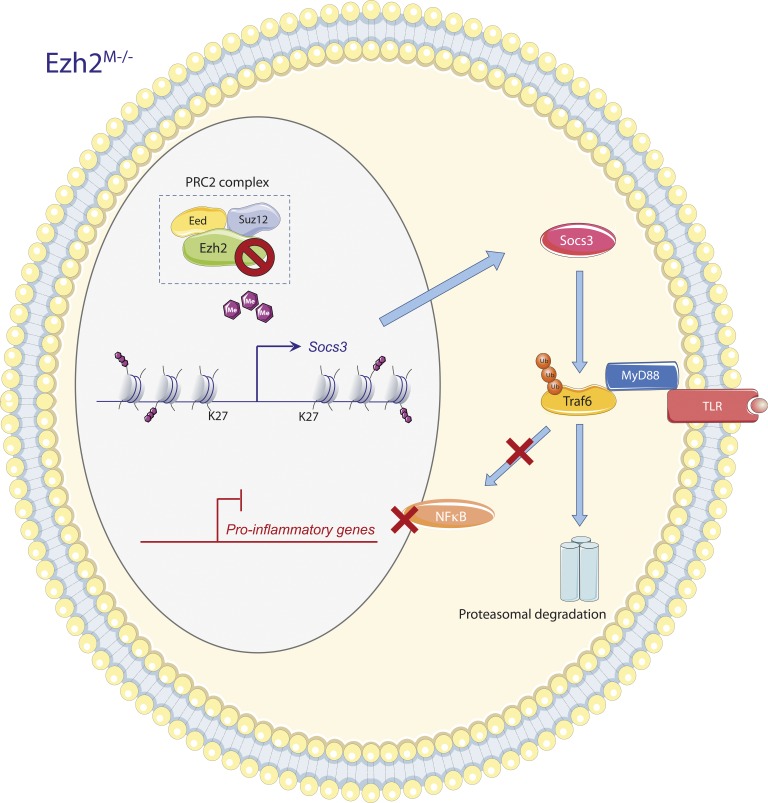
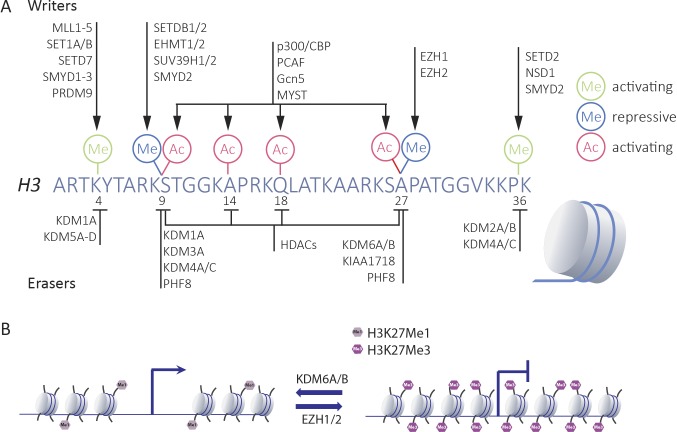
In this issue of , Zhang et al. (https://doi.org/10.1084/jem.20171417) show that the suppressive epigenetic enzyme Ezh2 is an important regulator of macrophage activation. The absence of Ezh2 leads to reduced cytokine secretion and suppresses macrophage-dependent disease development. They identify the antiinflammatory factor Socs3 as an important target for Ezh2 and thus show that regulation of suppressive histone modifications controls macrophage activation in disease.
本期《细胞》杂志中,Zhang 等人(doi:10.1084/jem.20171417)揭示了抑制性表观遗传酶 Ezh2 是调控巨噬细胞激活的重要分子。Ezh2 缺失导致细胞因子分泌减少,并抑制巨噬细胞依赖性疾病的发展。他们发现抗炎因子 Socs3 是 Ezh2 的一个重要靶标,从而表明抑制性组蛋白修饰的调节控制着疾病状态下巨噬细胞的激活。