Department of Molecular and Medical Pharmacology, University of California, Los Angeles, CA, 90095, USA.
Department of Microbiology, Immunology and Molecular Genetics, University of California, Los Angeles, CA, 90095, USA.
Cell Mol Immunol. 2022 Mar;19(3):327-336. doi: 10.1038/s41423-021-00827-0. Epub 2022 Jan 11.
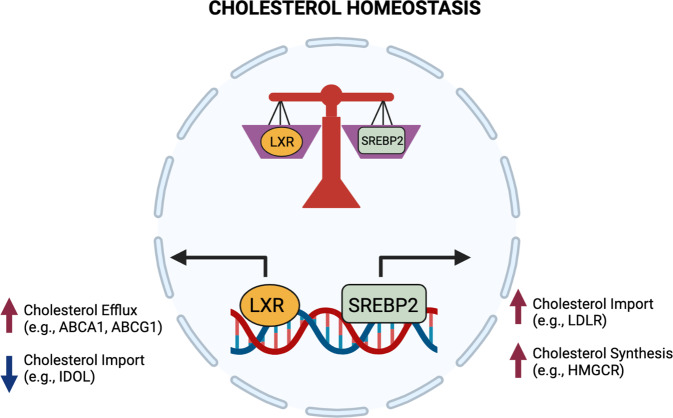
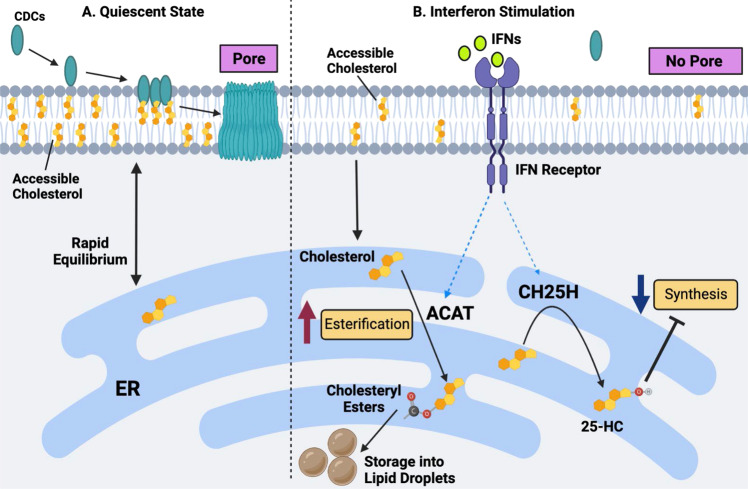
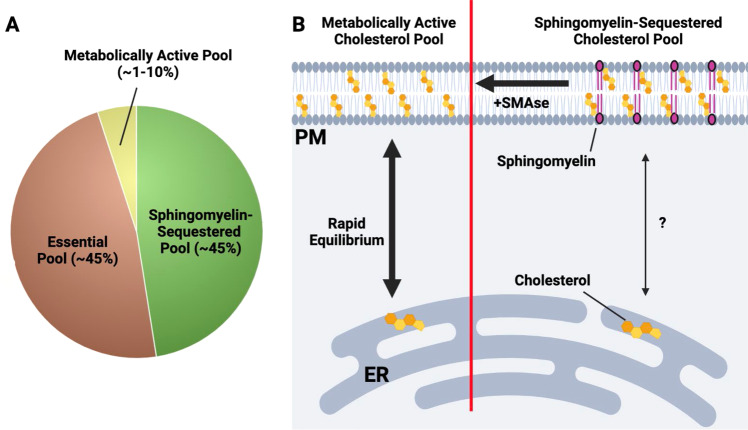
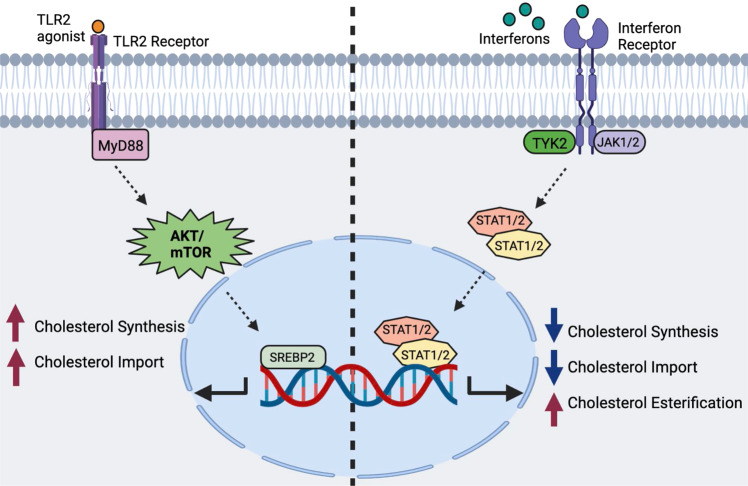
Cholesterol is a critical lipid for all mammalian cells, ensuring proper membrane integrity, fluidity, and biochemical function. Accumulating evidence indicates that macrophages rapidly and profoundly reprogram their cholesterol metabolism in response to activation signals to support host defense processes. However, our understanding of the molecular details underlying how and why cholesterol homeostasis is specifically reshaped during immune responses remains less well understood. This review discusses our current knowledge of cellular cholesterol homeostatic machinery and introduces emerging concepts regarding how plasma membrane cholesterol is partitioned into distinct pools. We then discuss how proinflammatory signals can markedly reshape the cholesterol metabolism of macrophages, with a focus on the differences between MyD88-dependent pattern recognition receptors and the interferon signaling pathway. We also discuss recent work investigating the capacity of these proinflammatory signals to selectively reshape plasma membrane cholesterol homeostasis. We examine how these changes in plasma membrane cholesterol metabolism influence sensitivity to a set of microbial pore-forming toxins known as cholesterol-dependent cytolysins that specifically target cholesterol for their effector functions. We also discuss whether lipid metabolic reprogramming can be leveraged for therapy to mitigate tissue damage mediated by cholesterol-dependent cytolysins in necrotizing fasciitis and other related infections. We expect that advancing our understanding of the crosstalk between metabolism and innate immunity will help explain how inflammation underlies metabolic diseases and highlight pathways that could be targeted to normalize metabolic homeostasis in disease states.
胆固醇是所有哺乳动物细胞的关键脂质,确保了适当的膜完整性、流动性和生化功能。越来越多的证据表明,巨噬细胞在受到激活信号后会迅速而深刻地重新编程其胆固醇代谢,以支持宿主防御过程。然而,我们对于胆固醇动态平衡在免疫反应中如何以及为什么被特异性重塑的分子细节的理解还不够深入。
本篇综述讨论了我们目前对细胞胆固醇动态平衡机制的认识,并介绍了关于质膜胆固醇如何分为不同池的新兴概念。然后,我们讨论了促炎信号如何显著重塑巨噬细胞的胆固醇代谢,重点关注 MyD88 依赖性模式识别受体和干扰素信号通路之间的差异。我们还讨论了最近研究这些促炎信号选择性重塑质膜胆固醇动态平衡的能力的工作。
我们研究了这些质膜胆固醇代谢变化如何影响对一组称为胆固醇依赖性细胞溶解素的微生物孔形成毒素的敏感性,这些毒素专门针对其效应功能靶向胆固醇。我们还讨论了脂质代谢重编程是否可以用于治疗,以减轻坏死性筋膜炎和其他相关感染中胆固醇依赖性细胞溶解素介导的组织损伤。我们预计,深入了解代谢与先天免疫之间的相互作用将有助于解释炎症如何导致代谢疾病,并突出可以靶向的途径,以在疾病状态下使代谢动态平衡正常化。