Bird C W, Baculis B C, Mayfield J J, Chavez G J, Ontiveros T, Paine D J, Marks A J, Gonzales A L, Ron D, Valenzuela C F
Department of Neurosciences, School of Medicine, University of New Mexico Health Sciences Center, Albuquerque, New Mexico.
Department of Neurology, University of California, San Francisco, California.
Genes Brain Behav. 2019 Mar;18(3):e12484. doi: 10.1111/gbb.12484. Epub 2018 May 28.
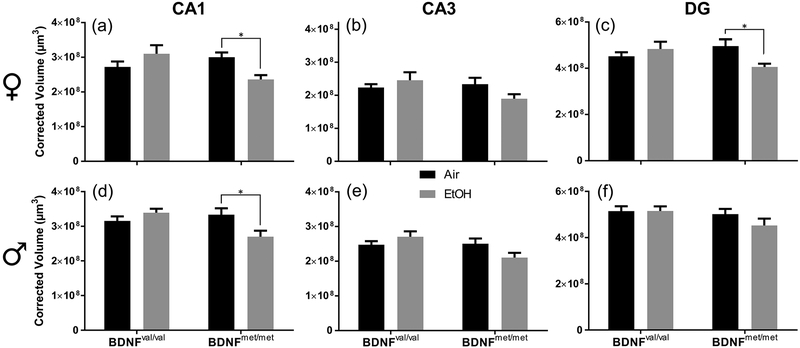
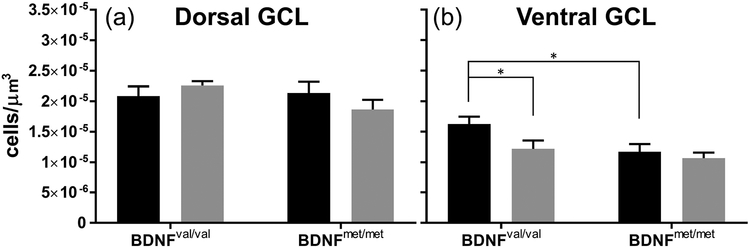
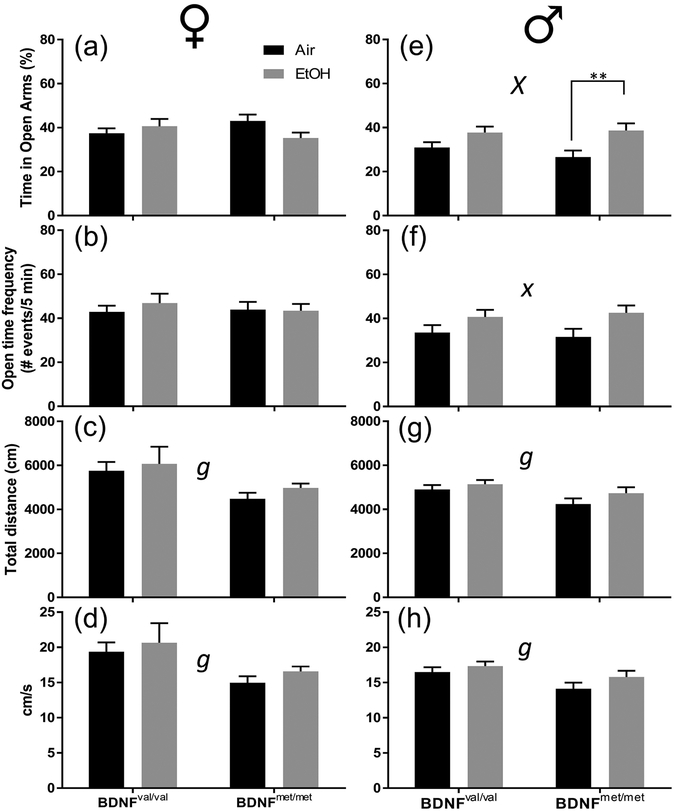
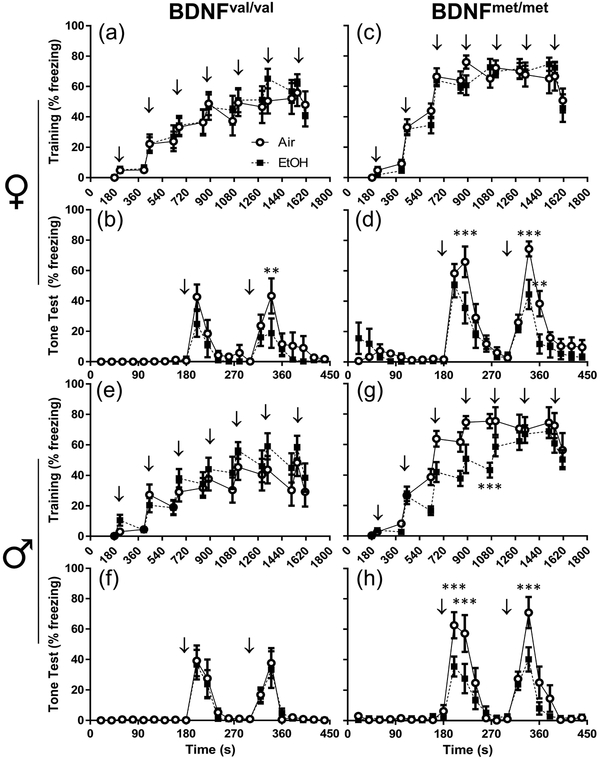
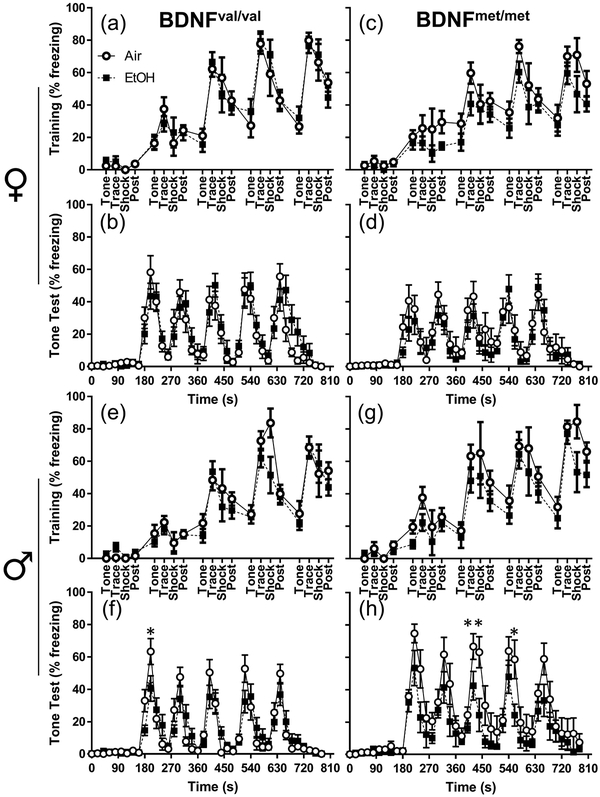
Prenatal exposure to alcohol causes a wide range of deficits known as fetal alcohol spectrum disorders (FASDs). Many factors determine vulnerability to developmental alcohol exposure including timing and pattern of exposure, nutrition and genetics. Here, we characterized how a prevalent single nucleotide polymorphism in the human brain-derived neurotrophic factor (BDNF) gene (val66met) modulates FASDs severity. This polymorphism disrupts BDNF's intracellular trafficking and activity-dependent secretion, and has been linked to increased incidence of neuropsychiatric disorders such as depression and anxiety. We hypothesized that developmental ethanol (EtOH) exposure more severely affects mice carrying this polymorphism. We used transgenic mice homozygous for either valine (BDNF ) or methionine (BDNF ) in residue 68, equivalent to residue 66 in humans. To model EtOH exposure during the second and third trimesters of human pregnancy, we exposed mice to EtOH in vapor chambers during gestational days 12 to 19 and postnatal days 2 to 9. We found that EtOH exposure reduces cell layer volume in the dentate gyrus and the CA1 hippocampal regions of BDNF but not BDNF mice during the juvenile period (postnatal day 15). During adulthood, EtOH exposure reduced anxiety-like behavior and disrupted trace fear conditioning in BDNF mice, with most effects observed in males. EtOH exposure reduced adult neurogenesis only in the ventral hippocampus of BDNF male mice. These studies show that the BDNF val66met polymorphism modulates, in a complex manner, the effects of developmental EtOH exposure, and identify a novel genetic risk factor that may regulate FASDs severity in humans.
产前接触酒精会导致一系列被称为胎儿酒精谱系障碍(FASDs)的缺陷。许多因素决定了对发育过程中酒精接触的易感性,包括接触的时间和模式、营养和遗传因素。在这里,我们描述了人类脑源性神经营养因子(BDNF)基因中一种常见的单核苷酸多态性(val66met)如何调节FASDs的严重程度。这种多态性破坏了BDNF的细胞内运输和活性依赖性分泌,并与抑郁症和焦虑症等神经精神疾病的发病率增加有关。我们假设发育性乙醇(EtOH)暴露对携带这种多态性的小鼠影响更严重。我们使用了在第68位残基处纯合缬氨酸(BDNF )或蛋氨酸(BDNF )的转基因小鼠,这相当于人类的第66位残基。为了模拟人类妊娠中期和晚期的EtOH暴露,我们在妊娠第12天至19天以及出生后第2天至9天期间,将小鼠置于蒸汽室中暴露于EtOH。我们发现,在幼年期(出生后第15天),EtOH暴露会减少BDNF小鼠齿状回和海马CA1区的细胞层体积,但对BDNF小鼠没有影响。在成年期,EtOH暴露会降低BDNF小鼠的焦虑样行为并破坏痕迹恐惧条件反射,大多数影响在雄性小鼠中观察到。EtOH暴露仅在BDNF雄性小鼠的腹侧海马中减少成年神经发生。这些研究表明,BDNF val66met多态性以复杂的方式调节发育性EtOH暴露的影响,并确定了一种可能调节人类FASDs严重程度的新的遗传风险因素。