Department of Obstetrics and Gynaecology, The First Affiliated Hospital of Chongqing Medical University, Chongqing 400016, P.R. China.
Department of Pathology, The Basic Medical School of Chongqing Medical University, Chongqing 400016, P.R. China.
Oncol Rep. 2018 Jun;39(6):2653-2663. doi: 10.3892/or.2018.6383. Epub 2018 Apr 19.
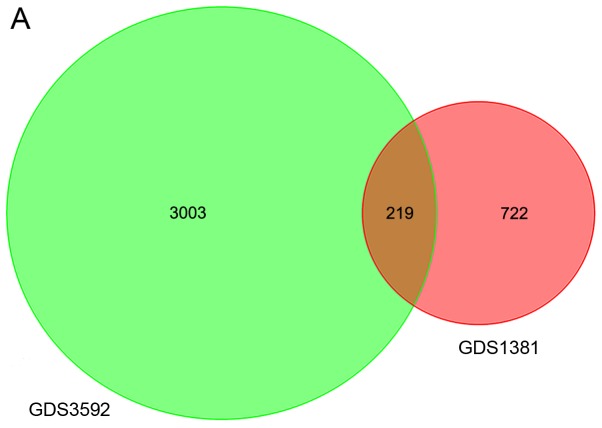
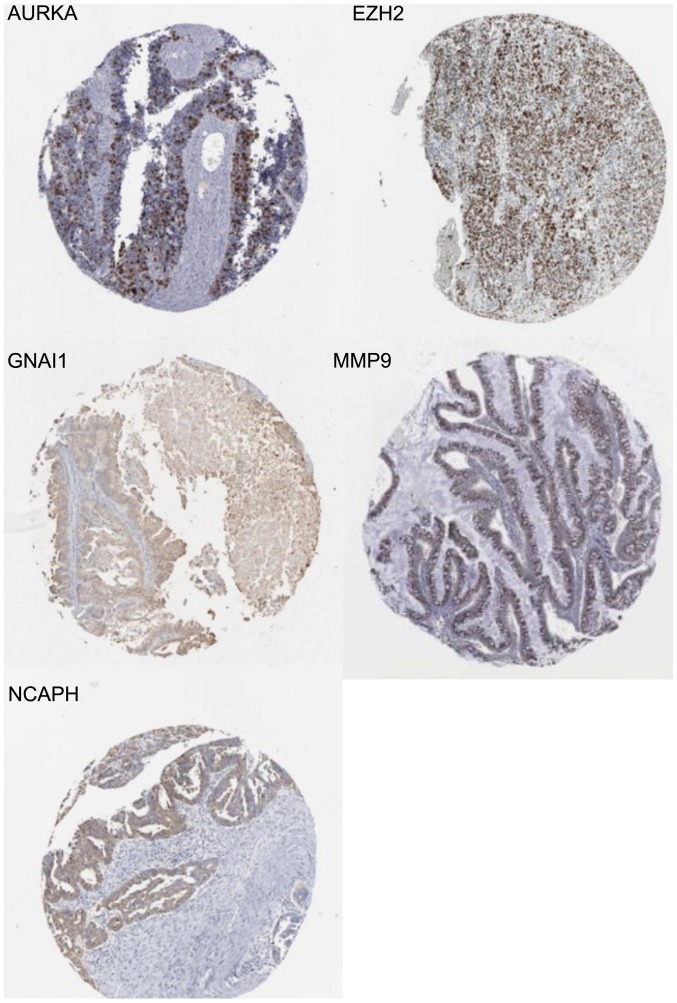
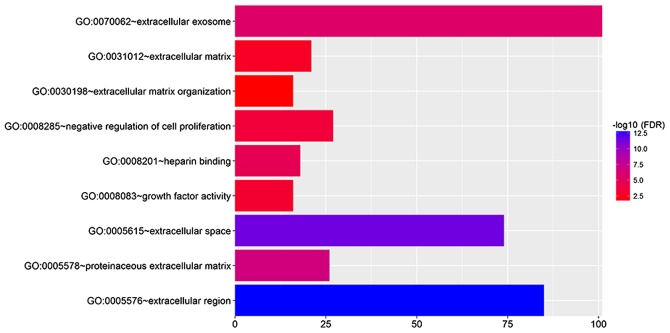
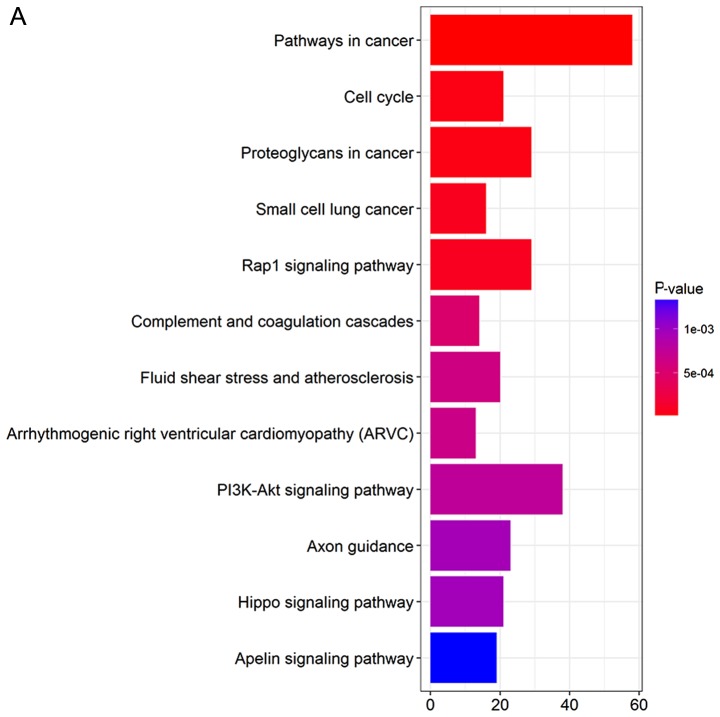
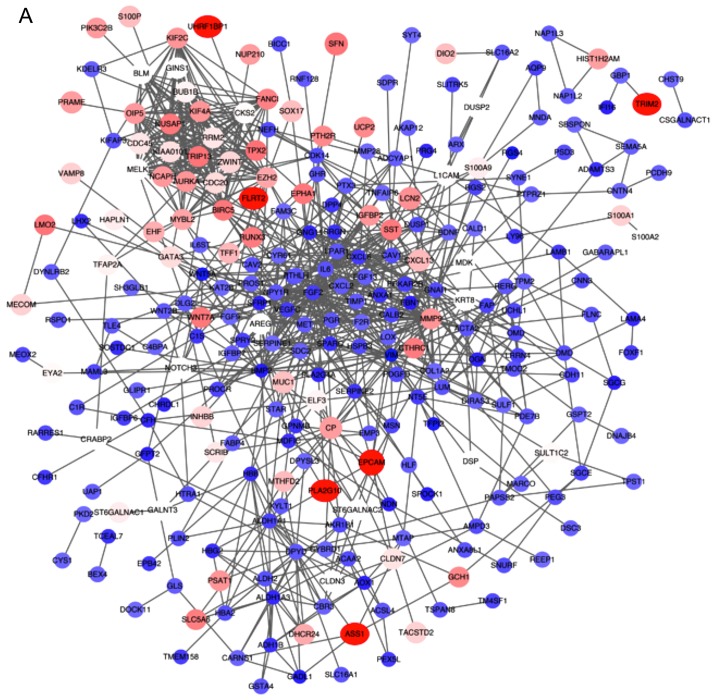
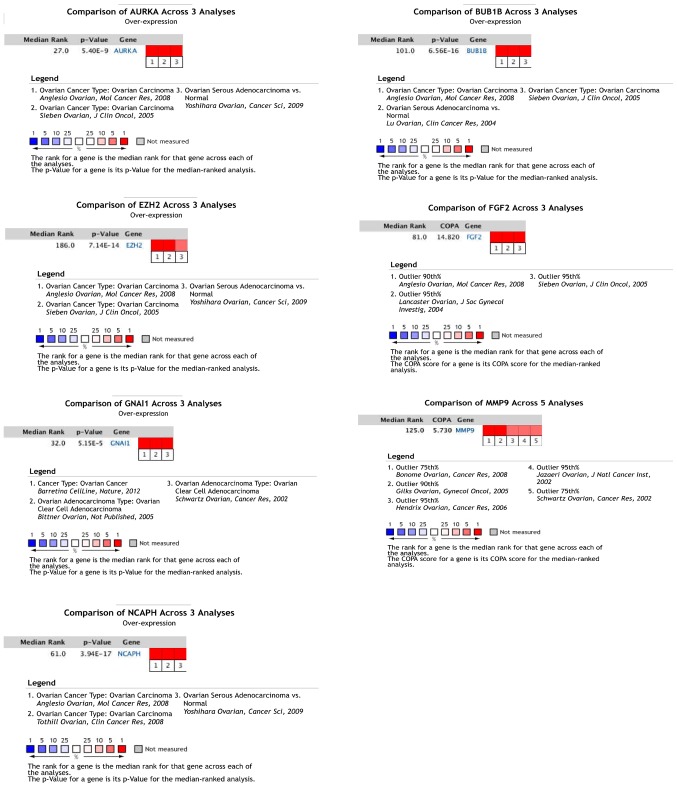
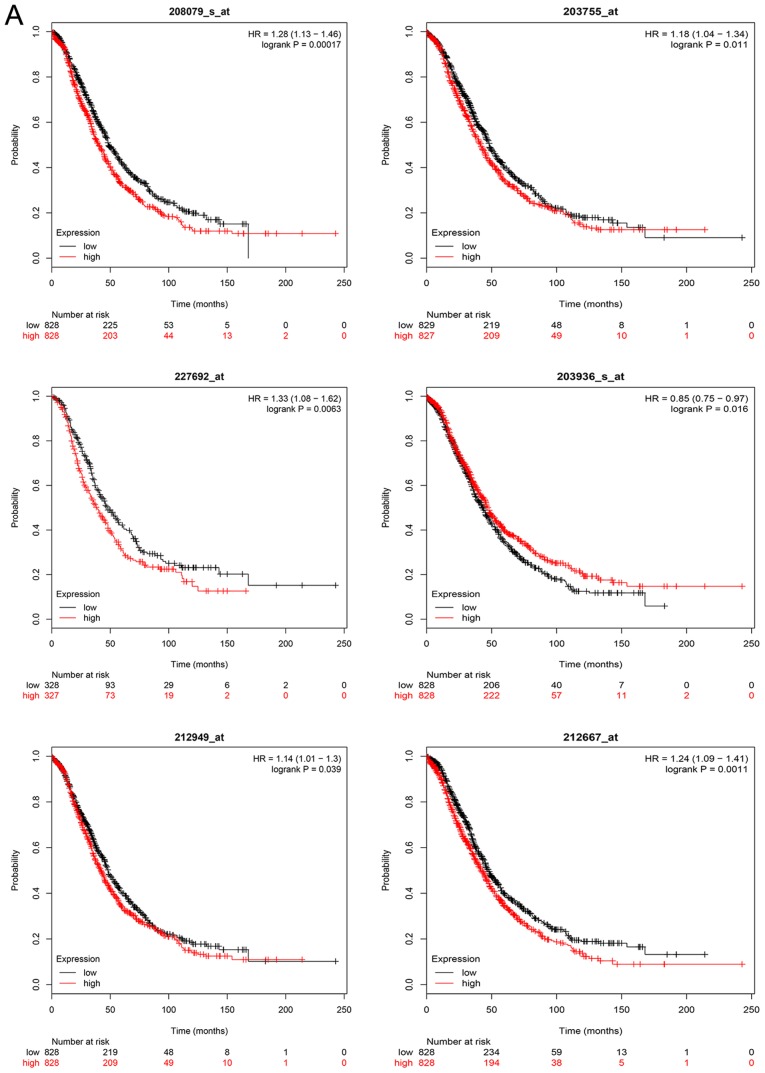
Serous ovarian cancer (SOC) accounts for >50% of all epithelial ovarian cancers. However, patients with SOC present with various degrees of response to platinum‑based chemotherapy and, thus, their survival may differ. The present study aimed to identify the candidate genes involved in the carcinogenesis and drug resistance of SOC by analyzing the microarray datasets GDS1381 and GDS3592. GDS1381 and GDS3592 were downloaded from the Gene Expression Omnibus database (https://www.ncbi.nlm.nih.gov/gds/). A total of 219 differentially expressed genes (DEGs) were identified. Potential genes that may predict the response to carboplatin and, thus, the prognosis of SOC were analyzed. The enriched functions and pathways of DEGs included extracellular region, extracellular space and extracellular exosome, among others. Upon screening the upregulated and downregulated genes on the connectivity map, 10 small‑molecule drugs were identified that may be helpful in improving drug sensitivity in patients with ovarian cancer. A total of 30 hub genes were screened for further analysis after constructing the protein‑to‑protein interaction network. Through survival analysis, comparison of genes across numerous analyses, and immunohistochemistry, GNAI1, non‑structural maintenance of chromosomes (non‑SMC) condensin I complex subunit H (NCAPH), matrix metallopeptidase 9 (MMP9), aurora kinase A (AURKA) and enhancer of zeste 2 polycomb repressive complex 2 subunit (EZH2) were identified as the key molecules that may be involved in the carcinogenesis and carboplatin resistance of SOC. In conclusion, GNAI1, NCAPH, MMP9, AURKA and EZH2 should be examined in further studies for the possibility of their participation in the carcinogenesis and carboplatin response of SOC.
浆液性卵巢癌(SOC)占上皮性卵巢癌的>50%。然而,SOC 患者对铂类化疗的反应程度不同,因此其生存情况可能存在差异。本研究通过分析微阵列数据集 GDS1381 和 GDS3592,旨在鉴定参与 SOC 发生和耐药的候选基因。GDS1381 和 GDS3592 从基因表达综合数据库(https://www.ncbi.nlm.nih.gov/gds/)下载。共鉴定出 219 个差异表达基因(DEGs)。分析了可能预测顺铂反应并预测 SOC 预后的潜在基因。DEGs 的富集功能和途径包括细胞外区、细胞外空间和细胞外外泌体等。在筛选连接图谱上上调和下调的基因后,确定了 10 种可能有助于提高卵巢癌患者药物敏感性的小分子药物。构建蛋白质相互作用网络后,筛选出 30 个枢纽基因进行进一步分析。通过生存分析、跨多个分析的基因比较和免疫组化分析,鉴定出 GNAI1、非染色质维持染色体(非-SMC)凝聚素 I 复合物亚基 H(NCAPH)、基质金属蛋白酶 9(MMP9)、极光激酶 A(AURKA)和增强子的锌指 2 多梳抑制复合物 2 亚基(EZH2)作为可能参与 SOC 发生和卡铂耐药的关键分子。总之,应在进一步的研究中检查 GNAI1、NCAPH、MMP9、AURKA 和 EZH2 参与 SOC 发生和卡铂反应的可能性。