Li Lu, Wei Xiaochun, Geng Xiang, Duan Zhiqing, Wang Xiaohu, Li Pengcui, Wang Chunfang, Wei Lei
Shanxi Key Laboratory of Bone and Soft Tissue Injury Repair, Department of Orthopaedics, The Second Hospital of Shanxi Medical University, Taiyuan, China.
Shanxi Medical College of Continuing Education, Jinzhong, China.
Swiss Med Wkly. 2018 Apr 25;148:w14607. doi: 10.4414/smw.2018.14607. eCollection 2018.
The aim of this study was to investigate whether an aged systemic environment could impair young cartilage tissue in mice.
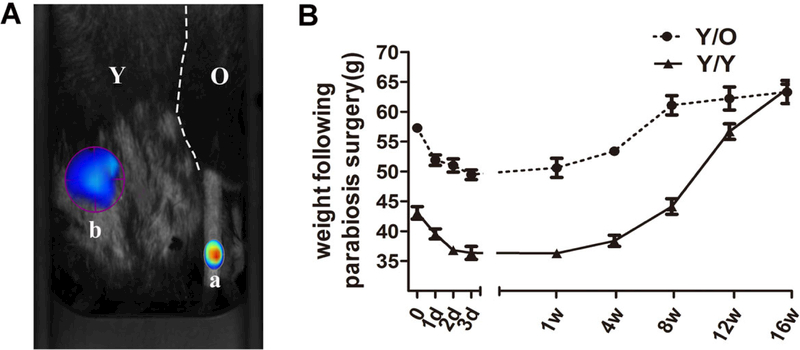
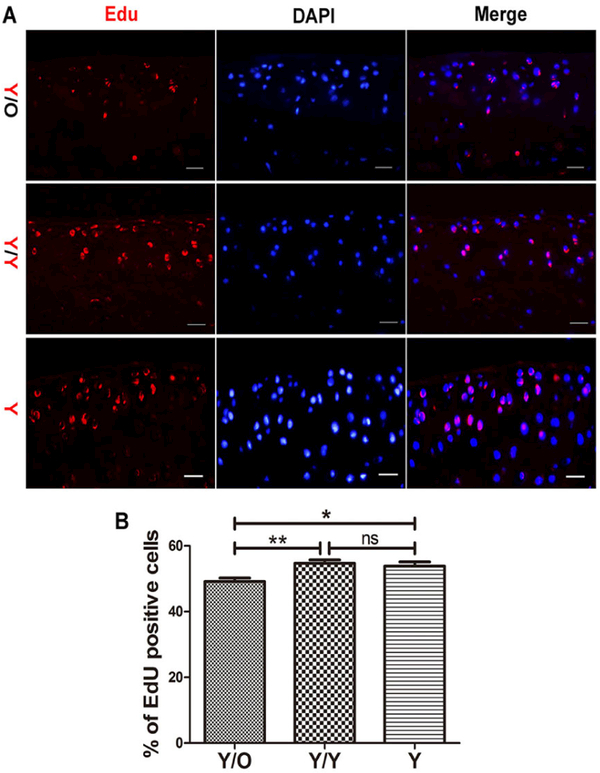
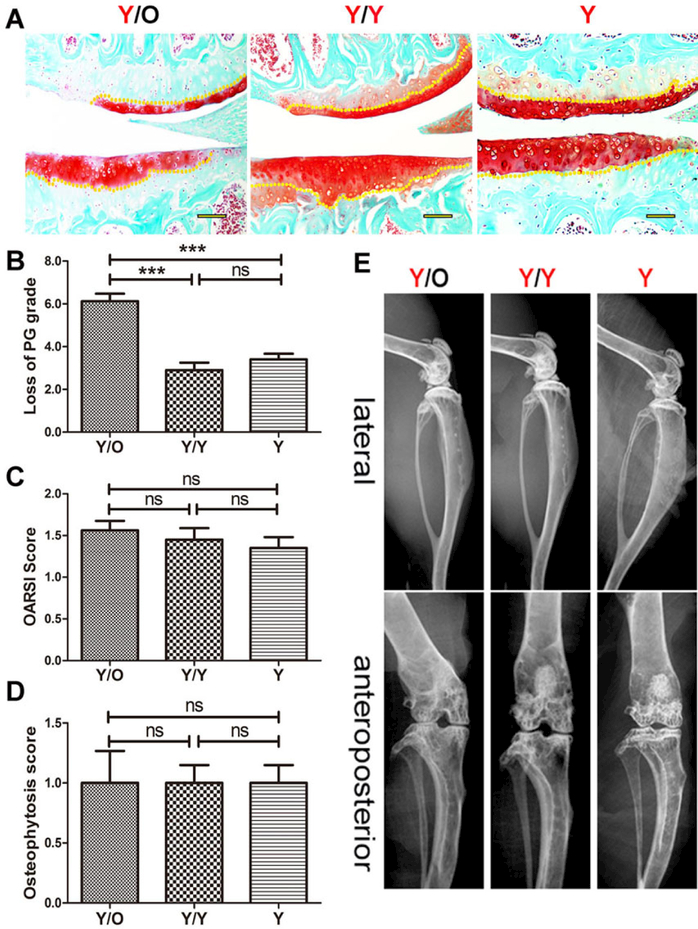
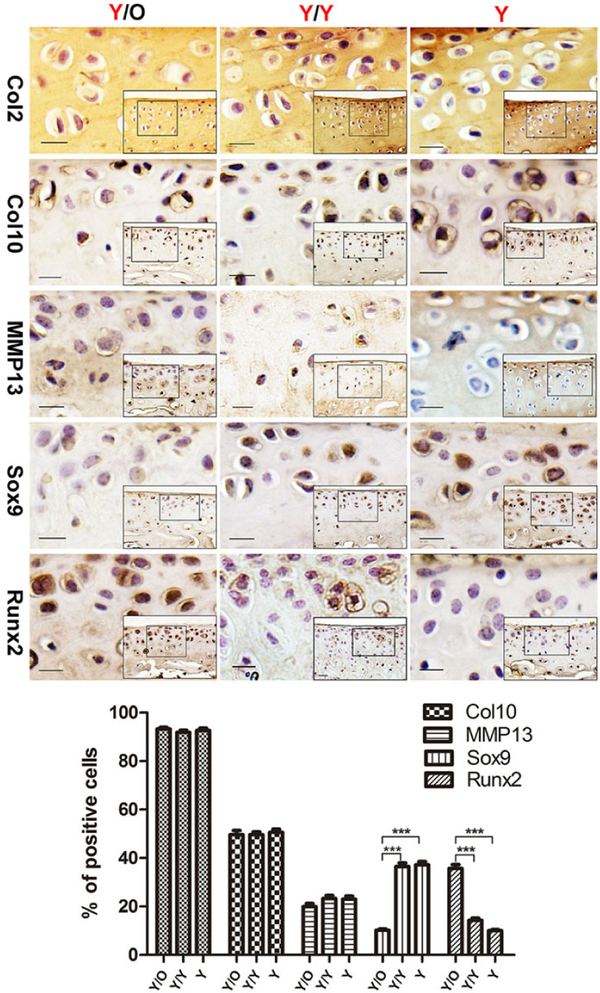
Mice differing in age were randomly divided into three groups. Group 1 was the experimental group (Y/O group) consisting of the heterochronic parabiosis model (2-month-old/12-month-old, young/old). Group 2 was the surgical control group (Y/Y group) with the isochronic parabiosis model (2-month-old/2-month-old, young/young). Group 3 consisted of the ageing control mice (2-month-old alone, Y group). Young knee cartilages collected from all three groups at 4 months after surgery were compared. Fluorescence molecular tomography (FMT) was used to confirm whether the two mice in parabiosis shared a common blood circulation at 2 weeks after surgery. The knee joints of young mice were examined radiologically at 4 months after surgery. Histological scoring was assigned to grade the severity of osteoarthritis (OA). Immunohistochemistry and quantitative reverse transcription polymerase chain reaction were used to evaluate OA-related protein expression and gene expression, and chondrocyte proliferation was determined with EdU staining.
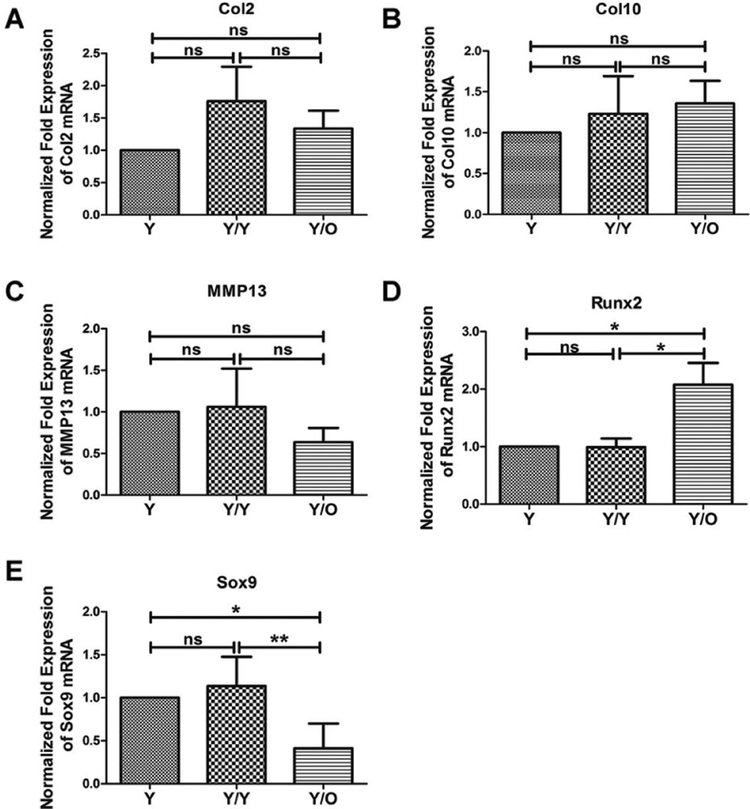
FMT imaging confirmed cross-circulation in the parabiotic pairs. The percentage of EdU-positive chondrocytes in young mice from the Y/O group was significantly lower compared with those of the Y/Y and Y groups (p <0.05 for both). There was no statistically significant difference in the mRNA expression of collagen type II (Col2), collagen type X (Col10), and matrix metalloproteinase 13 (MMP13) among the three groups (P>0.05), but expression of sex-determining region Y box 9 (Sox9) mRNA in young cartilage from the Y/O group was markedly attenuated compared to those in the Y/Y and Y groups (p <0.05 for both). In the Y/O group, mRNA expression of runt-related transcription factor 2 (Runx2) in young cartilage was significantly increased compared to the Y/Y and Y groups (p <0.05 for both). The changes in Col2, Col10, MMP13, Runx2 and Sox9 at the protein level mimicked the alterations found at the mRNA level. Loss of cartilage proteoglycan in young mice from the Y/O group was significantly greater compared to the Y/Y and Y groups (p <0.05 for both), despite the lack of significant difference among the three groups in OARIS and osteophytosis scores.
Heterochronic parabiosis exerts a negative effect on chondrocyte proliferation in the knee cartilage of young mice.
本研究旨在调查衰老的全身环境是否会损害小鼠的年轻软骨组织。
将不同年龄的小鼠随机分为三组。第1组为实验组(Y/O组),由异时联体共生模型(2月龄/12月龄,年轻/年老)组成。第2组为手术对照组(Y/Y组),采用等时联体共生模型(2月龄/2月龄,年轻/年轻)。第3组由衰老对照小鼠(仅2月龄,Y组)组成。比较术后4个月从所有三组收集的年轻膝关节软骨。术后2周使用荧光分子断层扫描(FMT)确认联体共生的两只小鼠是否共享共同的血液循环。术后4个月对年轻小鼠的膝关节进行放射学检查。进行组织学评分以评估骨关节炎(OA)的严重程度。采用免疫组织化学和定量逆转录聚合酶链反应评估OA相关蛋白表达和基因表达,并用EdU染色测定软骨细胞增殖。
FMT成像证实联体共生对中的交叉循环。与Y/Y组和Y组相比,Y/O组年轻小鼠中EdU阳性软骨细胞的百分比显著降低(两者均p<0.05)。三组之间II型胶原(Col2)、X型胶原(Col10)和基质金属蛋白酶13(MMP13)的mRNA表达无统计学显著差异(P>0.05),但与Y/Y组和Y组相比,Y/O组年轻软骨中性决定区Y框9(Sox9)mRNA的表达明显减弱(两者均p<0.05)。在Y/O组中,与Y/Y组和Y组相比,年轻软骨中 runt相关转录因子2(Runx2)的mRNA表达显著增加(两者均p<0.05)。Col2、Col10、MMP13、Runx2和Sox9在蛋白水平的变化与mRNA水平的变化相似。尽管三组在骨关节炎研究学会国际工作组(OARIS)和骨赘评分方面无显著差异,但与Y/Y组和Y组相比,Y/O组年轻小鼠软骨蛋白聚糖的丢失明显更大(两者均p<0.05)。
异时联体共生对年轻小鼠膝关节软骨中的软骨细胞增殖产生负面影响。