Department of Zoology, Faculty of Science, University of Peradeniya, Peradeniya, Sri Lanka.
Department of Zoology, Faculty of Science, University of Jaffna, Jaffna, Sri Lanka.
Parasit Vectors. 2018 Apr 25;11(1):266. doi: 10.1186/s13071-018-2810-z.
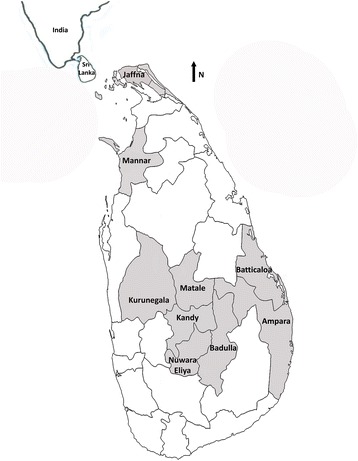
Vectors of mosquito-borne diseases in Sri Lanka, except for malaria, belong to the subfamily Culicinae, which includes nearly 84% of the mosquito fauna of the country. Hence, accurate and precise species identification of culicine mosquitoes is a crucial factor in implementing effective vector control strategies. During the present study, a combined effort using morphology and DNA barcoding was made to characterize mosquitoes of the subfamily Culicinae for the first time from nine districts of Sri Lanka. Cytochrome c oxidase subunit 1 (cox1) gene from the mitochondrial genome and the internal transcribed spacer 2 (ITS2) region from the nuclear ribosomal DNA were used for molecular characterization.
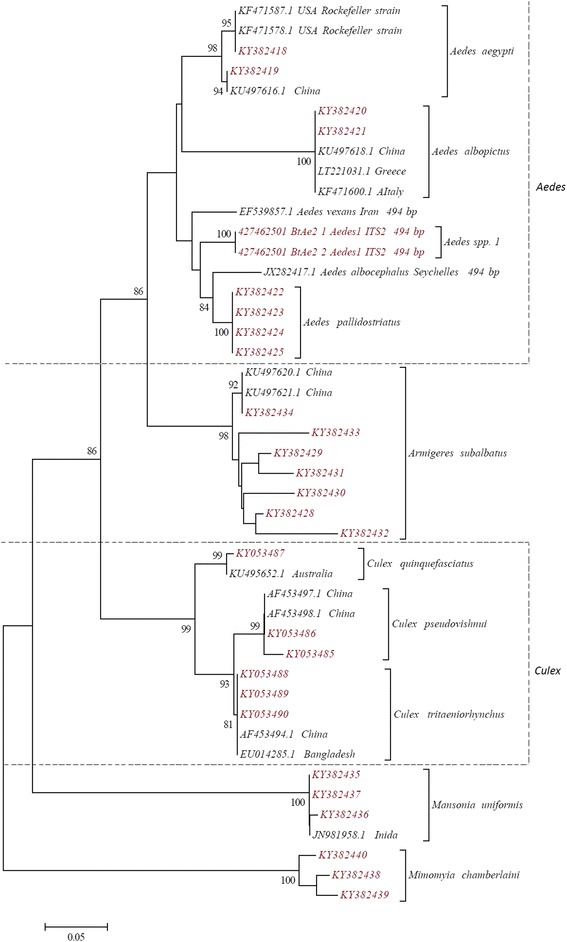
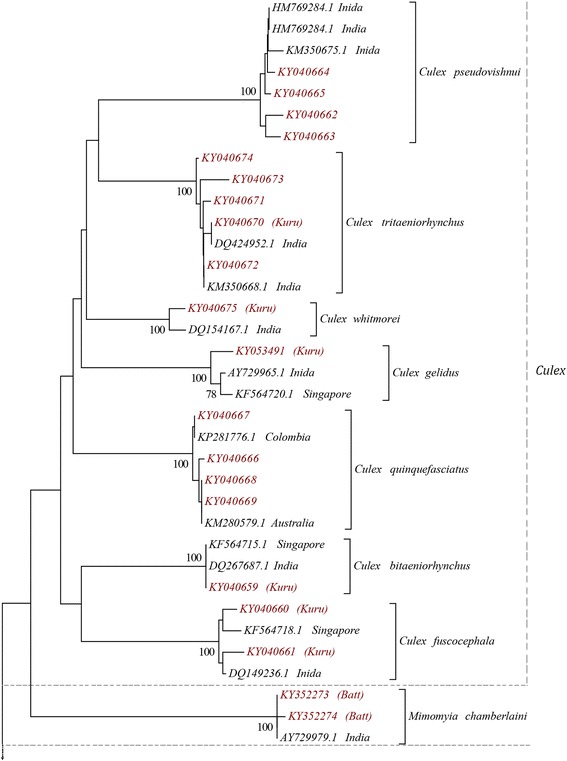
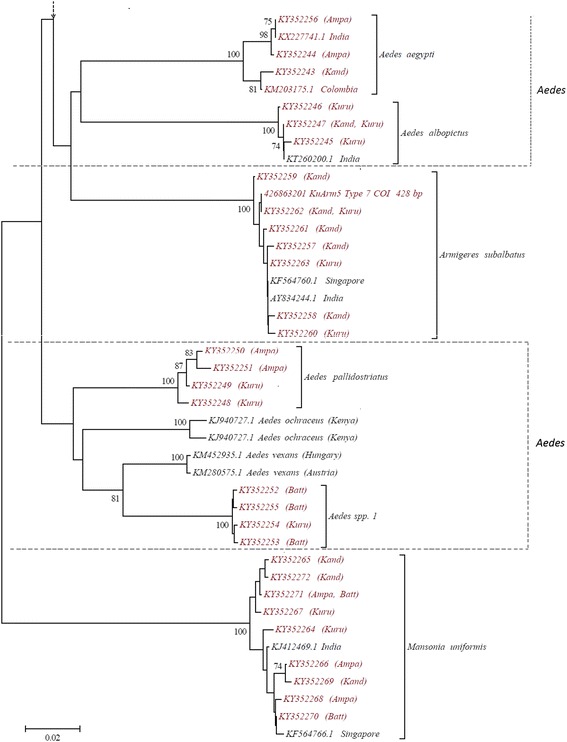
According to morphological identification, the field collected adult mosquitoes belonged to 5 genera and 14 species, i.e. Aedes aegypti, Ae. albopictus, Ae. pallidostriatus, Aedes sp. 1, Armigeres sp. 1, Culex bitaeniorhynchus, Cx. fuscocephala, Cx. gelidus, Cx. pseudovishnui, Cx. quinquefasciatus, Cx. tritaeniorhynchus, Cx. whitmorei, Mansonia uniformis and Mimomyia chamberlaini. Molecular analyses of 62 cox1 and 36 ITS2 sequences were exclusively comparable with the morphological identifications of all the species except for Ae. pallidostriatus and Aedes sp. 1. Although the species identification of Armigeres sp. 1 specimens using morphological features was not possible during this study, DNA barcodes of the specimens matched 100% with the publicly available Ar. subalbatus sequences, giving their species status. Analysis of all the cox1 sequences (14 clades supported by strong bootstrap value in the Neighbor-Joining tree and interspecific distances of > 3%) showed the presence of 14 different species. This is the first available DNA sequence in the GenBank records for morphologically identified Ae. pallidostriatus. Aedes sp. 1 could not be identified morphologically or by publicly available sequences. Aedes aegypti, Ae. albopictus and all Culex species reported during the current study are vectors of human diseases. All these vector species showed comparatively high diversity.
The current study reflects the significance of integrated systematic approach and use of cox1 and ITS genetic markers in mosquito taxonomy. Results of DNA barcoding were comparable with morphological identifications and, more importantly, DNA barcoding could accurately identify the species in the instances where the traditional morphological identification failed due to indistinguishable characters of damaged specimens and the presence of subspecies.
除疟疾外,斯里兰卡的蚊媒病传播媒介属于库蚊亚科,该亚科包括该国近 84%的蚊虫区系。因此,准确而精确的库蚊种鉴定是实施有效病媒控制策略的关键因素。在本研究中,首次从斯里兰卡的九个地区利用形态学和 DNA 条形码技术对库蚊亚科的蚊子进行了综合研究。线粒体基因组中的细胞色素 c 氧化酶亚基 1 (cox1)基因和核核糖体 DNA 中的内部转录间隔区 2 (ITS2)区域用于分子特征描述。
根据形态学鉴定,从野外采集的成年蚊子属于 5 个属和 14 个种,即埃及伊蚊、白纹伊蚊、淡色库蚊、Aedes sp. 1、库蚊属 1、致倦库蚊、淡色库蚊、寒库蚊、伪杂鳞库蚊、三带喙库蚊、刺扰伊蚊、白纹伊蚊、曼蚊和 chamberlaini 蚊。62 个 cox1 和 36 个 ITS2 序列的分子分析结果与除淡色库蚊和 Aedes sp. 1 以外的所有物种的形态学鉴定完全一致。尽管在本研究中无法通过形态特征对 Armigeres sp. 1 标本进行物种鉴定,但标本的 DNA 条码与公开的 Ar. subalbatus 序列完全匹配,确定了其物种地位。对所有 cox1 序列(邻接法树中得到强烈支持的 14 个分支和种间距离>3%)进行分析表明,存在 14 个不同的种。这是在 GenBank 记录中首次获得形态学鉴定的淡色库蚊的 DNA 序列。Aedes sp. 1 无法通过形态学或公开的序列进行鉴定。本研究中报告的埃及伊蚊、白纹伊蚊和所有库蚊种都是人类疾病的传播媒介。所有这些媒介种都表现出较高的多样性。
本研究反映了综合系统方法的重要性,以及 cox1 和 ITS 遗传标记在蚊种分类学中的应用。DNA 条形码的结果与形态学鉴定结果一致,更重要的是,在由于受损标本的特征难以区分和亚种的存在而导致传统形态学鉴定失败的情况下,DNA 条形码能够准确地鉴定物种。