Molecular & Cellular Oncogenesis Program, The Wistar Institute, Philadelphia, PA, USA.
Gene Expression & Regulation Program, The Wistar Institute, Philadelphia, PA, USA.
Oncogene. 2018 Jul;37(30):4058-4072. doi: 10.1038/s41388-018-0247-7. Epub 2018 Apr 26.
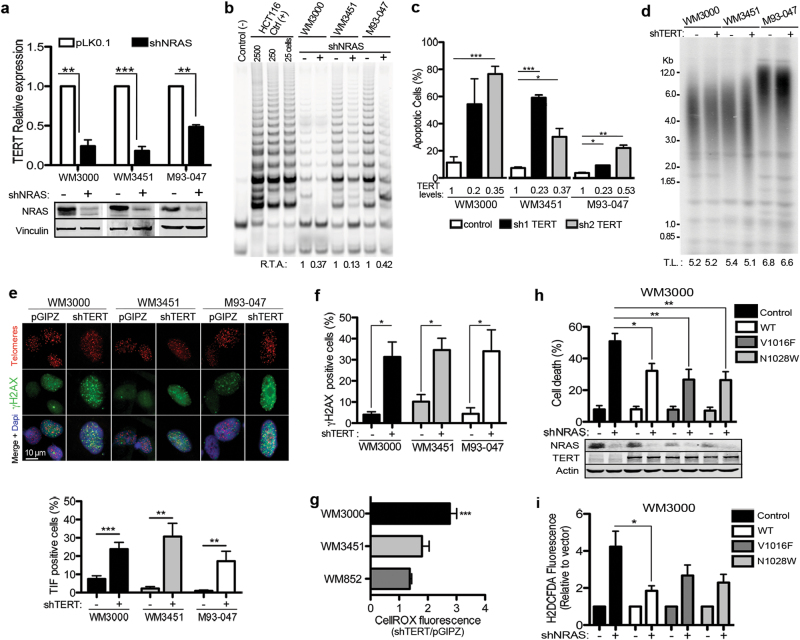
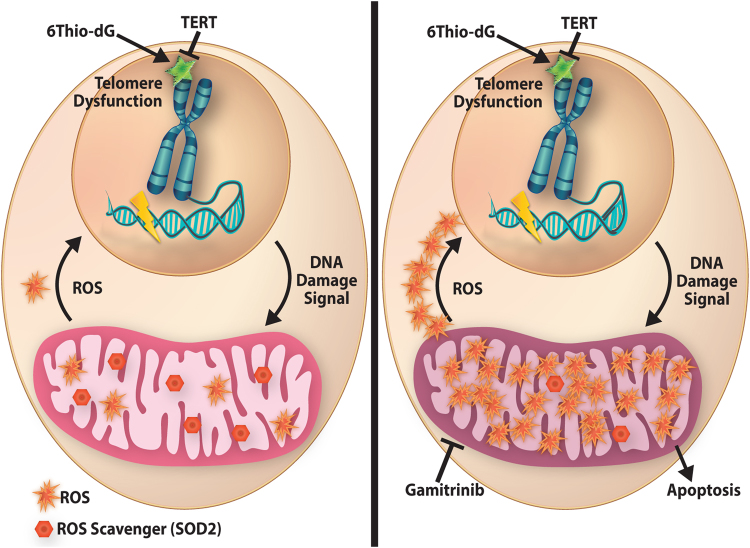
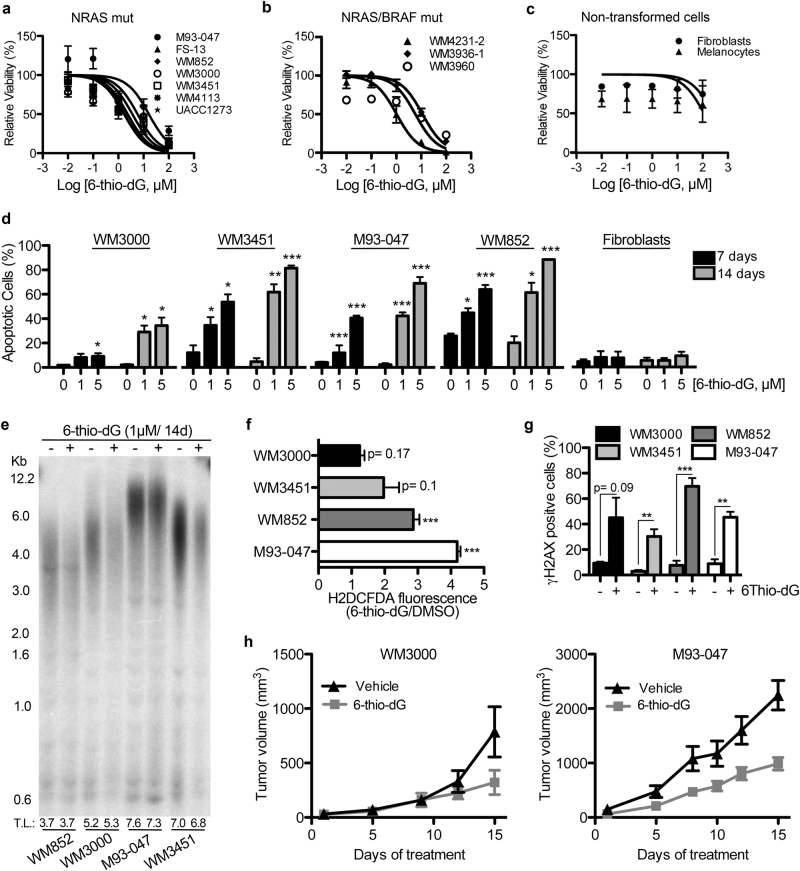
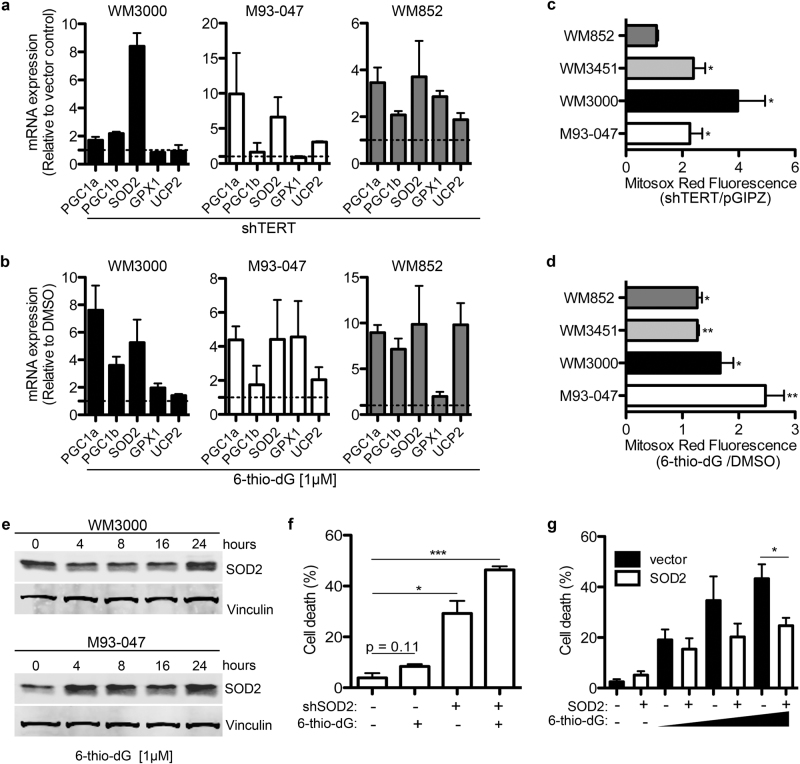
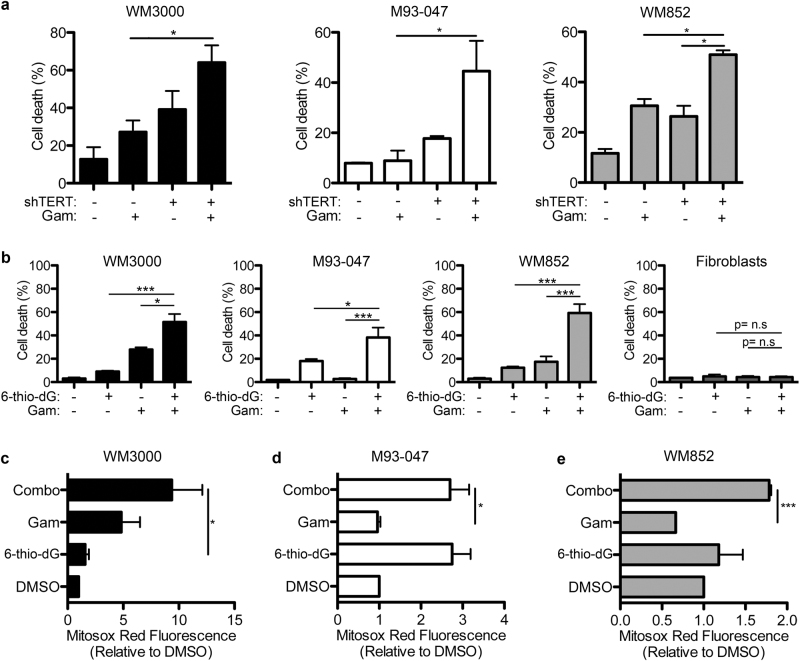
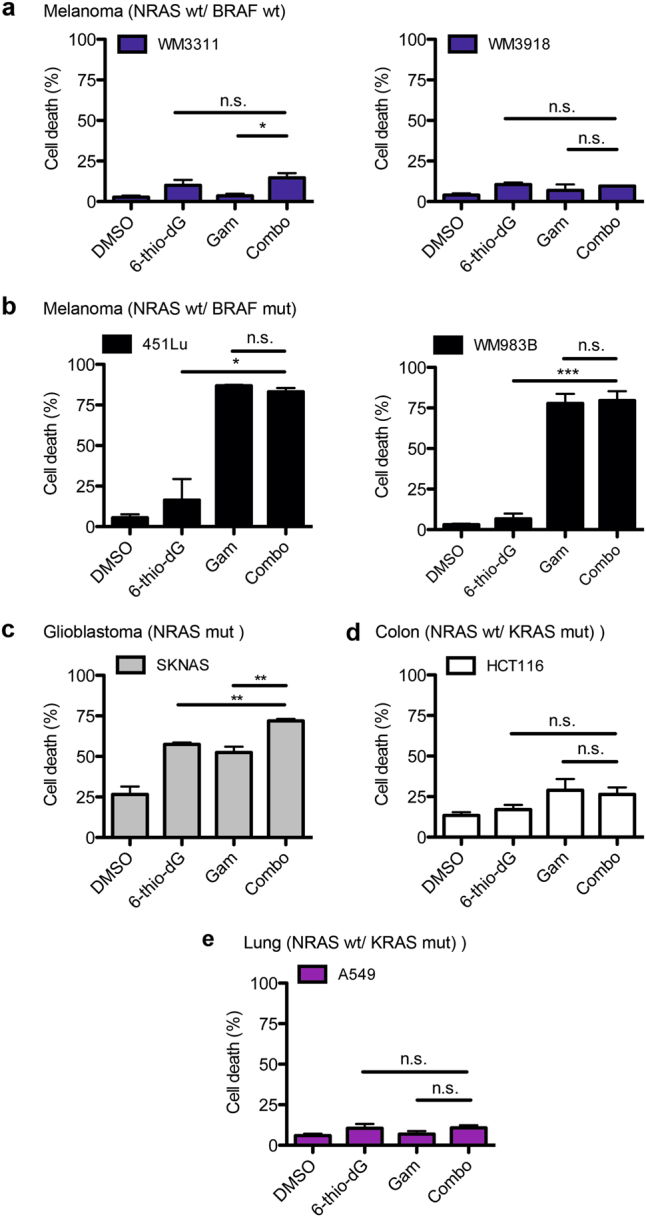
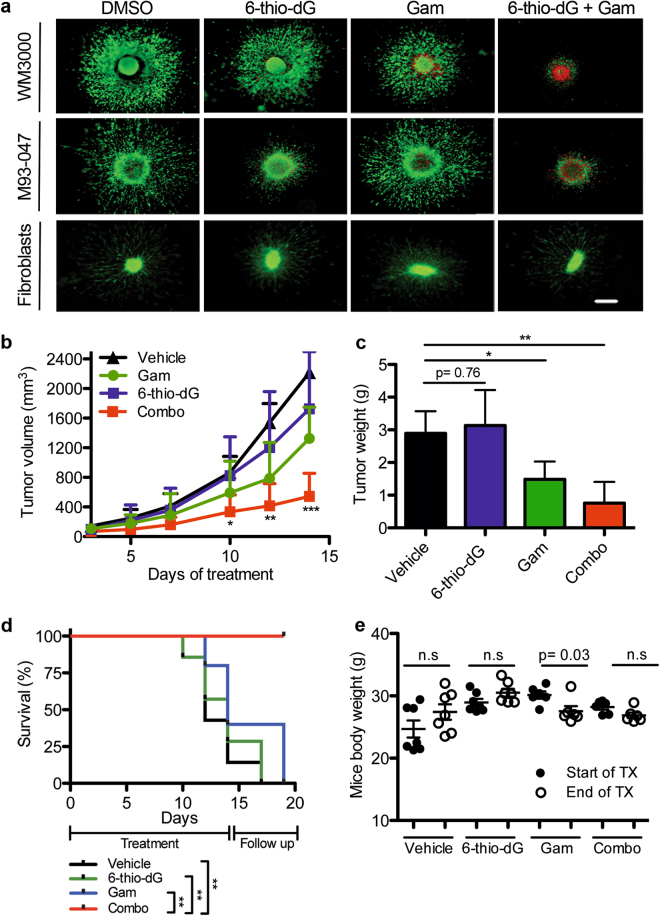
Targeting RAS is one of the greatest challenges in cancer therapy. Oncogenic mutations in NRAS are present in over 25% of melanomas and patients whose tumors harbor NRAS mutations have limited therapeutic options and poor prognosis. Thus far, there are no clinical agents available to effectively target NRAS or any other RAS oncogene. An alternative approach is to identify and target critical tumor vulnerabilities or non-oncogene addictions that are essential for tumor survival. We investigated the consequences of NRAS blockade in NRAS-mutant melanoma and show that decreased expression of the telomerase catalytic subunit, TERT, is a major consequence. TERT silencing or treatment of NRAS-mutant melanoma with the telomerase-dependent telomere uncapping agent, 6-thio-2'-deoxyguanosine (6-thio-dG), led to rapid cell death, along with evidence of both telomeric and non-telomeric DNA damage, increased ROS levels, and upregulation of a mitochondrial antioxidant adaptive response. Combining 6-thio-dG with the mitochondrial inhibitor Gamitrinib attenuated this adaptive response and more effectively suppressed NRAS-mutant melanoma. Our study uncovers a robust dependency of NRAS-mutant melanoma on TERT, and provides proof-of-principle for a new combination strategy to combat this class of tumors, which could be expanded to other tumor types.
靶向 RAS 是癌症治疗的最大挑战之一。NRAS 的致癌突变存在于超过 25%的黑色素瘤中,并且携带 NRAS 突变的患者治疗选择有限,预后较差。到目前为止,还没有临床药物可有效靶向 NRAS 或任何其他 RAS 致癌基因。另一种方法是识别和靶向关键的肿瘤脆弱性或非致癌基因成瘾,这些对于肿瘤的生存是必不可少的。我们研究了 NRAS 阻断在 NRAS 突变型黑色素瘤中的后果,结果表明端粒酶催化亚基 TERT 的表达降低是主要后果。TERT 沉默或用端粒酶依赖性端粒去帽剂 6-硫代-2'-脱氧鸟苷(6-thio-dG)治疗 NRAS 突变型黑色素瘤,导致快速细胞死亡,同时伴有端粒和非端粒 DNA 损伤、ROS 水平增加以及线粒体抗氧化剂适应性反应的上调。将 6-thio-dG 与线粒体抑制剂 Gamitrinib 联合使用可减弱这种适应性反应,并更有效地抑制 NRAS 突变型黑色素瘤。我们的研究揭示了 NRAS 突变型黑色素瘤对 TERT 的强大依赖性,并为对抗这一类肿瘤的新联合策略提供了原理验证,该策略可扩展到其他肿瘤类型。