Jafri Mohammad A, Ansari Shakeel A, Alqahtani Mohammed H, Shay Jerry W
Center of Excellence in Genomic Medicine Research, King Abdulaziz University, Jeddah, 21589, Kingdom of Saudi Arabia.
Department of Cell Biology, University of Texas Southwestern Medical Center, Dallas, Texas, 75390, USA.
Genome Med. 2016 Jun 20;8(1):69. doi: 10.1186/s13073-016-0324-x.
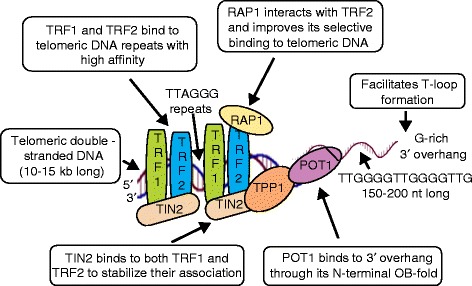
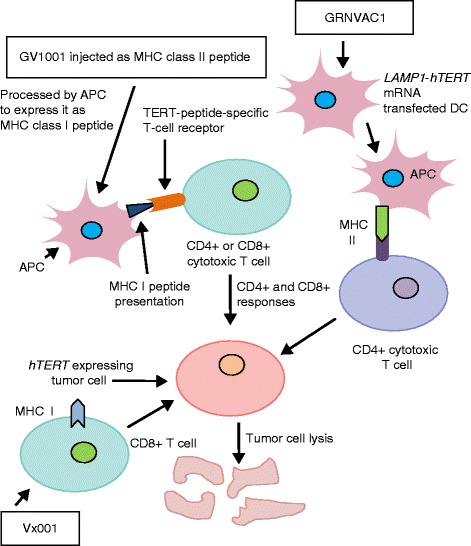
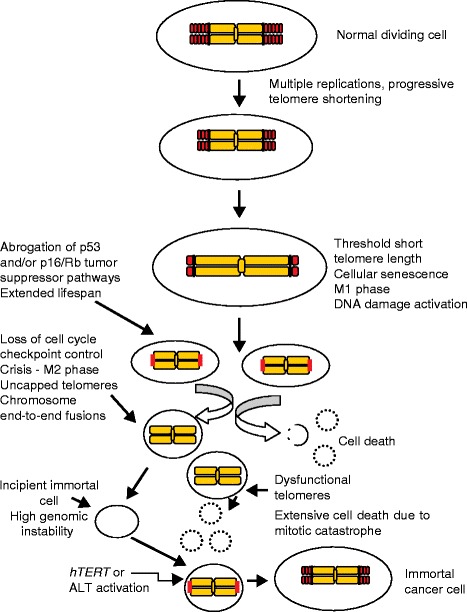
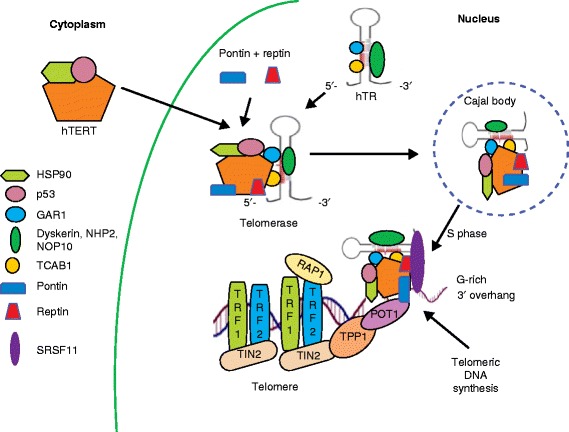
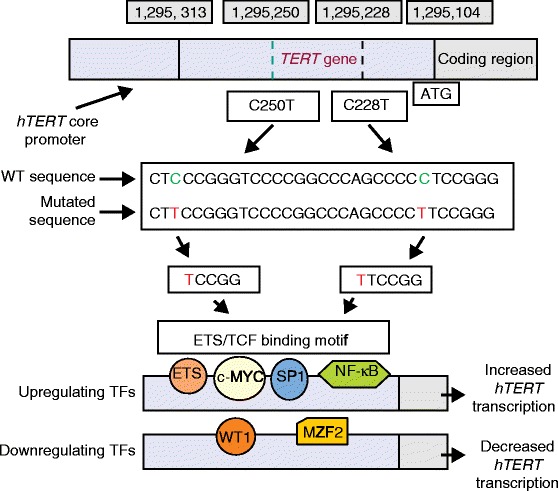
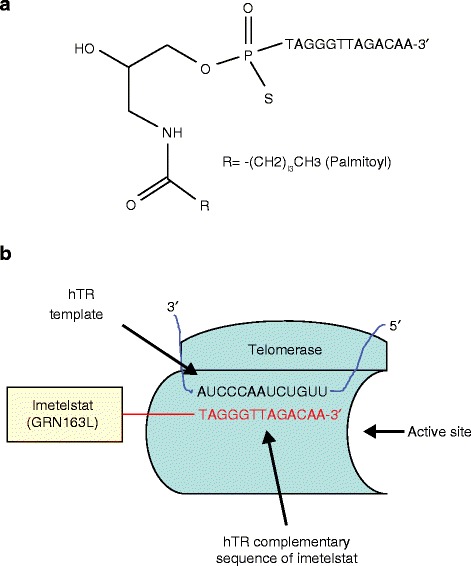
Telomeres maintain genomic integrity in normal cells, and their progressive shortening during successive cell divisions induces chromosomal instability. In the large majority of cancer cells, telomere length is maintained by telomerase. Thus, telomere length and telomerase activity are crucial for cancer initiation and the survival of tumors. Several pathways that regulate telomere length have been identified, and genome-scale studies have helped in mapping genes that are involved in telomere length control. Additionally, genomic screening for recurrent human telomerase gene hTERT promoter mutations and mutations in genes involved in the alternative lengthening of telomeres pathway, such as ATRX and DAXX, has elucidated how these genomic changes contribute to the activation of telomere maintenance mechanisms in cancer cells. Attempts have also been made to develop telomere length- and telomerase-based diagnostic tools and anticancer therapeutics. Recent efforts have revealed key aspects of telomerase assembly, intracellular trafficking and recruitment to telomeres for completing DNA synthesis, which may provide novel targets for the development of anticancer agents. Here, we summarize telomere organization and function and its role in oncogenesis. We also highlight genomic mutations that lead to reactivation of telomerase, and mechanisms of telomerase reconstitution and trafficking that shed light on its function in cancer initiation and tumor development. Additionally, recent advances in the clinical development of telomerase inhibitors, as well as potential novel targets, will be summarized.
端粒维持正常细胞的基因组完整性,在连续的细胞分裂过程中端粒的逐渐缩短会诱导染色体不稳定。在绝大多数癌细胞中,端粒长度由端粒酶维持。因此,端粒长度和端粒酶活性对癌症的起始和肿瘤的存活至关重要。已经确定了几种调节端粒长度的途径,全基因组规模的研究有助于绘制参与端粒长度控制的基因图谱。此外,对人类端粒酶基因hTERT启动子复发性突变以及参与端粒延长替代途径的基因(如ATRX和DAXX)突变进行的基因组筛查,阐明了这些基因组变化如何促进癌细胞中端粒维持机制的激活。人们还尝试开发基于端粒长度和端粒酶的诊断工具和抗癌疗法。最近的研究揭示了端粒酶组装、细胞内运输以及募集到端粒以完成DNA合成的关键方面,这可能为抗癌药物的开发提供新的靶点。在此,我们总结了端粒的组织和功能及其在肿瘤发生中的作用。我们还强调了导致端粒酶重新激活的基因组突变,以及端粒酶重构和运输机制,这些机制揭示了其在癌症起始和肿瘤发展中的功能。此外,还将总结端粒酶抑制剂临床开发的最新进展以及潜在的新靶点。